Facial fat transfer recovery in Singapore: what to expect from day 1 to month 6, swelling and bruising timeline, aftercare, and how long results last.
October 18, 2026


Public parking available or drop off along Arab Street, Village Hotel Bugis (Previously known as Golden Landmark Hotel)
Buses (2, 12, 32, 33, 130, 133, 133A, 520, 960, NR7) MRT (alight at Bugis MRT station)


Facial fat transfer recovery in Singapore: what to expect from day 1 to month 6, swelling and bruising timeline, aftercare, and how long results last.
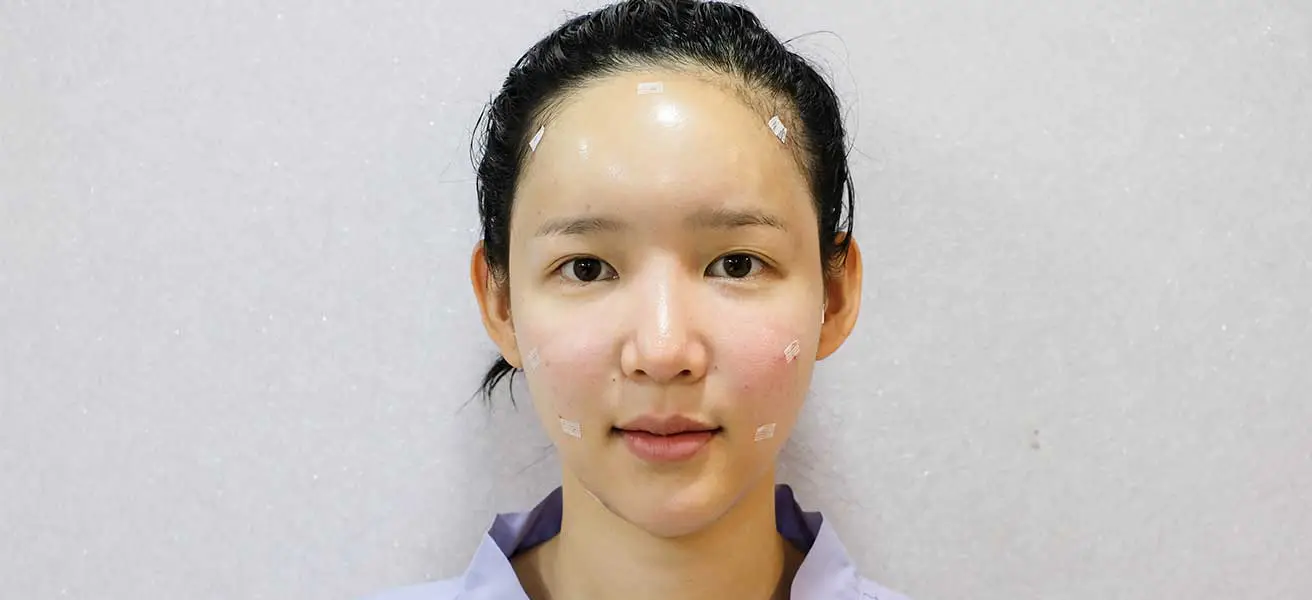
Facial fat grafting recovery is short for most people: expect about 1-2 days of downtime, with many patients returning to work within a few days. Swelling typically peaks around day 3 and settles over 1-2 weeks, while bruising fades in a similar timeframe and can often be concealed with makeup once your doctor clears it. You will be caring for two areas, the face where the fat is placed and the donor or harvested site (usually the abdomen or thighs), which may stay sore for one to two weeks. Over the following months, the grafted fat integrates, and mild unevenness may appear as the body absorbs part of it. Roughly 60-70% of transferred fat is commonly cited as surviving, and the final result becomes clear at around 6 months. Results can last many years, depending on factors such as the surgeon's technique, your health and lifestyle, and good aftercare, including manual lymphatic drainage massages.
Facial fat grafting (also called facial fat transfer) is a procedure that uses your own fat to restore lost volume in the face. Surgeons take a small amount of fat from the abdomen or thighs, purify it, and inject it in tiny droplets into areas such as the cheeks, forehead, temples, under-eyes, nasolabial folds, and chin. As it uses your own tissue, it is often called the "organic facelift."
Facial ageing can begin from the late 30s as volume is lost beneath the skin. Facial fat grafting aims to restore the "inverted triangle" of a youthful, heart-shaped face.
Most visible swelling and bruising settle within 1-2 weeks. Tissue settling and fat integration continue for up to 6 months.
| Stage | Timeframe | What to expect |
|---|---|---|
| Immediate | Day 1-2 | Swelling, bruising, mild discomfort |
| Early recovery | Week 1 | Swelling peaks around day 3; soreness and tightness; follow-up visit |
| Healing | Weeks 2-4 | Marked drop in swelling and bruising; sutures removed; start MLD massage |
| Adjustment | Months 1-2 | Results stabilise; mild unevenness may appear as some fat is absorbed |
| Settling | Months 3-6 | Contours look smoother and fuller; return to full activity once cleared |
| Final result | ~ 6 months | Primary volume and contour are stable |
Expect 1-2 days of downtime, so take time off work to rest well. Wear the compression garment on the donor sites as instructed, stay hydrated, and eat protein-rich foods to support healing.
| Symptom | Is it normal? | Relief |
|---|---|---|
| Swelling | Yes, noticeable in treated areas | Apply cold cloth instead of heavy ice pack, several times a day |
| Bruising | Yes, prominent for a few days | Cold, wet cloth; do not massage or apply pressure on treated areas. Ensure cloth is thin and light. Avoid supplements like fish oil, vitamin E, ginseng, or traditional Chinese medicine, as these may increase bleeding. |
| Discomfort | Mild discomfort is common | Over-the-counter painkillers such as paracetamol or medication prescribed by your surgeon. Avoid ibuprofen or NSAIDS as it may increase bruising. You may also be prescribed antibiotics; be sure to finish the full course. |
You will have a follow-up appointment within the first week to review healing and change dressings. You should be back to desk work on the third day. If you're feeling anxious or unsure, reach out to the medical team for clarity and support.
Results are more stable, but they will continue to evolve. Mild asymmetry or unevenness may appear as your body absorbs some of the grafted fat. This is a normal part of healing. Continue doctor follow-ups and MLD treatments. If your garment feels looser as your swelling subsides, get a smaller size to support healing.
About 60-70% of transferred fat is commonly cited as surviving long term. The rest is naturally absorbed, which is why a surgeon may slightly overcorrect or plan a touch-up.
| Factor | Why it matters |
|---|---|
| Doctor’s technique | Gentle handling and precise injection improve fat cell survival |
| Donor site | Areas such as the thighs and lower abdomen may yield better-quality fat |
| Metabolism and health | Overall health and body composition affect retention |
| Lifestyle | Healthy, active lifestyles support longer-lasting results |
| Post-op care | Avoid pressure on treated areas, especially in the first few months |
| Blood supply | Survival depends on the fat forming a new blood supply, which MLD helps support |
In Singapore, fat grafting is performed by doctors accredited by the Ministry of Health (MOH) to perform liposuction. Look for a doctor with:
Dr Ivan Puah, an MOH-accredited doctor with over 20 years of experience in face and body sculpting, was personally trained in syringe fat grafting by French plastic surgeon Dr Pierre Francois Fournier. He describes fat grafting as 30% science and 70% art. Just as a sculptor uses artistic training to mould material into art, he uses artistic sense and scientific expertise, along with modern technology, to shape the face and body.
Most swelling and bruising settle in 1-2 weeks. Fat integration and final results take up to 6 months.
Local anaesthetic is used during the procedure. Afterwards, most patients describe soreness and tightness rather than sharp pain.
Results are visible immediately, but the full effect appears once swelling and bruising resolve.
Results vary, but they can last a couple of years. The fat that survives the first few months behaves like your normal tissue, so it also ages with you.
Downtime is about 1-2 days, and most people return to work within a few days. Bruising is usually concealable with makeup once your doctor clears it.
Because it uses your own fat, there is no risk of rejection. As with any procedure, risks such as infection, asymmetry, or uneven fat survival exist, so choose an accredited, experienced doctor and discuss risks at consultation.
It is highly recommended that you sleep on your back for the first few weeks. If you are a side sleeper, placing a long pillow or bolster on your side can help you sleep on your back more comfortably.
Avoid wearing spectacles for the first two weeks if you had grafting done on your cheeks or tear trough. It is best to wear contact lenses for the first month to avoid putting pressure on the grafted area.
Uneven swelling is normal as tissue and fluid drainage react differently on both sides of the body. Address your concerns during your follow-up appointments with your doctor.
Lumps, fat necrosis or oil cysts, overcorrection, prolonged swelling, nerve numbness, and the rare but serious vascular complications. Your doctor should have explained these possible complications during the pre-op consultation. That is why post-op follow-up reviews with the doctor are critical so that he can watch for any red flags.
Yes, including the breast and buttocks. Fat grafting to the hands is also commonly done.
Facial fat grafting in Singapore starts at SGD 4000 onwards. The final cost depends on the doctor's experience, your aesthetic goals, the facility, and the type and duration of anaesthesia.