Female pattern hair loss: What you can do about it
44.4% of women in Singapore aged 15 to 64 reported ranking hair loss as their top hair concern, surpassing concerns about hair damage or dryness
April 1, 2026


Public parking available or drop off along Arab Street, Village Hotel Bugis (Previously known as Golden Landmark Hotel)
Buses (2, 12, 32, 33, 130, 133, 133A, 520, 960, NR7) MRT (alight at Bugis MRT station)


Public parking available or drop off along Arab Street, Village Hotel Bugis (Previously known as Golden Landmark Hotel)
Buses (2, 12, 32, 33, 130, 133, 133A, 520, 960, NR7) MRT (alight at Bugis MRT station)
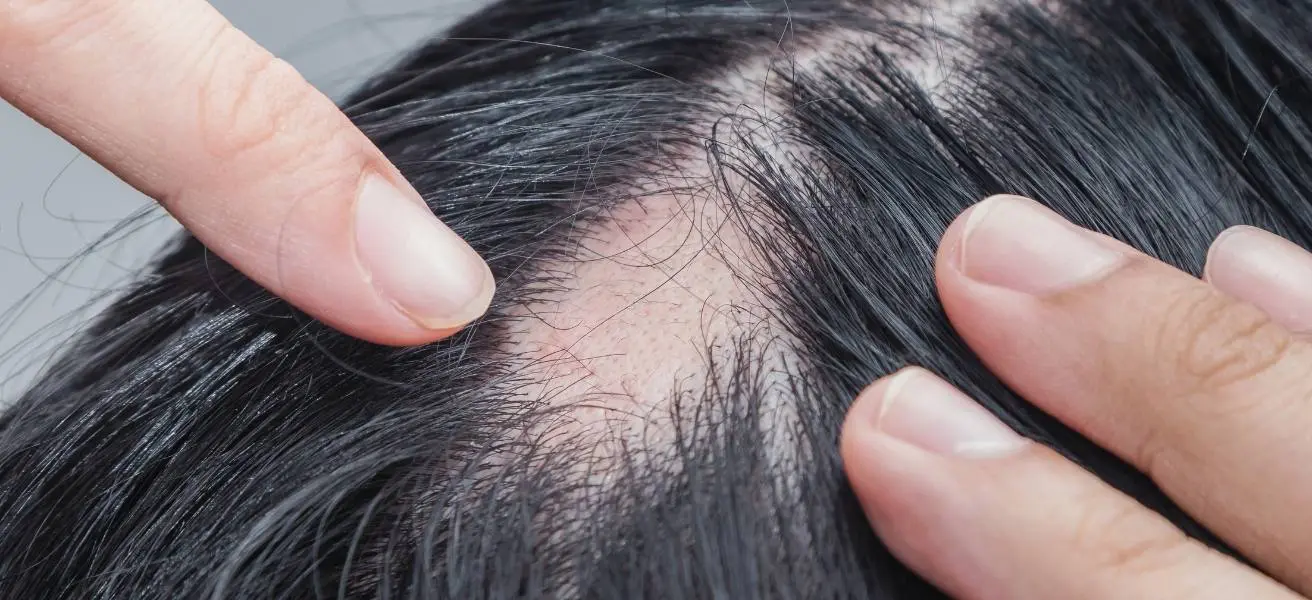
Hair loss is more common in Singapore than many people realise. A 2022 survey found that nearly half of women aged 15 to 64 cited it as their top hair concern. Among men, androgenetic alopecia affects around 63% of the local population. Despite its prevalence, hair thinning can be an isolating experience.
Follicle Renewal Hair Therapy at Amaris B. Clinic addresses hair loss at a cellular level. Performed by Dr Ivan Puah, the treatment combines RF Microneedling with Exosome Therapy to address underlying factors that contribute to thinning, including reduced blood flow to the follicle, collagen depletion, and scalp inflammation.
RF Microneedling stimulates the scalp and creates microchannels through which exosomes are delivered, supporting follicle activity and creating conditions for new hair growth.
The treatment is non-surgical and requires no downtime.
Book a consultation with Dr Ivan Puah at Amaris B. Clinic in Singapore today.
In 2022, a nationwide survey revealed a silent concern: 44.4% of women in Singapore aged 15 to 64 ranked hair loss as their top concern regarding hair health, surpassing damage or dryness[1]. Yet societal attitudes remain unkind.
While male baldness is often normalised (affecting 30% to 50% of men by age 50[2]), women face harsher stigma. Your hair isn’t just strands; it’s femininity, and confidence. Your hair is deeply tied to your identity and confidence – its thinning can significantly impact your social and professional wellbeing.
At Amaris B. Clinic, we recognise this deeply. Our Follicle Renewal Hair Therapy is a clinically supported approach[7, 8, 9, 10] that combines the dual action of RF Microneedling & Exosome Therapy to address thinning hair at its source, without the need for surgery.

| HAIR LOSS IN MEN | HAIR LOSS IN WOMEN | |
|---|---|---|
| Common cause of hair loss | Androgenetic Alopecia [6] | Androgenetic Alopecia [6] |
| Occurrence | ≈ 63% of men in Singapore [3] | < 40% of women experience hair thinning or excessive shedding [4] |
| Prevalent age | After the age of 40 [2] | During postpartum or menopause [5] |
| Genetic predisposition | Inherited from father and paternal relatives [2] | Genetics, including other factors |
| HAIR LOSS | HAIR THINNING | HAIR BREAKAGE | |
|---|---|---|---|
| Appearance |  | 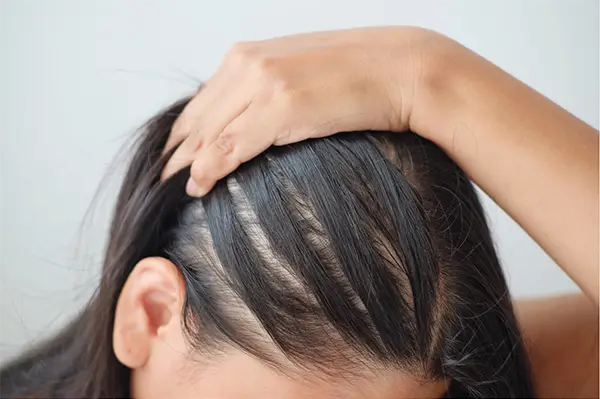 |  |
| Details |
|
|
|
| Other names |
|
|
|
| Definition | Reduction in the total number of hair strands on the scalp due to hair follicles not generating new hairs or by premature hair loss | Decrease in the thickness of individual hair strands, making the hair appear less voluminous and dense | Occurs when the hair strands break causing shorter strands and split ends |
| Causes |
|
|
|
| What You Might Notice | PROFESSIONAL INSIGHT |
|---|---|
| Receding hairline | Temples/frontal area thinning |
| Overall hair thinning | Gradual density loss, slower growth |
| Widening part | Visible scalp along the midline |
| Isolated bare spots | Scalp, brows, or facial hair patches |
| Excessive shedding | More hair in brush/shower drain |
| Scalp changes: Sensitivity/itching | Tenderness or sun discomfort |
| Scalp changes: Redness/flaking | Possible inflammation or infection |
| Body hair thinning | Sparse brows/lashes, slower regrowth |
| Weak hair resilience | Falls out with gentle touching |
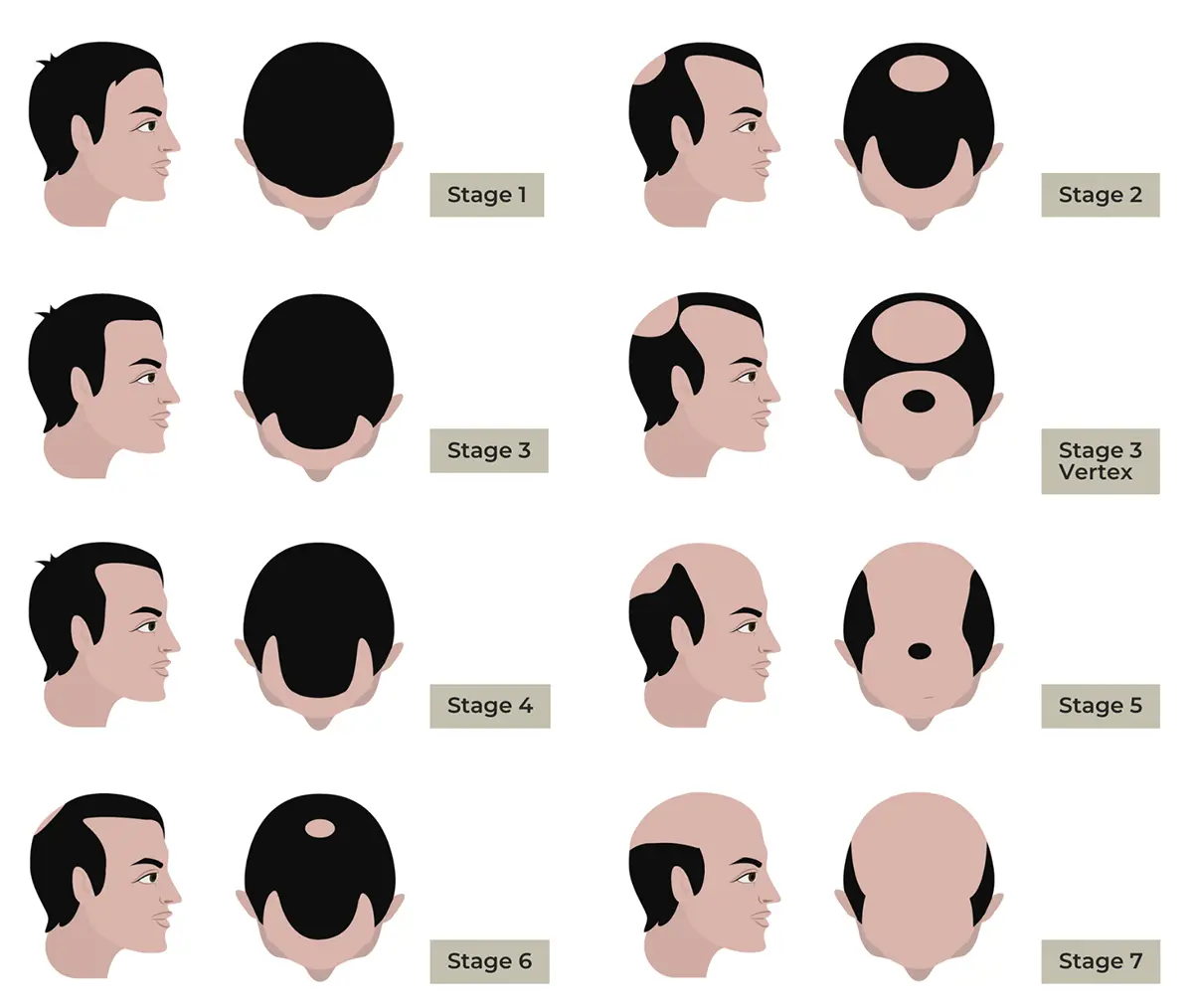
The Norwood scale is commonly used to better understand how men experience hair loss, particularly male pattern baldness, also known as androgenetic alopecia.
This scale helps people identify their hair loss stage and look into possible treatments. These treatments may include medications or hair restoration options.
Stage 1: No noticeable hair loss; hairline is intact.
Stage 2: Early hairline recession, forming an "M" shape at the temples.
Stage 3: Significant baldness starts; deeper recession at the temples and some thinning on the crown.
Stage 4: More pronounced hairline recession and noticeable thinning or baldness on the crown.
Stage 5: Expanding areas of hair loss at the temples and crown, creating a horseshoe shape.
Stage 6: No hair connects the front and crown bald areas, leaving a ring of hair around the sides and back.
Stage 7: Only a thin band of hair remains around the sides and back, with extensive baldness on top.
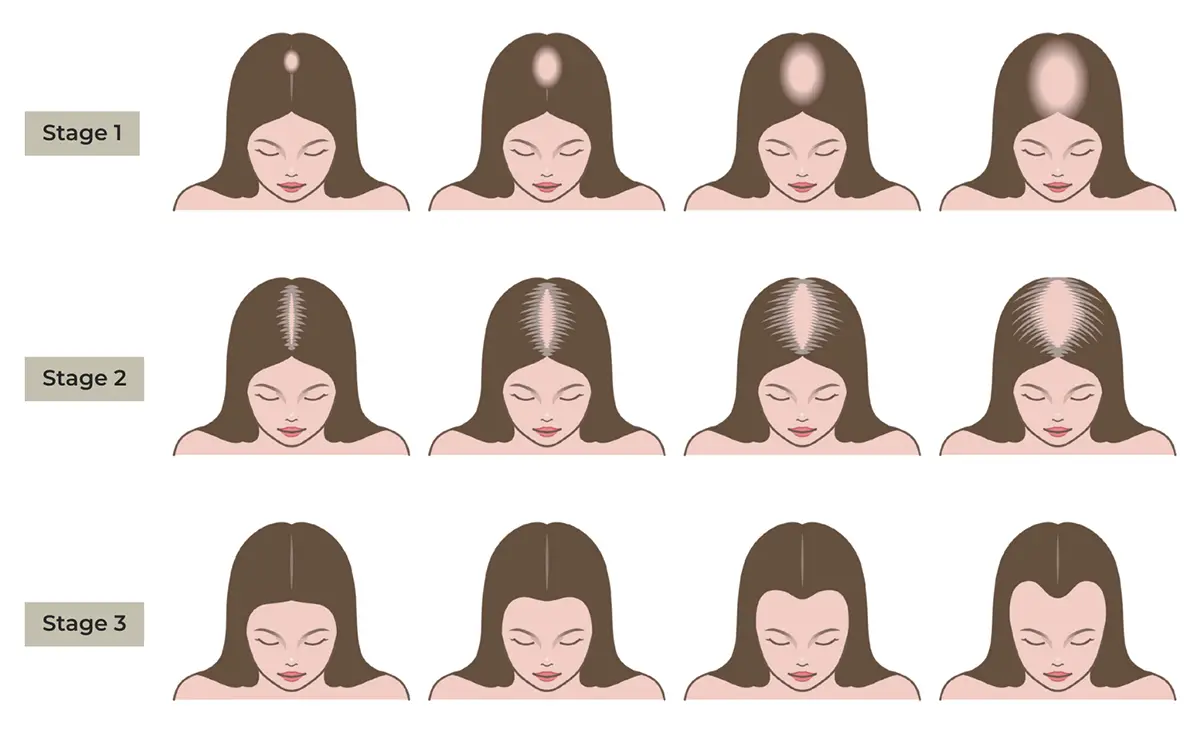
Stage 1 (Early Hair Thinning)
Stage 2 (Progressive Thinning)
Stage 3 (Advanced Hair Loss)
Hair loss affects both men and women, while genetics plays a role, thinning often stems from:
Traditional topical applications and methods can’t reach these underlying issues. Follicle Renewal targets them at their source.
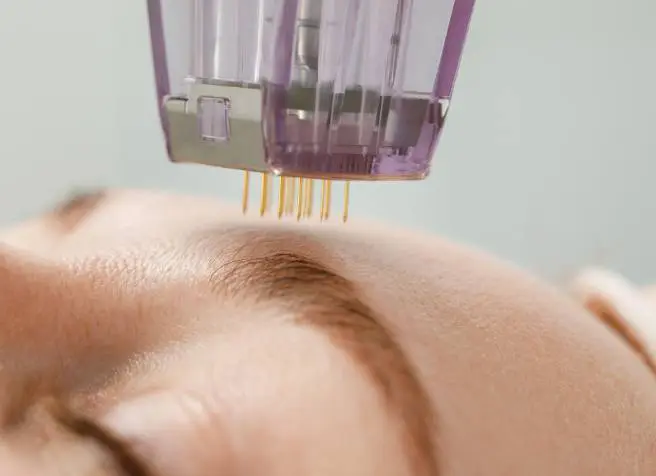
Ultra-fine needles make tiny punctures on the scalp; enhancing blood flow to the targeted area and creating temporary micro-channels, preparing the pathways for exosome delivery.
RF energy is delivered through the needles, heating the dermis (deeper skin layer) and stimulates collagen rebuilding.
This stimulating action also helps to reactivate dormant hair follicles, further strengthening the existing hair and encourage new hair growth.

Specially prepared exosomes are applied onto the scalp post-RF Microneedling.
Exosomes will penetrate deep into the scalp via the micro-channels to:
Micro-channels enable a much deeper exosome penetration while RF heat amplifies their regenerative messaging.
Together, they:
Targets dormancy through bio-stimulation and encourages new hair growth
Reduces inflammation, improves nutrient delivery
Collagen renewal for stronger follicle anchoring
Non-surgical, lunchtime-friendly sessions
✓ Early-stage androgenetic alopecia
✓ Age-related hair density loss
✓ Stress- or hormone-triggered shedding
✓ Postpartum or menopause-related thinning
✓ Fine, fragile hair that lacks volume
✓ Scalp sensitivity or dryness
✓ Diffuse thinning (Wider part lines, reduced ponytail volume)
Personal Evaluation
During consultation, Dr Ivan Puah will assess your hair condition. He will also review your medical history, lifestyle, and any family history of hair loss.
Dr Puah will share how hair regrowth works and the typical timelines for the regrowth period, including the initial shedding phase that many patients experience, as well as post-treatment care for optimal results.
Not required
Slight redness
> 1 hour
Very minimal
Once a month
Scalp Analysis
RF Microneedling (Gentle pressure sensation)
Exosome Application (Cool, soothing serum)
No numbing cream required
Mild warmth during RF phase (Well-tolerated)
Pressure-sensitive depth adjustment
Temporary pinkness (Resolves within 24 to 48 hours)
No downtime; resume activities immediately
While this advanced treatment is low-risk and well-tolerated, temporary reactions may include mild redness or swelling on the treated area that typically resolves in 24 to 48 hours.
You may experience temporary shedding of weaker hairs as new, stronger growth begins.
Reduced shedding
Fuller hair texture
Improved density, new baby hairs
At Amaris B. Clinic, Dr. Ivan Puah personally performs all Follicle Renewal Hair Therapy sessions. As RF microneedling is a HSA-registered medical device, this treatment can only be administered by experienced doctors under strict clinical protocols.
Is Follicle Renewal Hair Therapy painful?
The discomfort is manageable.
Can I use Follicle Renewal Hair Therapy for better beard volume?
It depends on each individual.
Hair Transplant or Follicle Renewal Hair Therapy: What is the difference?
Follicle Renewal Hair Therapy is a non-surgical treatment to target and support early thinning, while hair transplant is a surgical procedure involving transplanting your own healthy follicles to thinning areas like the hairline or crown for hair growth.
Who should avoid Follicle Renewal Hair Therapy for hair loss?
This procedure may not be suitable for everyone. We typically advise against it if you have:
✓ Active scalp infections or skin conditions.
✓ Certain scarring hair loss conditions (like lichen planopilaris), where results may be limited.
✓ Bleeding disorders or if you take blood-thinning medications (e.g., warfarin, aspirin), due to increased risk of bleeding or bruising.
Your safety and results are our priority. Always discuss your full medical history with Dr Ivan Puah during your consultation for personalised guidance.
How should I prepare for Follicle Renewal Hair Therapy?
For a safe, effective session:
✓ Pause blood thinners/supplements 1 week prior (consult your doctor first).
✓ Avoid alcohol 24 hours before treatment.
✓ Gently cleanse your hair/scalp the day of your appointment.
Our medical team will provide personalised preparation steps during your consultation to ensure optimal results.
What aftercare follows Follicle Renewal Hair Therapy?
It is essential to:
→ Skip hair washing for 24 hours post-treatment.
→ Avoid heat styling/harsh products for 1 week.
→ Shield scalp from sun exposure for 72 hours.
→ Follow your the medical team’s personalised instructions closely.
Reference
[1] https://www.statista.com/statistics/1099370/singapore-leading-hair-concerns-among-women/
[2] Asfour L, Cranwell W, Sinclair R. Male Androgenetic Alopecia. [Updated 2023 Jan 25]. In: Feingold KR, Ahmed SF, Anawalt B, et al., editors. Endotext [Internet]. South Dartmouth (MA): MDText.com, Inc.; 2000-. Available from: https://www.ncbi.nlm.nih.gov/books/NBK278957/
[3] Tang PH, Chia HP, Cheong LL, Koh D. A community study of male androgenetic alopecia in Bishan. Singapore. Singapore Med. J. 2000;41(5):202–205. [PubMed]
[4] https://www.uclahealth.org/news/article/what-causes-female-hair-loss
[5] Rinaldi F, Trink A, Mondadori G, Giuliani G, Pinto D. The Menopausal Transition: Is the Hair Follicle "Going through Menopause"? Biomedicines. 2023 Nov 14;11(11):3041. doi: 10.3390/biomedicines11113041. PMID: 38002043; PMCID: PMC10669803.
[6] https://www.healthhub.sg/a-z/diseases-and-conditions/hair-loss
[7] Nirmal B, Mubeena SS, Antonisamy B. Efficacy and safety of microneedling radiofrequency in patterned hair loss. J Cutan Aesthet Surg. 2024 Jul-Sep;17(3):189-193. doi: 10.25259/jcas_44_23. Epub 2024 Aug 29. PMID: 39483654; PMCID: PMC11497534.
[8] Nirmal B, Mubeena SS, Antonisamy B. Efficacy and safety of microneedling radiofrequency in patterned hair loss. J Cutan Aesthet Surg. 2024 Jul-Sep;17(3):189-193. doi: 10.25259/jcas_44_23. Epub 2024 Aug 29. PMID: 39483654; PMCID: PMC11497534.
[9] Pei, D., Zeng, L., Huang, X., Wang, B., Liu, L., & Zhang, G. (2024). Efficacy and safety of combined microneedling therapy for androgenic alopeciA systematic review and meta‐analysis of randomized clinical trials. Journal of Cosmetic Dermatology, 23(5), 1560-1572.
[10] English Jr, R. S., Ruiz, S., & DoAmaral, P. (2022). Microneedling and its use in hair loss disorders: a systematic review. Dermatology and therapy, 12(1), 41-60.

Dr Ivan Puah's novel 360° Glandular Tissue Dissection (360°GTD®) technique minimises surgical invasiveness while achieving cosmetic results.


Dr Ivan Puah's novel 360° Glandular Tissue Dissection (360°GTD®) technique minimises surgical invasiveness while achieving cosmetic results.

Dr Ivan Puah's novel 360° Glandular Tissue Dissection (360°GTD®) technique minimises surgical invasiveness while achieving cosmetic results.