Post-care tips and guide after your first Picolaser Tattoo Removal session
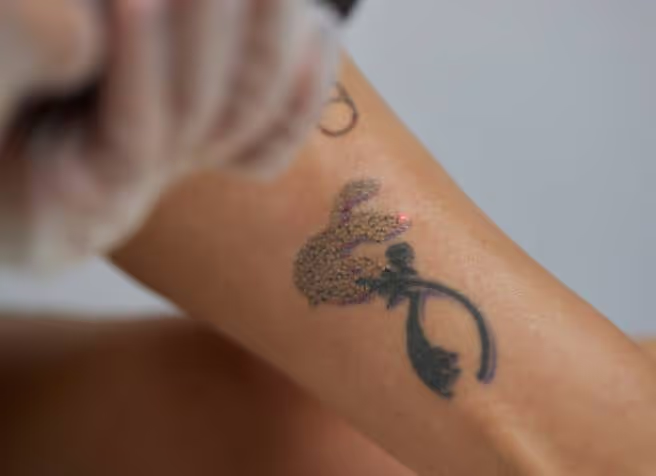
Improvements can occur after the 1st laser tattoo removal session so take care of the area between treatments. Aftercare is essential to minimise complications.
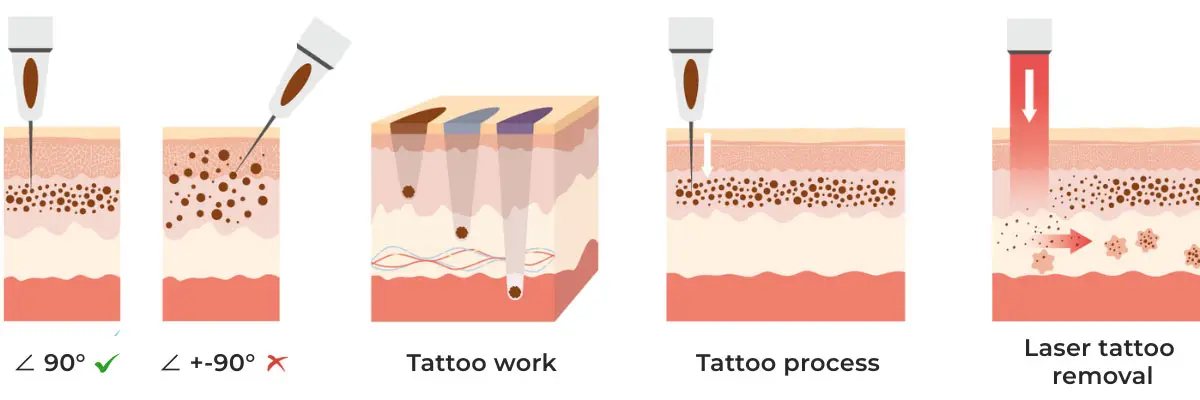
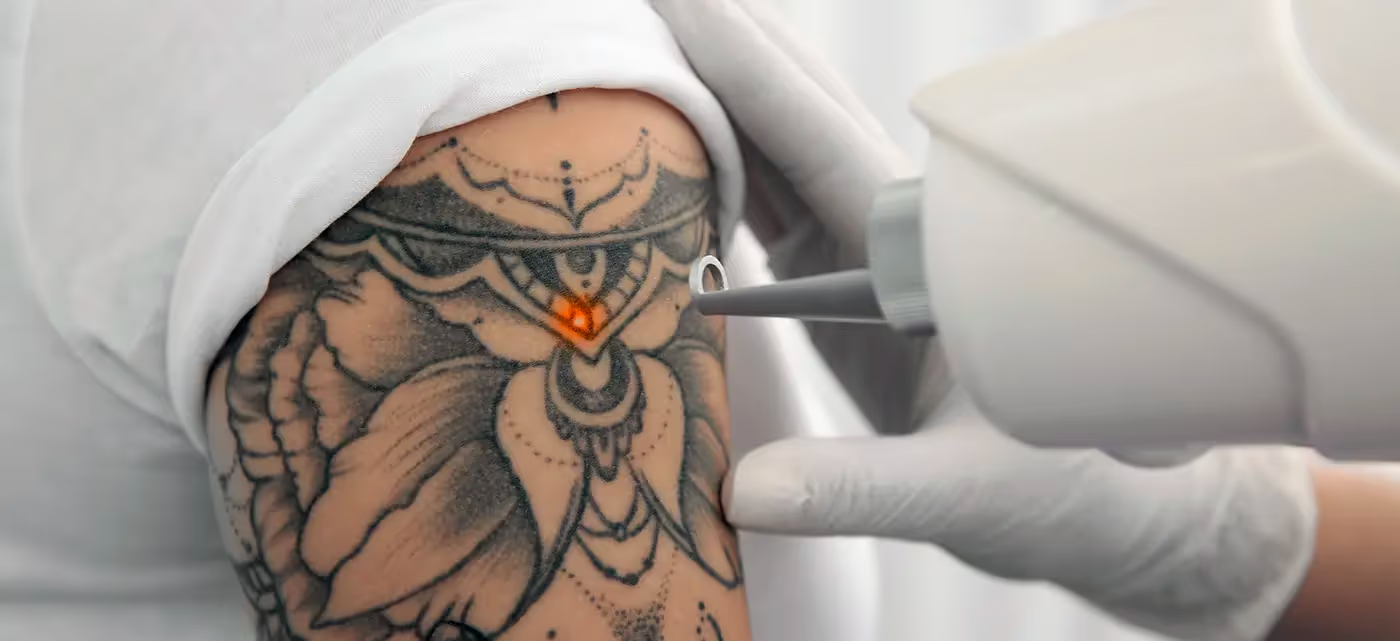
Picolaser Tattoo Removal is an advanced laser technology that delivers extremely short pulses of energy (pulse duration is less than one nanosecond) to break up tattoo pigments.

The ultrashort pulses and the wavelengths work simultaneously to disintegrate the ink particles while reducing the heat delivered to the skin.
The laser energy penetrates deep into the targeted skin area without causing damage to the skin surface. This also translates to a faster recovery for the patient.
Tattoos will fade over several sessions as the ink breaks up and disperses. Your body will naturally and safely get rid of these ink particles through the immune system.
The key difference between these two lasers is their pulse duration. The Q-Switched Nd:YAG Laser uses nanoseconds for its pulses, while the Picosecond Laser employs picoseconds.
The shorter pulse duration of the Picosecond Laser allows it to provide quicker and safer treatments.
This makes it very effective for tackling stubborn tattoos, while also reducing the chances of scarring and other side effects.
Another advantage of the Picosecond Laser is its compatibility with a wider range of skin types and colours.
It is less likely to cause skin discolouration compared to older laser technologies.
Laser tattoo removal treatment is widely available today, and with it, a tattoo that has overstayed its welcome doesn't have to be a permanent regret of a lifetime anymore.
Location of tattoo
The patient’s age
Ink quality & colours used
Tattoo technique used
The skin over the ribs is thin, with little fat to cushion against the laser sensation.
The spine has minimal fat coverage, and the nerves are close to the skin surface.
The head is a sensitive area with a lot of nerve endings.
The concentration of nerve endings in the armpit can increase the pain experienced during laser treatments.
Areas such as the palms of the hands and the soles of the feet are highly sensitive due to the high density of nerve endings.
These joints have thin skin over bony areas, which can amplify the sensation of pain during session.
The skin on the thighs and buttocks is thicker with more fat padding, which can help absorb some of the discomfort.
The side of the upper arms have a lower pain level associated with laser removal due to the thicker skin and fat layers.
The skin on the calves is thick and can take laser treatment with less discomfort compared to other regions.
The shoulders have a good amount of muscle and fat, which can provide a buffer against the pain of the laser.
While sensitivity can vary, the lower abdomen is less painful than areas with less fat and more nerve endings.
Avoid excessive sun exposure one week prior to the treatment, if possible. Anaesthetic cream will be applied on the targeted area.
During the treatment, you may experience a “snapping” like sensation and the intensity varies depending on the location and size of the tattoo. It is important to inform the medical team and our doctor if you are experiencing any skin allergies, open wound or infection or if you are feeling unwell on the day of treatment.
If needed, the treatment will be postponed to ensure that you are fit to undergo tattoo removal.
Aftercare is essential in minimising the possibilities of issues.

Ensure that the skin is treated dry and clean.
Use a soft towel to pat the area after cleaning.
Antibiotic ointment should be applied as directed.
Keep the area bandage during the first 72 hours.
Follow your doctor's advice.

No tub or water activities for the first three days post-removal.
In the shower, try not to use highly pressurised water to prevent it from hitting the treated area.
Opt for a tepid shower.

Minimising sun exposure on skin is also a must.
Try not to head outdoors too much.
If you must, protect your skin, especially the treated area.
Avoid other sources of UV rays like tanning beds as well.

Go for walks as this simple activity helps to, among other things, boost your immune system.
An improved blood circulation increases blood flow to the treated area can facilitate better recovery.
In Singapore, the Ministry of Health (MOH) and the Health Sciences Authority (HSA) set strict safety rules for medical devices, including pico lasers, to protect patients and ensure good cosmetic treatment results.
Clinics must follow strict safety and cleanliness standards.
Doctors must have specific training for pico laser treatments and keep updated on new technologies.
Only pico laser machines that are approved by the HSA can be used. The HSA ensures the safety and effectiveness of these devices.
Distributors must be registered and comply with guidelines.
Clinics must evaluate a patient's suitability for pico laser therapy by reviewing medical history and skin concerns.
Patients must receive clear information about the procedure, including risks and benefits, and provide informed consent before treatment.
Regular maintenance and calibration of pico lasers are essential, with records kept.
Clinics should have plans to manage any adverse reactions during or after treatment, including trained staff and necessary equipment.
Transparent Communication
The consultation should be thorough, clear and well communicated. It should never be rushed and should not leave you with questions unanswered. Throughout a patient's liposuction journey, open and honest communication is essential.Doctors should be able to listen and communicate effectively. They should be able to comprehend their patients' requirements, assuage their fears and anxieties, and confidently answer any questions they may have. Trust is essential, and it must be earned.
Team
Pay attention to factors such as the doctor's medical support staff's experience. When did they start aiding the doctor with the procedure? Are they able to provide you with timely advice? When it comes to addressing your queries, are they professional, confident, and knowledgeable?Is it possible for them to allay your fears and anxieties about the treatment and make you feel at ease in their care?
The Doctor's Experience
An experienced doctor who has performed multiple liposuction operations is capable of addressing a patient's demands and anticipating the results. Research thoroughly about the doctors you have shortlisted.Consistent outcomes are often a strong sign. Inquire about before and after images and the number of liposuction treatments they perform monthly.
Surgical Difficulty
A doctor should ideally have an excellent eye for aesthetics to visualise the desired results and then materialise them using his expertise. Each body area is unique and needs a distinct approach.
This is a problem that a highly seasoned doctor can take on with confidence and reasonable ease.
Patient-centred Care
Attention to patient care is a vital need for any medical professional. After all, the patient's safety, comfort, and wellbeing are paramount. This rule applies to the whole medical team as well as the facilities. It's also essential to consider postoperative care and its level of service.
In Singapore, only registered and certified medical doctors with adequate training can perform the treatment.
What tattoo colours can a Picolaser Tattoo Removal remove from the skin?
Generally, most of the colours can be treated. The difference is in the number of sessions that may be needed.
Different colour tattoos absorb laser light differently and will require lasers of different spectrums to treat effectively.
How many sessions will I need?
The number of sessions required will depend on many factors, such as your body’s ability to eliminate ink from the skin, ink colour, depth of the pigment, and type of ink the tattooist uses.In general, tattoo removal will require a minimum of 5 to 10 sessions over time.
During the consultation, our doctor will assess your tattoo and advise accordingly.
Can I get tattooed again after getting the laser?
It is your personal decision if you would like to get tattooed again.
However, if you are considering a new tattoo in the same area, it is advisable to wait for at least 6 months so that your skin can heal properly.
How much does Picolaser Tattoo Removal cost?
To determine whether Picolaser Tattoo Removal is right for you, the required sessions, and how much the process will cost, please contact us at 65364211.
Does Picolaser Tattoo Removal hurt?
Tattoo removal does cause some level of discomfort and is often compared to the sensation of snapping a rubber band against the skin.
We provide topical anaesthetic for our patients before the session starts.
Are old tattoos easier to remove?
As older tattoos are most likely already experiencing the effects of fading, they are usually easier to remove and require fewer sessions.
What is the hardest colour tattoo to remove?
These would be yellow, purple, turquoise and fluorescent dyes, while dark and green are the easiest to remove. This is because different dyes respond to different light wavelengths.
Does Picolaser Tattoo Removal leave scars?
Although it is uncommon, it is still possible. Hence, a doctor's experience is critical to avoid complications and unwanted side effects.
Can you remove a tattoo yourself?
It is highly not recommended to do DIY tattoo removal and should be carried out by medical doctors who are trained in performing laser tattoo removal treatments.
Does tattoo removal cream work?
Tattoo removal creams usually consist of glycolic acid or trichloroacetic acid that work by removing the top skin layers and lightening the skin.
The side effect of glycolic acid includes swelling, burning and abnormal redness of the skin, while trichloroacetic acid can cause severe irritation to the skin, nose and throat, including shortness of breath.
Although trichloroacetic acid, a powerful corrosive chemical, is FDA-approved for medical professionals' usage, it is not regulated to be used in tattoo removal creams.
Using them without supervision is highly risky as different skin's tolerance levels vary.
Can a tattoo be totally removed?
The honest answer is Yes and No. The complete removal of a tattoo depends on your tattoo's colour, size, and location.
Colours like vibrant green and yellow are stubborn, whereas red and black are easier to remove.
Other factors that can affect complete tattoo removal include:
• The way a tattoo is created (by an amateur or professional)
• The patient's age
• The technique that was used to create the tattoo
How long is the treatment per session?
A session may take between 10 to 45 minutes, depending on the tattoo's size and other factors.
The topical cream will be applied to the area to be treated about 30 to 60 minutes before the treatment commences.
How soon can I repeat the session?
Spacing out each treatment with a gap of 4 to 6 weeks in between is usually advised.
This allows the body to recover and, more importantly, to metabolise and remove the pigments.
Are there any side effects?
While there are no worrying side effects to note, some (rare) documented ones include hyperpigmentation, blistering, keloid formation and infection.
Is there any downtime for the procedure?
There is minimal downtime, and patients can resume their normal daily activities after the procedure. The doctor will be able to better advise you on this.

Dr Ivan Puah's novel 360° Glandular Tissue Dissection (360°GTD®) technique minimises surgical invasiveness while achieving cosmetic results.

Dr Ivan Puah's novel 360° Glandular Tissue Dissection (360°GTD®) technique minimises surgical invasiveness while achieving cosmetic results.

Dr Ivan Puah's novel 360° Glandular Tissue Dissection (360°GTD®) technique minimises surgical invasiveness while achieving cosmetic results.