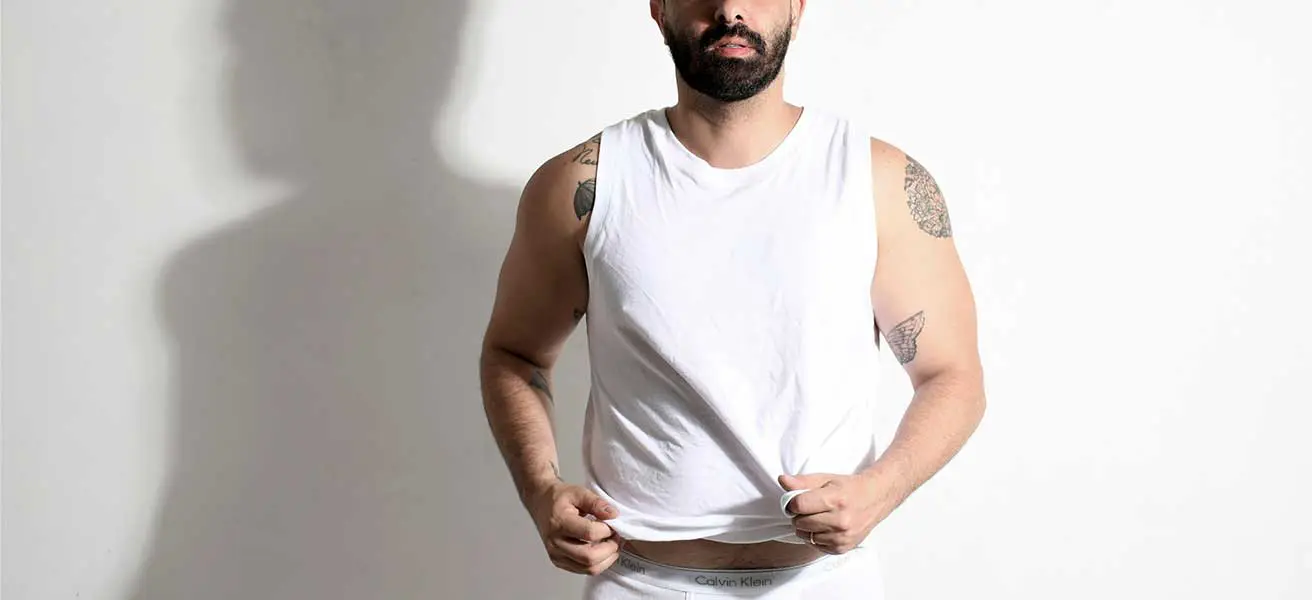
Men's Chest Contouring & Sculpting: Targeting Chest Fat & Enlarged Glandular Tissue
Discover effective chest contouring and sculpting solutions for men to reduce chest fat and enlarged glands to achieve a more defined, masculine chest.
Coming to terms with needing a second surgery can be tough. You invested in a procedure hoping for a certain outcome, and it didn't work out as planned. That’s a frustrating and deeply personal experience.
At Amaris B. Clinic, our forte lies in body sculpting and corrective surgery for liposuction and gynecomastia cases, whether due to the body’s natural healing, passage of time, or a previous surgeon’s approach.
We understand secondary revision isn’t the journey you anticipated. That’s why we prioritise clear communication at every step and help to revise and refine previous work so you can finally feel confident in your results.
The Unpredictable Nature of Surgery
Surgery involves live tissue — and every body heals differently. Some patients may have more visible scarring; others may find results change over time.
When Results Fall Short
Unfortunately, not all surgeons possess the same skill or artistic eye leading to disappointing results.
Handling Unexpected Complications
Sometimes, despite all best efforts, unexpected issues like healing variations or infections can affect your results. If this happens, revision surgery may be an option.
Patients who experience unsatisfactory results from procedures such as liposuction or gynecomastia surgery often report:
In such cases, corrective surgery may be considered not only to improve physical outcomes but also to support emotional recovery and overall well-being.
Liposuction is a body contouring procedure to remove stubborn fat. It can remove unwanted body fat that is resistant to dieting and exercise or correct disproportionate body shape. While the concept may sound straightforward, the technique, safety measures, and artistic approach behind it make all the difference in your results and experience.
We often meet patients who are disappointed with liposuction results from elsewhere. One common reason is uneven fat removal whereby too little fat was taken out, leaving behind stubborn areas that disrupt a smooth contour.
Conversely, too much fat removal can lead to dents, hollows, or an unbalanced appearance, the result of a one-size-fits-all technique, outdated technique, a lack of individualised planning, or insufficient experience in liposuction.
We can’t stress enough how important surgical approach and the doctor’s experiences are. Body contouring with liposuction requires the performing doctor to have a thorough understanding of anatomy, an eye for proportion, and using appropriate surgical techniques that respect fat tissue and skin. Without these, the outcome can potentially look “artificial” or feel irregular to the touch.
Other reasons for unsatisfactory lipo results include scar tissue formation, excess loose skin and significant weight gain or weight loss post lipo.
Finally, communication between the lipo doctor and patient before the procedure is vital. When there isn’t a clear and shared understanding of goals from the beginning, the final contour may not reflect your desires.
At Amaris B. Clinic, we prioritise a detailed consultation to discuss your body goal, explain what can be achieved, and apply a measured approach aimed at delivering balanced and lasting outcomes for your liposuction revision surgery.
While your body needs time to heal fully post liposuction, some signs can indicate a less-than-ideal outcome.
Here’s what to look for:
The treated area feels or looks uneven, bumpy, or rippled, often due to uneven fat removal.
Small indentations that resemble cellulite, usually caused by fat being removed too close to the skin.
One side of your body looks noticeably different from the other.
Noticeable, indented, or raised scars at the cannula entry sites, or even visible "track marks" under the skin from the instrument's path.
You still see stubborn bulges or a lack of contour in the areas you wanted treated.
The results look unnatural for your body's frame, such as sharp, angular transitions instead of soft, natural curves.
A hollowed, gaunt, or overly aggressive look.
Unusual or permanent changes in skin colour (like hyperpigmentation) that last well beyond the normal bruising phase.
Dr Ivan Puah’s approach is careful and built on his proprietary MDC-Sculpt® Lipo Technique, a multi-plane methodology designed to address the nuances of corrective lipo:
In cases where the patient had overcorrection during the initial procedure — leading to hollows, dents, or an unbalanced silhouette, Dr Ivan Puah may suggest fat grafting, and the procedure typically involves:
Good candidates for revision liposuction typically include those who:
During your consultation, Dr Ivan Puah will take time to listen to your history, concerns, and goals. Being open about your previous experience helps us create a treatment plan that’s both safe and tailored to you.
We believe in honesty and clarity from the start. While revision surgery can improve your results, it’s important to understand that every person’s body responds differently. Factors like existing scar tissue, skin quality, or past surgical techniques can influence the outcome.
We will walk you through what is and isn’t possible in your situation, so you can make a fully informed decision.
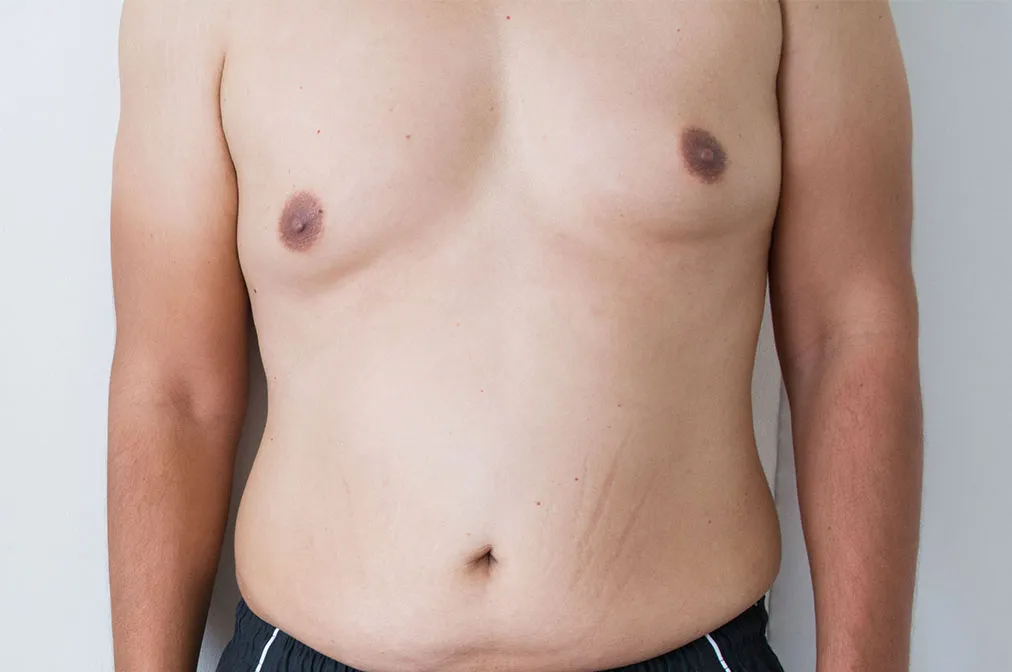
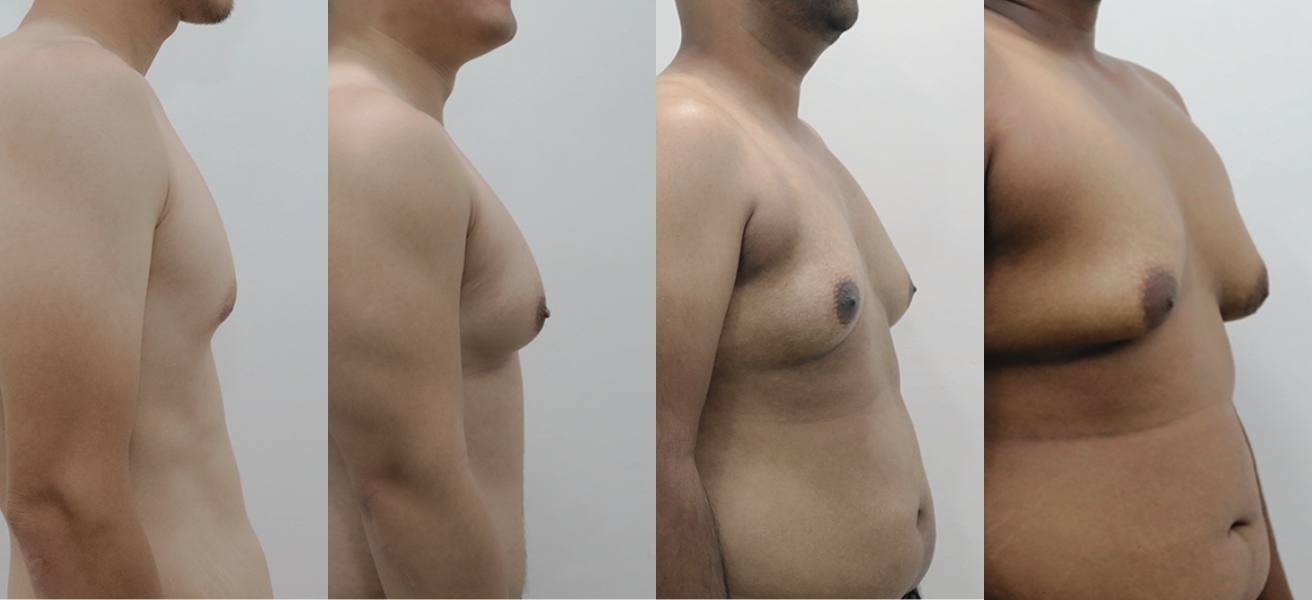
Gynecomastia is a common benign medical condition (male breast disorder), where men develop enlarged breast tissue that causes both physical and emotional discomfort. It is very common across all ages, with 2 in 3 men experiencing it at some point in their lives.
Some clinical studies reported fewer than 5%[3] of gynecomastia patients require revision surgery.
However, based on more than 20 years of body sculpting and chest contouring experience, Dr Ivan Puah has observed a quietly increasing number of patients — both locally and from abroad — seeking corrective surgery after undergoing procedures elsewhere.
This suggests that the need for revision may be more common than widely reported figures indicate.
Unsatisfactory results often stem from a combination of technical, artistic, or communication-related factors.
Here’s what you should know:
Gyno doctors unfamiliar with the nuances of male chest anatomy may remove too much or too little tissue.
These can lead to indentations, asymmetry, or even residual glandular tissue.
Each patient's chest is unique.
Failure to account for skin elasticity, underlying muscle structure, or fat distribution can result in a chest that looks artificial or unbalanced.
Non-invasive treatments like fat freezing are sometimes misused in place of surgery.
These can potentially lead to complication such as Paradoxical Adipose Hyperplasia (PAH), where treated areas become harder and more prominent.
Gynecomastia surgery is as much an art as it is a science.
Without a refined aesthetic sense, the gyno doctor may fail to create a natural, masculine chest contour that harmonises with the rest of the body.
Promising unrealistic results or not properly educating the patient on achievable outcomes can lead to dissatisfaction — even if the surgery itself is technically successful.
Using overly aggressive techniques increases the risk of complications such as irregular contours, excessive scarring, or prolonged recovery.
Using incorrectly sized instruments or creating poorly placed incisions. can lead to visible scars and indentations.
While your body needs time to heal fully post-gynecomastia surgery, some signs can indicate a less-than-ideal outcome. Here’s what to look for:
Incomplete glandular breast tissue removal, that leads to persistent fullness.
Crater Deformity, an indented appearance by over-aggressive tissue removal beneath the nipple.
Asymmetry or sunken chest due to aggressive and over-resection.
Only remove fat without addressing the underlying glandular tissue.
Some patients find that their initial surgery did not fully address their concerns or, in some cases, created new ones. This is where revision gynecomastia surgery may be considered.
Revision gynecomastia surgery is not a routine procedure. It demands a doctor who is not only experienced in male breast reduction and chest shaping but also trained in addressing complications from prior surgeries.
Dr Ivan Puah has received dedicated gynecomastia surgery training in San Francisco and liposuction training in Italy, Colorado and Argentina. He has developed a practice focused on body contouring and chest sculpting, with special interest in dealing with liposuction and gynecomastia revisions.
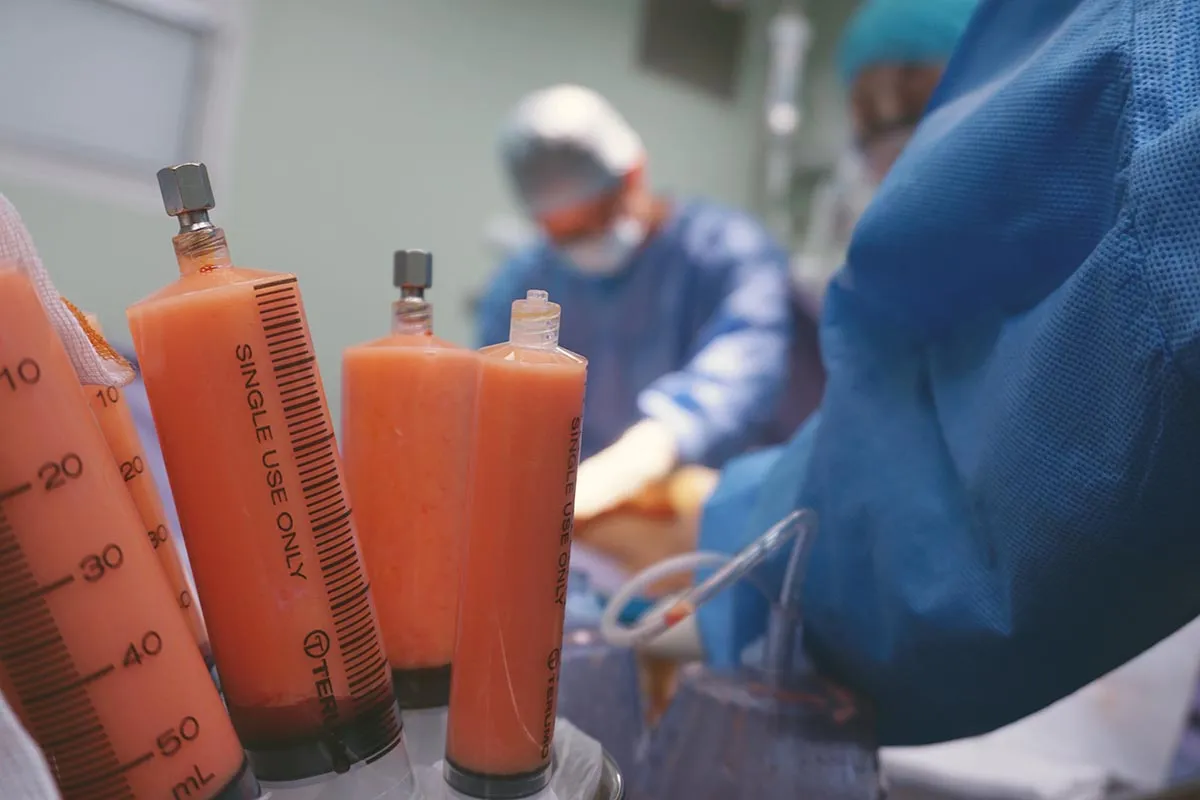
Gynecomastia revision surgery often requires both careful excision of residual tissue and removal of fat. Depending on the individual’s case, strategic fat transfer (fat grafting) to restore volume in over-treated areas may be carried out to ensure a smooth and masculine appearance.
Dr Ivan Puah offers a dedicated method for revision cases, combining two proprietary techniques: the 360° GTD® technique for targeted glandular tissue removal and MDC-Sculpt® Lipo Technique for harmonised chest contouring (where excess fat is involved).

Every surgery is designed around your specific chest anatomy and concerns and it is not a standard template or cookie-cutter method.
Emphasis is placed on creating a chest shape that appears natural and proportionate.
Your well-being is the main priority. We never take shortcuts that could affect results or safety.
We address both physical and visual aspects — from scar tissue and deficits to overall contour and symmetry.
Ideal candidates for revision liposuction typically include those who:
At Amaris B. Clinic, we prioritise open communication and a shared understanding of what can be achieved.

Corrective surgery can deliver meaningful improvements, but it’s important to know that each person’s body heals and responds in its own way. Factors such as previous surgical techniques, the condition of your skin, and how your body forms scar tissue all play a role in your final result.
Our doctor will take the time to carefully explain what revision surgery can and sometimes can’t accomplish in your unique situation. Our goal is to provide you with all the information you need to feel certain about your choices.
The decision to undergo body procedures such as liposuction and gynecomastia is significant, and where you choose to have it performed can greatly impact your results.
While many are drawn to having procedures done overseas due to perceived cost savings or combining surgery with travel, it’s important to be aware of the potential challenges. Similarly, locally-based patients can also experience poor outcomes, often due to inexperience, aggressive cost-cutting, or technically inadequate surgery.
Difficulty verifying the clinic’s reputation or the surgeon’s credentials due to limited transparent information.
Varying standards of clinical care and regulation thus increasing the risks of inconsistent care.
Without proper post-op support, complications can go unrecognised and untreated.
Language barriers affect communication about your goals and recovery instructions.
Beauty standards can vary, sometimes leading to results that don’t align with your expectations.

It is essential to select a doctor who frequently performs liposuction and is MOH- accredited in Singapore to provide this service.

An experienced lipo or gyno doctor will not hesitate to show you the wide range of cases he has done.
Reviewing a surgeon’s before-and-after photos can provide insight into their typical results and skill level.

Choosing a provider based primarily on cost can sometimes lead to incomplete fat removal, poor contouring, or other issues that require costly revision surgery later.

Inexperienced practitioners or those using outdated techniques are more likely to deliver poor outcomes.
Ensuring your doctor has a proven track record is vital for your safety and results.
Corrective Surgery is an elective surgery, therefore it is not covered under insurance or Medisave.
What affects the cost?
Your total surgical fees vary based on several factors such as:
We provide before-and-after photos privately during your one-on-one consultation with Dr Ivan Puah. You will be able to view anonymised images of actual patients who had undergone corrective surgery.
They allow you to:
Disclaimer: While these clinical visuals are shared in-clinic for your education, MOH strictly prohibits displaying before/after images in ANY public advertising (website, social media, brochures etc.). We fully comply to ensure ethical patient communication, no unrealistic outcome promises and protection of patient privacy. Visual examples are for educational reference only - individual results vary based on your unique condition.
Corrective surgery is NOT a routine procedure; it requires a body contouring doctor who is not only extremely experienced but also willing to take on the complexities of revision work.
In Singapore and across APAC, Dr Ivan Puah has built a practice focused on addressing complex liposuction revisions. With a particular interest and abilities in this delicate area, he is known for taking corrective lipo cases with a personalised surgical approach.
Corrective surgery requires a unique combination of advanced surgical skill, a discerning eye, and deep empathy. Dr Ivan Puah applies his proprietary techniques and artistic approach to correct, refine, and deliver results that align with your goals.
Patients seek Dr Ivan Puah’s care not because of promises of perfection, but because of his consistent dedication to achieving natural-looking, balanced results — especially in situations where earlier procedures have fallen short.

I had gynecomastia surgery done at another clinic, but I noticed unevenness, and the chest still looks puffy. What should I do?
Uneven chest contour with irregular dents, depressions on the chest and incomplete and uneven glandular tissue removal are signs of botched gynecomastia surgery. Other symptoms of poorly done gynecomastia surgery include inverted nipples, excessive and thick scarring, and over-suction of fat tissue that result in rippling and unevenness.
In such cases, Dr Ivan Puah will carefully assess your clinical condition and propose a suitable surgical approach to address your issues. An obvious asymmetrical chest with visible scarring can be corrected to give you a more masculine chest that you yearn for.
I have had liposuction, but I noticed unevenness. Why?
Unevenness could be due to the doctor’s poor planning or improper surgical technique. If you have had liposuction and are unhappy with its unevenness, please make an appointment with Dr Ivan Puah for a thorough assessment.
I had liposuction many years ago, and it seemed that the fat returned. Can I opt for another liposuction?
Yes, certainly. Some patients have had liposuction done with satisfactory results. However, they may have gained massive weight or cannot maintain their post-liposuction results due to ageing or certain medical conditions.
Secondary liposuction is an option to correct and improve the treated area.
Reference
[1] Innocenti, A., Melita, D. & Dreassi, E. Incidence of Complications for Different Approaches in Gynecomastia Correction: A Systematic Review of the Literature. Aesth Plast Surg 46, 1025–1041 (2022). https://doi.org/10.1007/s00266-022-02782-1
[2] Sollie M. Management of gynecomastia-changes in psychological aspects after surgery-a systematic review. Gland Surg. 2018 Aug;7(Suppl 1):S70-S76. doi: 10.21037/gs.2018.03.09. PMID: 30175067; PMCID: PMC6107601.
[3] Mett, T.R., Pfeiler, P.P., Luketina, R. et al. Surgical treatment of gynaecomastia: a standard of care in plastic surgery. Eur J Plast Surg 43, 389–398 (2020). https://doi.org/10.1007/s00238-019-01617-8

Dr Ivan Puah's novel 360° Glandular Tissue Dissection (360°GTD®) technique minimises surgical invasiveness while achieving cosmetic results.

Dr Ivan Puah's novel 360° Glandular Tissue Dissection (360°GTD®) technique minimises surgical invasiveness while achieving cosmetic results.

Dr Ivan Puah's novel 360° Glandular Tissue Dissection (360°GTD®) technique minimises surgical invasiveness while achieving cosmetic results.