



Facial fat grafting in Singapore starts at SGD 3,500. Prices vary based on doctor's experience, etc. Fat grafting provides a more natural appearance.
October 4, 2026


Public parking available or drop off along Arab Street, Village Hotel Bugis (Previously known as Golden Landmark Hotel)
Buses (2, 12, 32, 33, 130, 133, 133A, 520, 960, NR7) MRT (alight at Bugis MRT station)


Accessory breast tissue can mimic severe medical condition as it can clinically resemble cancer, sebaceous cyst, lipoma, etc This often leads to a misdiagnosis.
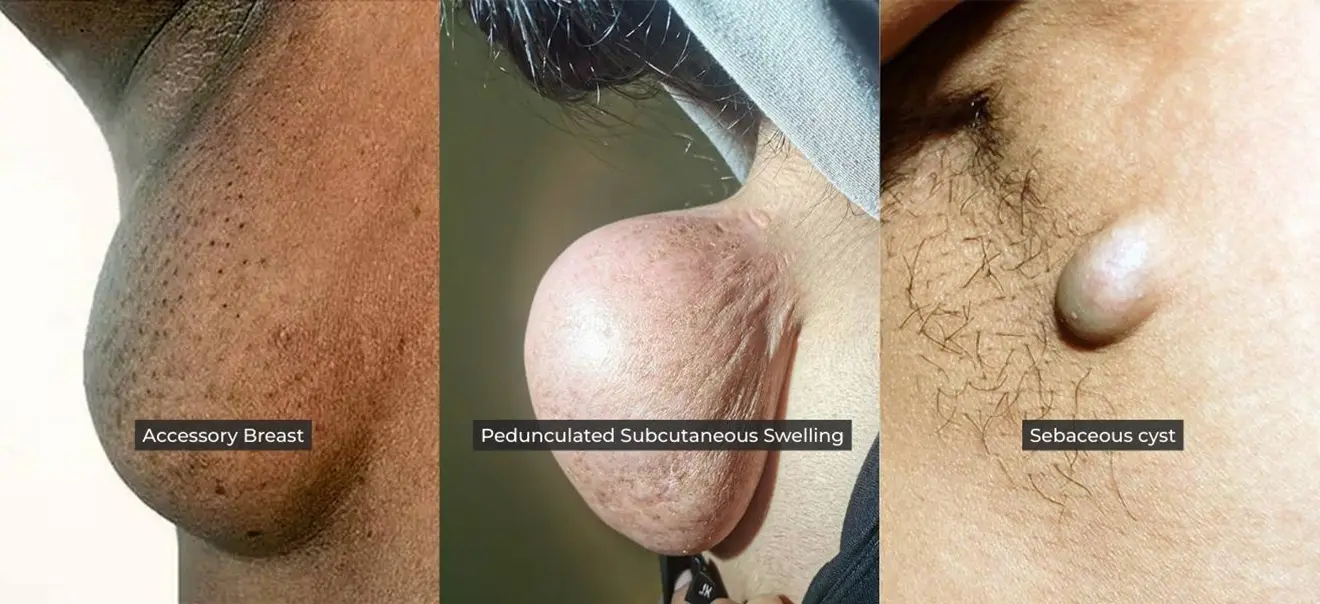
An accessory breast is defined by the growth of excess breast tissue that can develop in various areas of the body, most commonly in the axillary (armpit) region.
It may look like armpit fat, but is actually a recognised congenital medical condition that can enlarge, causing pain and swelling.
Accessory breasts can appear with or without a nipple, areola, or glandular tissue, or in various combinations.
Medically termed polymastia, axillary accessory breast tissue can mimic severe medical conditions because it can clinically resemble other medical conditions, and can also undergo similar physiological and pathological changes as both benign and malignant tumours.
It may also go through changes as normal breast tissue does, such as inflammation, fibrocystic changes, and in severe and rare cases, cancer. This often leads to a misdiagnosis.
So the next time you discover a lump in your armpit, there's no need to panic.
It may simply be accessory breast tissue, which is usually benign and can vary in shape and size.
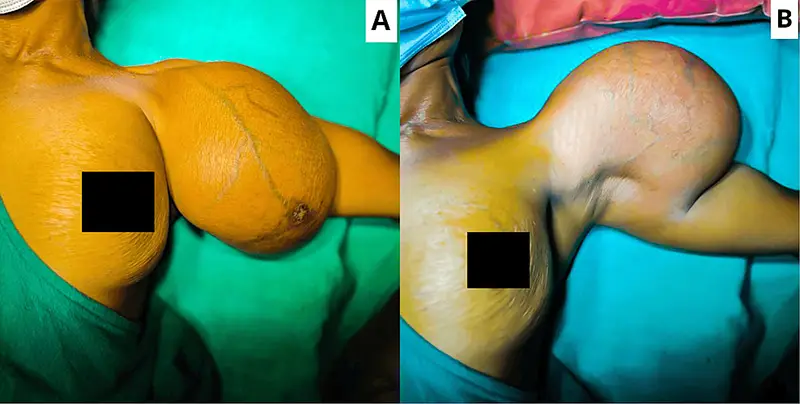
A case was published in the Cureus Medical Science Journal about a 40-year-old Asian woman who visited the general surgery outpatient department due to swelling in her left upper arm for eight years.
The swelling started small but gradually grew larger.
She had regular menstrual cycles. The patient does not experience any significant symptoms, such as cough or weight loss, only occasional mild stomach discomfort, for which she takes over-the-counter antacids.
She had not undergone surgery, nor was she abusing any substance.
During the examination, the patient showed mild paleness, but no other issues were noted, including normal heart and lung sounds.
The arm swelling measured 20 by 15 cm and had no skin changes, with prominent veins and a central scab resembling a nipple-areola complex.
Fine-needle aspiration suggested that the swelling is likely a lipomatous lesion [1].
Journal of Clinical and Diagnostic Research reported a case where a 37-year-old woman went to the doctor because she had noticed swelling in her right armpit for the past month and a half.
The swelling stayed the same size, did not hurt, and had no discharge. The doctor thought it might be swollen lymph nodes and sent her for a fine-needle aspiration.
During the examination, the doctor found a soft, movable nodule that measured 2 cm by 1.5 cm in the right armpit.
This nodule was separate from her breast and felt firm with normal skin over it. There were no other nodules in her other armpit or her breasts.
After the fine-needle aspiration and examining the samples, the doctors diagnosed it as a fibroadenoma in ectopic breast tissue in the armpit [2].
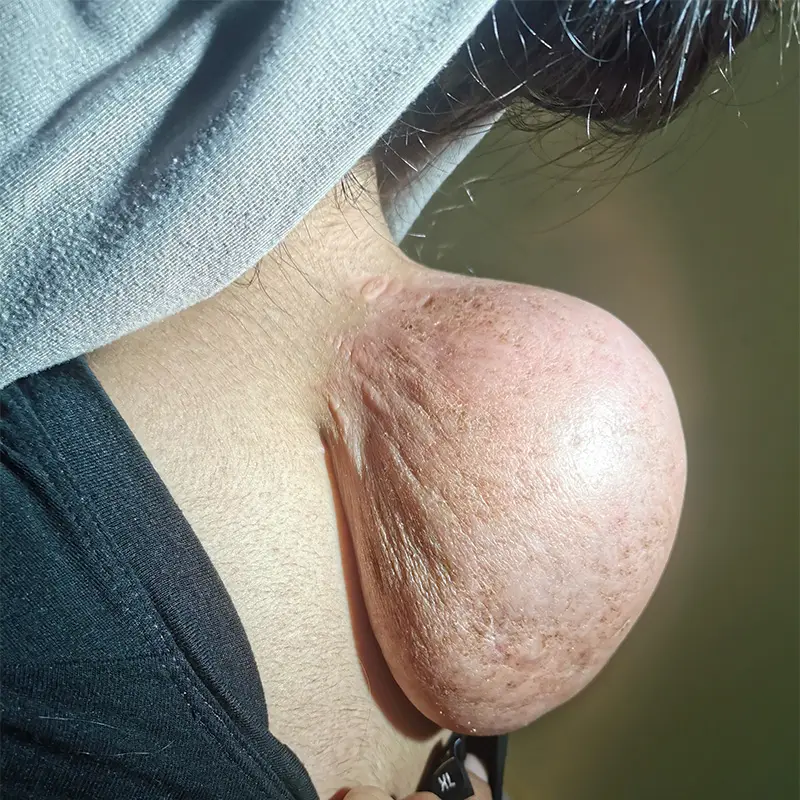
BMJ Case Reports reported a 32-year-old woman who presented with a significant right-sided accessory breast.
She was initially misdiagnosed with a pedunculated lipoma, a benign tumour composed of fatty tissue. However, histopathological examination revealed that the mass was not a lipoma but rather accessory breast tissue with lactational changes [3].
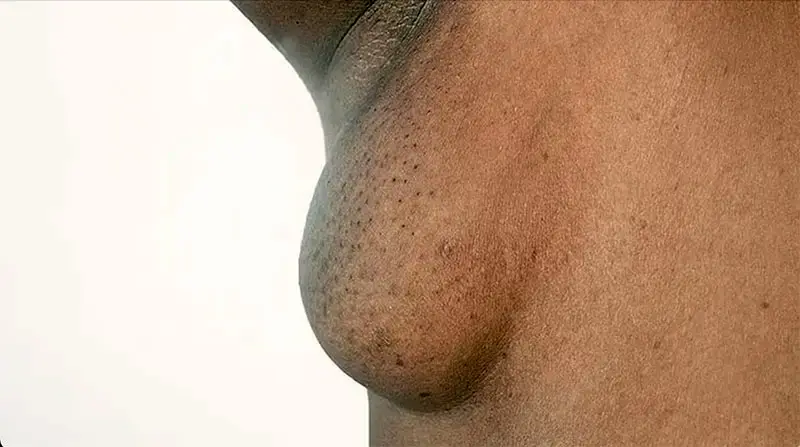
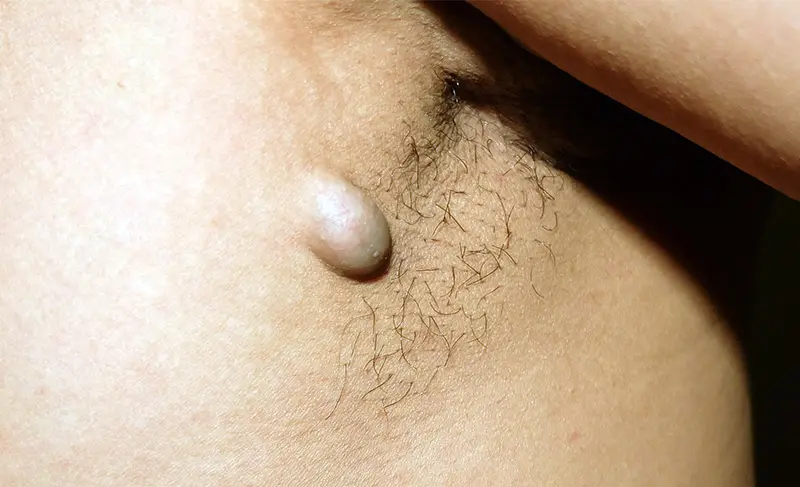
Accessory breast can sometimes be misinterpreted as breast cancer due to the presence of lumps or unusual growths that may occur in this tissue.
It can also resemble skin cysts or abscesses, leading to potential confusion in diagnosis.
It's essential for anyone noticing unusual lumps or changes in their breast tissue, whether in the usual breast tissue or in accessory breast tissue, to consult a healthcare professional for an accurate diagnosis.
Even though axillary accessory breasts can be mistaken for other medical conditions as listed above, the most common differential diagnosis for a lump in the axilla is still fatty deposits.
Regular examinations and imaging studies, such as ultrasound or mammography, can accurately identify breast abnormalities.
While it has been reported that accessory breast is an "extremely rare condition that develops in 0.4%-6% of females, ranging from 0.6% for Caucasians to 5% for Japanese females [1]," the occurrence of accessory breast tissue is not as uncommon.
Dr Ivan Puah has treated this condition with accessory breast removal surgery in many patients in Singapore, such as in a 40-year-old homemaker who had had them since puberty.


