Male Nipple Reduction is a well-defined chest accentuated by muscles is a physical trait that most men desire.
October 23, 2026


Public parking available or drop off along Arab Street, Village Hotel Bugis (Previously known as Golden Landmark Hotel)
Buses (2, 12, 32, 33, 130, 133, 133A, 520, 960, NR7) MRT (alight at Bugis MRT station)


Learn the 4 gynecomastia grades, what they look like, how to self-check your severity, and which treatment suits each stage.
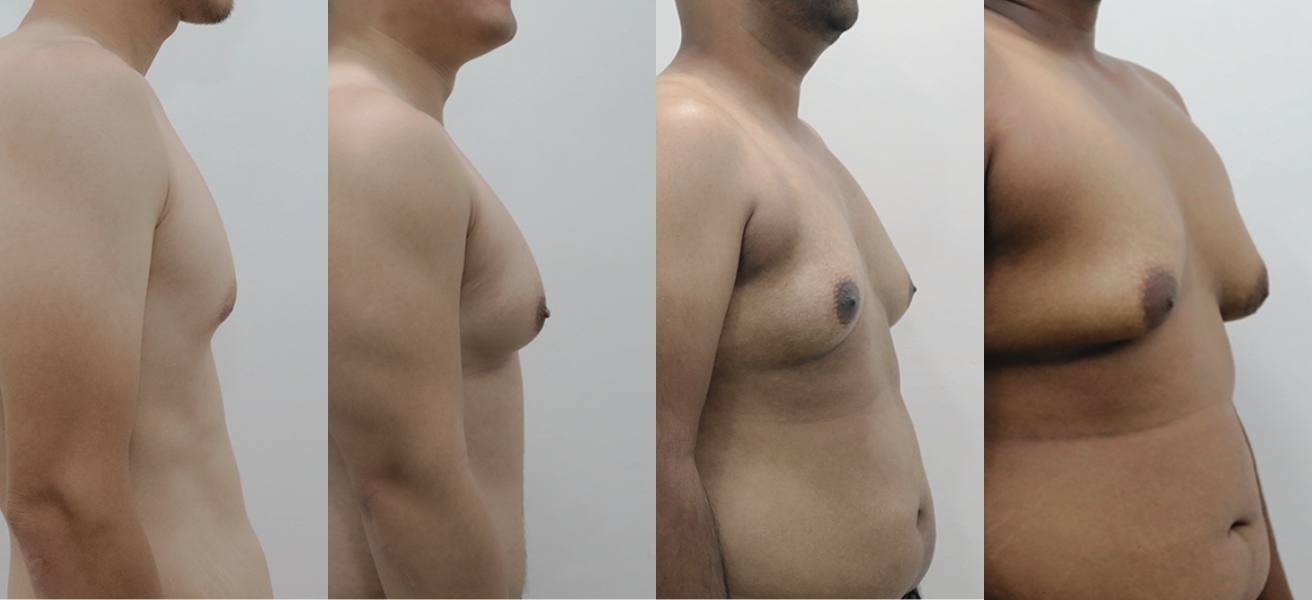
Gynecomastia, a medical condition that causes enlarged glandular tissue in the male breast, is graded on a scale from I to IV. Grade I is a mild condition, while Grade II is the most common grade amongst patients, with the enlarged gland spreading across the chest. Grade III and IV resemble female breast development, with Grade IV presenting with significant sagging skin. This grading system helps the gyno doctor customise the surgical plan. Your grade, assessed by a doctor experienced in treating gynecomastia, is determined through a physical exam, which then determines the extent of the surgery. Here's how to identify your grade and understand what treatment options are available.
The primary cause of gynecomastia is hormonal imbalance, not simply being overweight, which is a common misconception.
| Triggers | Details |
|---|---|
| Puberty | Hormone fluctuations in adolescent boys, which is usually temporary |
| Andropause/Ageing | The decline in testosterone levels in men over 50 years old |
| Medications | Side effects of certain medications, including blood pressure, psychiatric, and anti-androgen drugs |
| Anabolic-Androgenic Steroids abuse | Side effect of AAS is enlargement of the male glandular tissue as it spikes the testosterone levels |
| Underlying medical conditions | Liver, kidney, or thyroid disease; in rare cases, testicular cancer |
Gynecomastia is one of the most common male breast conditions, accounting for over 65% of male breast disorders.
In most adolescent cases in Singapore, swollen or enlarged male breast tissue tends to resolve without treatment within six months to two years. As for older men, the condition can peak between ages 50 and 69; at least one in four men in this age group is affected!
It appears at three life stages:
| Life stage | Approx. prevalence | Typical outcome |
|---|---|---|
| Neonatal | Common, usually resolves in weeks | Self-resolving |
| Puberty | Up to 70% of adolescent boys | May resolve within 6 months–2 years |
| Adulthood | ~1 in 4 men | Does not resolve without treatment |
A proper medical evaluation and diagnosis go beyond simply identifying enlarged breasts; it involves a precise classification to determine the most effective treatment approach.
Gynecomastia is broadly categorised based on tissue composition:
Pseudogynecomastia is NOT gynecomastia, as it does not involve enlargement of glandular tissue. The affected tissues are fat, which typically feels softer and more diffuse.
The two most widely used classification systems are the Simon and Rohrich classifications, both of which are based on tissue volume and skin laxity [1], helping the doctor to determine the balance between glandular tissue removal and liposuction to achieve optimal results.
If you are concerned about gynecomastia, a thorough consultation with an experienced doctor is essential for a proper diagnosis and a personalised treatment plan.
| Grade | Description |
|---|---|
| I | Small, localised tissue around areola | II | Moderate enlargement extending beyond areola with no skin excess |
| III | Significant enlargement resembling female breast with minor skin excess |
| IV | Severe enlargement with significant skin excess that has an obvious feminine appearance |
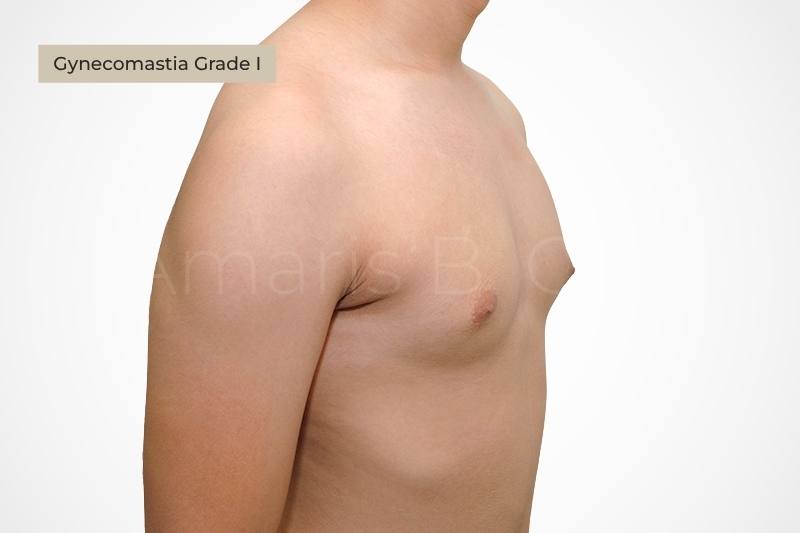
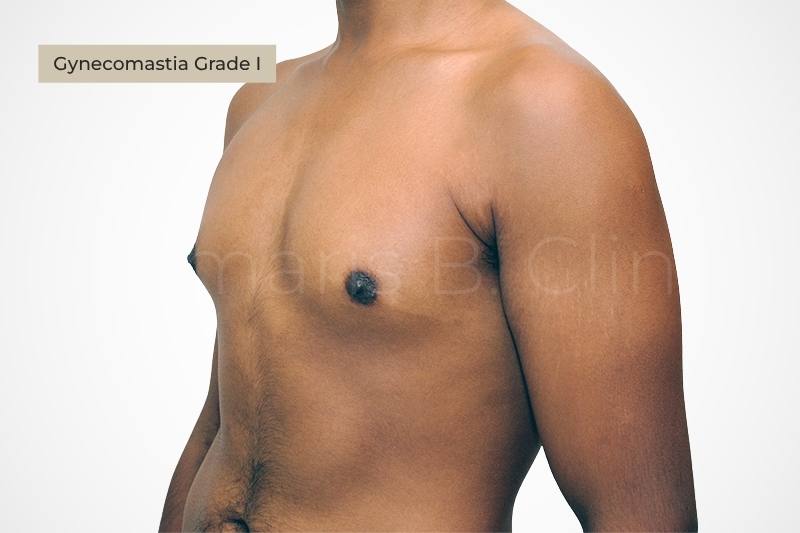
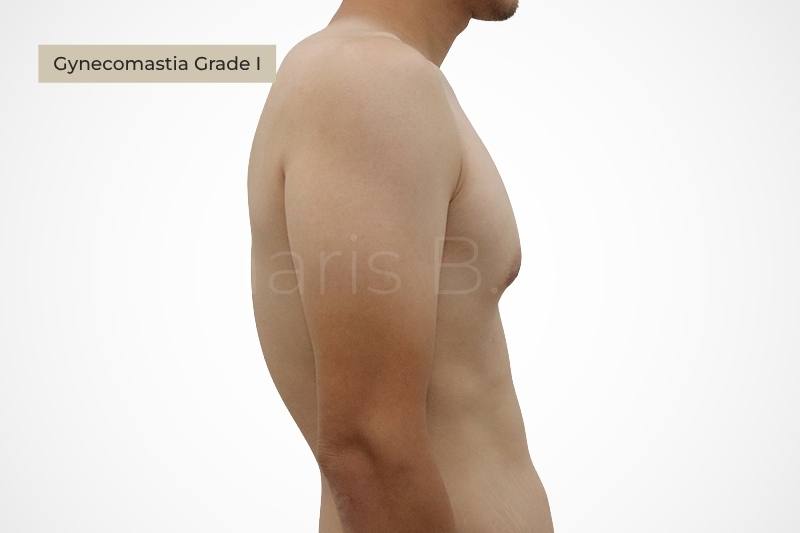
Grade I gynecomastia is a small, disc-like tissue that sits directly behind the nipple.
Characteristics:
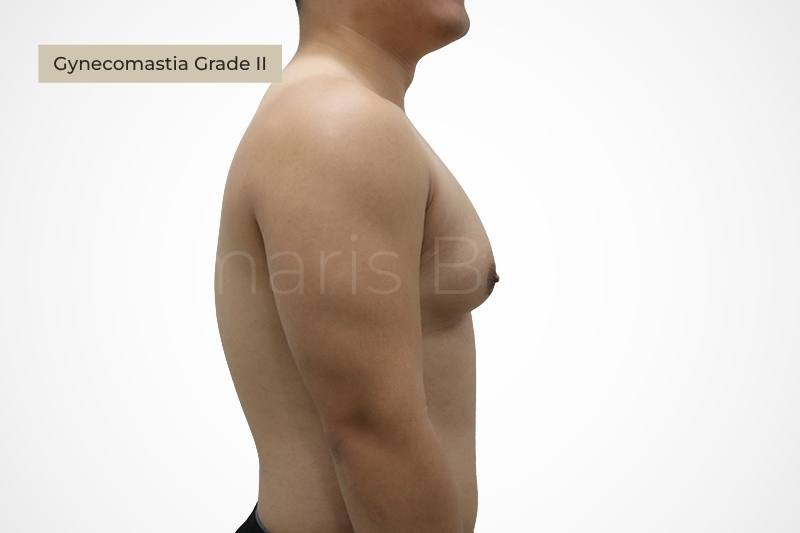
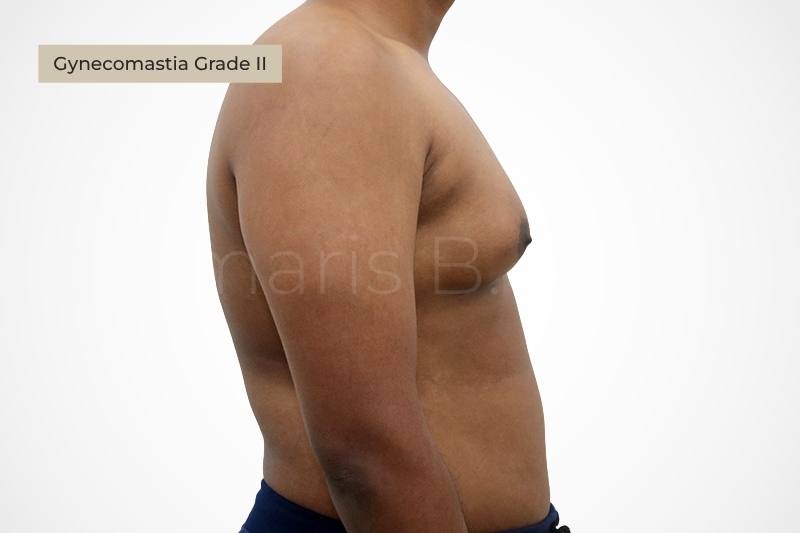
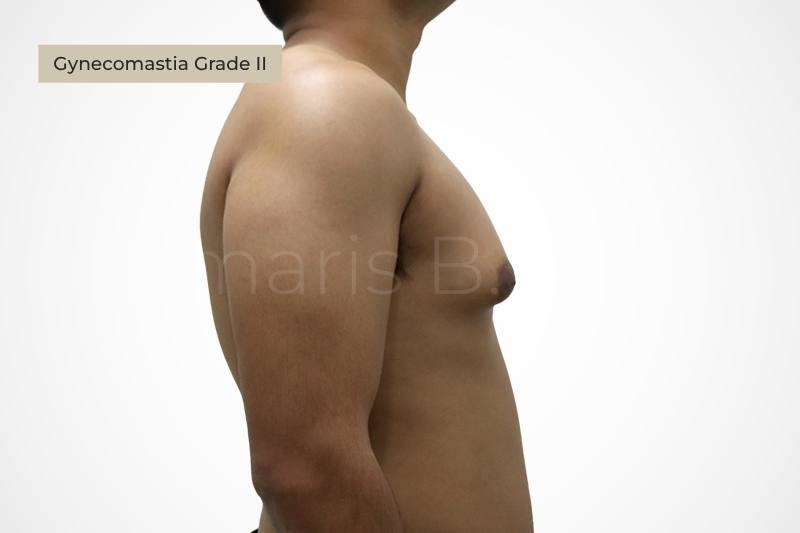
Grade II is the most common gynecomastia grade, with moderate enlargement extending to the width of the chest.
Characteristics:
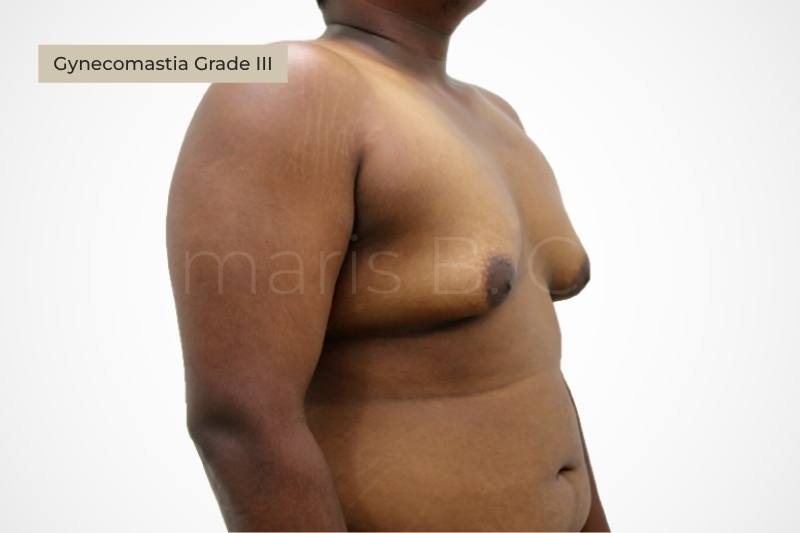
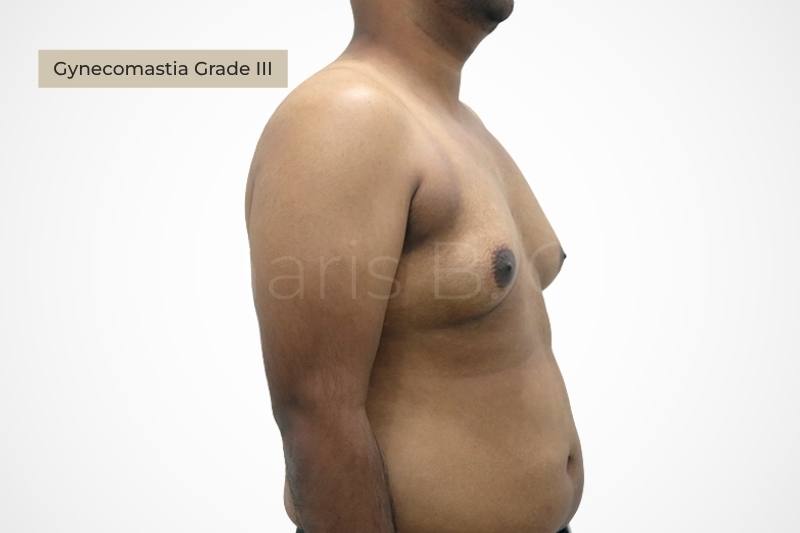
Grade III gynecomastia looks like a female breast, and it is often visible under clothing. The enlargement may also contribute to minor skin excess.
Characteristics:
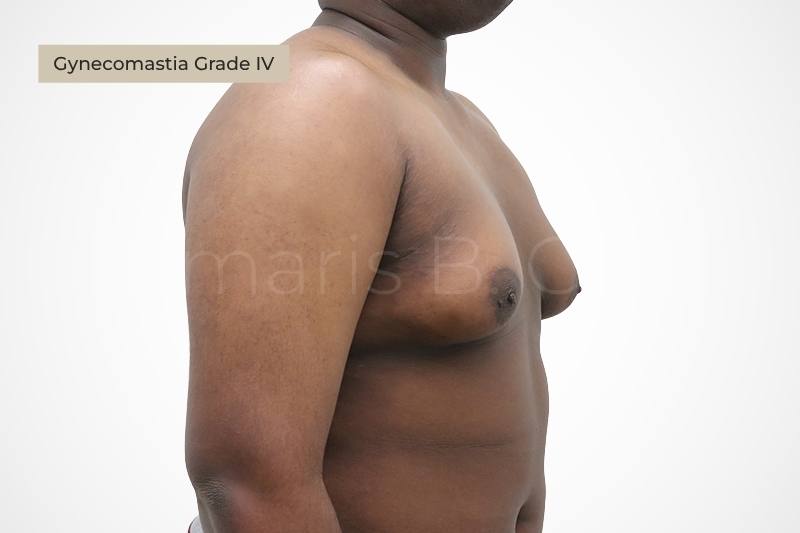
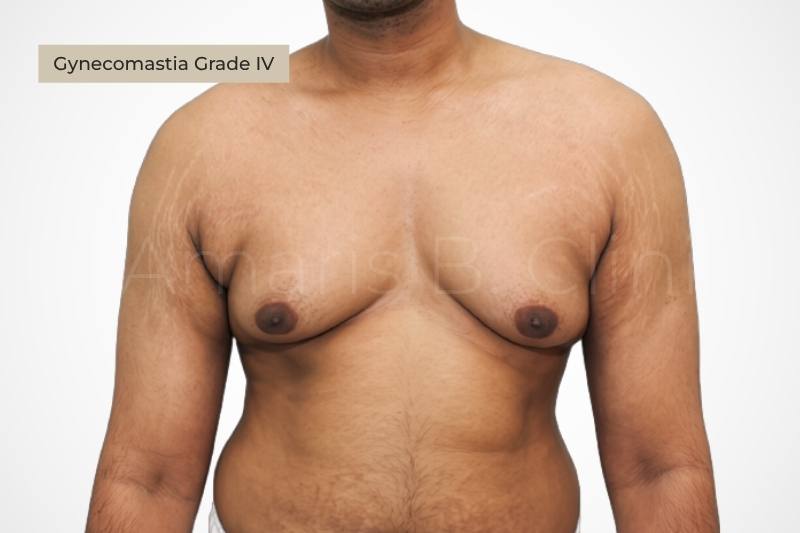
Grade IV is the most severe gynecomastia grade, marked by substantial excess, sagging skin (ptosis) and a clearly feminine chest contour.
Characteristics:
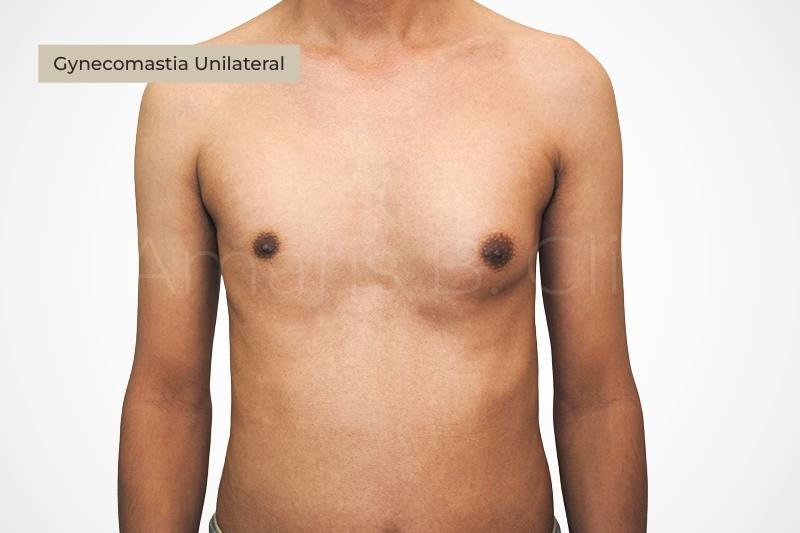
Bilateral gynecomastia affects both breasts; unilateral gynecomastia affects only one, and occurs in roughly 5–10% of men, accounting for about 25% of all gynecomastia cases.
Unilateral cases are graded and treated the same way as bilateral cases. The grading scale (I to IV) applies per side, based on the same tissue volume and skin laxity criteria.
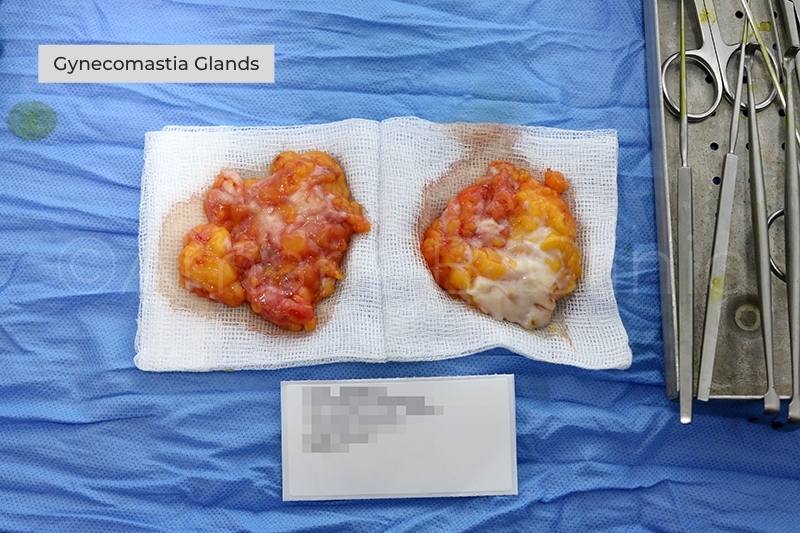
"For surgical precision, the male breast gland is not treated as a single lump. It presents as a cohesive unit with three distinct parts that must be completely addressed to avoid residual deformity", shares Dr Ivan Puah, medical director of Amaris B. Clinic with close to two decades of experience in gynecomastia surgery and male chest sculpting.”
A thorough, experienced doctor performing gynecomastia surgery will map these three parts preoperatively to ensure a flat, masculine contour from the sternum to the lateral chest wall.
You can get a preliminary sense of severity at home using these checks, but only a physical exam by an experienced doctor can confirm your exact grade.
1. The pinch test. It is probably gynecomastia if you feel a firm mound of breast tissue around the areola that is sensitive, sore, or painful to the touch. You may also feel pain, tenderness, and discomfort. It can happen to both breasts or just one.
2. Visual check in a fitted shirt. When you wear a form-fitting shirt, the chest looks like female breasts with some droopiness and loose skin. As much as it is physically embarrassing for a person, it is also a cause of real physical pain.
A self-test cannot replace a formal diagnosis by a doctor, but it is a useful starting point to distinguish whether you have gynecomastia or pseudogynecomastia.
Doctors with dedicated experience in male chest contouring are the best choice to conduct this assessment. They know precisely how to palpate the tissue, map the gland's full composition, and identify the difference between a firm subareolar disc (gynecomastia) and general subcutaneous fat (pseudogynecomastia).
A comprehensive diagnosis involves these mandatory steps below.
The doctor systematically assesses the chest for:
Palpation alone cannot measure depth or composition. A high-resolution breast ultrasound is sometimes recommended to quantify the thickness of the glandular tissue versus subcutaneous fat. It validates whether you fall into the true, mixed, or pseudogynecomastia category.
A targeted blood panel identifies underlying endocrine triggers or medication side effects.
Based on this complete picture palpation, imaging, and history your doctor will determine your exact grade using the Simon or Rohrich classification. This grading, combined with the anatomical mapping of the gland's head, body, and tail, allows the doctor to propose a tailored approach.
The strategy will specify:
Treating gynecomastia is more than removing excess tissue. It is a reconstructive procedure that demands surgical precision, anatomical understanding, and an individualised strategy for each patient.
"The objective of gynecomastia surgery is to seek histological clarification of the suspicious breast lesion and to reconstruct the male chest contour. It is a challenging and complex process which needs the performing doctor to understand the patient's unique muscle curvature, gynecomastia grade and fat anatomy and use the appropriate surgical technique to carry out the correction," explains Dr Ivan Puah.
The 360°GTD® technique is a surgical method developed by Dr Ivan Puah, especially designed to address the chest from all angles, and consider the grade of gynecomastia, the glandular tissue-to-fat ratio, and the patient's parenchymal distribution.
Short incisions are made to ensure minimal scarring while sculpting the chest.
The aim is to remove fibrous and painful glandular and/or fatty tissue while restoring a natural-looking masculine chest using the smallest possible incision.
Dr Ivan Puah is the lead author of a Singapore-based study titled "Surgical Management of Gynecomastia in Asian Men – Clinical Experience and Considerations for Different Patient Types". The study, published in the World Journal of Plastic Surgery, analysed over 550 cases treated at Amaris B. Clinic between 2018 and 2023.
"Every gynecomastia surgery needs a tailored approach by considering their ethnicity, genetic predisposition, glandular tissue characteristics, skin types and quality, etc, by adapting surgical techniques in every patient. There should be distinctions in treatment planning between Asians and Caucasians, particularly regarding careful incision placement, including addressing issues such as scarring and hyperpigmentation."
Dr Puah advocates an individualised approach for each patient after carefully assessing the gynecomastia grade, body and skin type, clinical condition, and the patient's specific concerns.
The bottom line: accurate grading, precise anatomical mapping, and a tailored surgical plan are non-negotiable for achieving an athletic, masculine chest contour.
Only a physical examination by an experienced doctor who performs gynecomastia surgery can confirm your exact grade; self-tests (pinch test, skin laxity check) can only suggest a likely range.
No, not in adults. Once gynecomastia is established in an adult male, it does not resolve without surgical intervention. This is a critical distinction from adolescent (pubertal) gynecomastia, which may resolve spontaneously within 6 months to 2 years in over 90% of cases as hormone levels stabilise.
It shouldn't. The gynecomastia grade influences the complexity of the procedure, not the base cost structure. What determines the final surgical fee includes:
Grade II is the most frequently encountered, involving moderate enlargement that extends across the chest width, with or without loose skin.
Yes. Progression occurs when glandular tissue continues to grow, gradually stretching the skin [2].
Both insurance and MediSave coverage is solely determined by medical necessity. MediSave withdrawal limits for all forms of surgery range from $240 to $5290, depending on the surgical type.
Eligibility and exact amount that can be claimed depend on the surgery's classification and associated medical needs. Private insurance plans may also cover gynecomastia surgery when medical necessity is established; coverage varies by policies and provider.
Gynecomastia is not life-threatening. However, it can cause significant physical discomfort, chafing and psychological distress. It warrants a medical evaluation to rule out an underlying condition.
Male breast reduction surgery is generally safe across all grades. The baseline surgical risks, including reaction to tape or sutures, haematoma, seroma, infection, and changes in nipple or chest sensation, are documented across all grades.
Higher grades (IIb and III) involve more extensive tissue resection and skin management due to the extent of the growth of the glandular tissue. This will increase surgical complexity and potentially extend recovery time.
The risk profile itself does not escalate with grade, but the technical demands on the performing doctor do. It is therefore important to disclose any health concerns during your consultation.