Facial fat grafting restores volume lost from GLP-1 weight loss. Learn how it works, survival rates, recovery, and results vs. fillers in Singapore.
September 26, 2026


Public parking available or drop off along Arab Street, Village Hotel Bugis (Previously known as Golden Landmark Hotel)
Buses (2, 12, 32, 33, 130, 133, 133A, 520, 960, NR7) MRT (alight at Bugis MRT station)


Like any other surgery, liposuction, which has many wonderful benefits, is not without potential risks, side effects and complications.
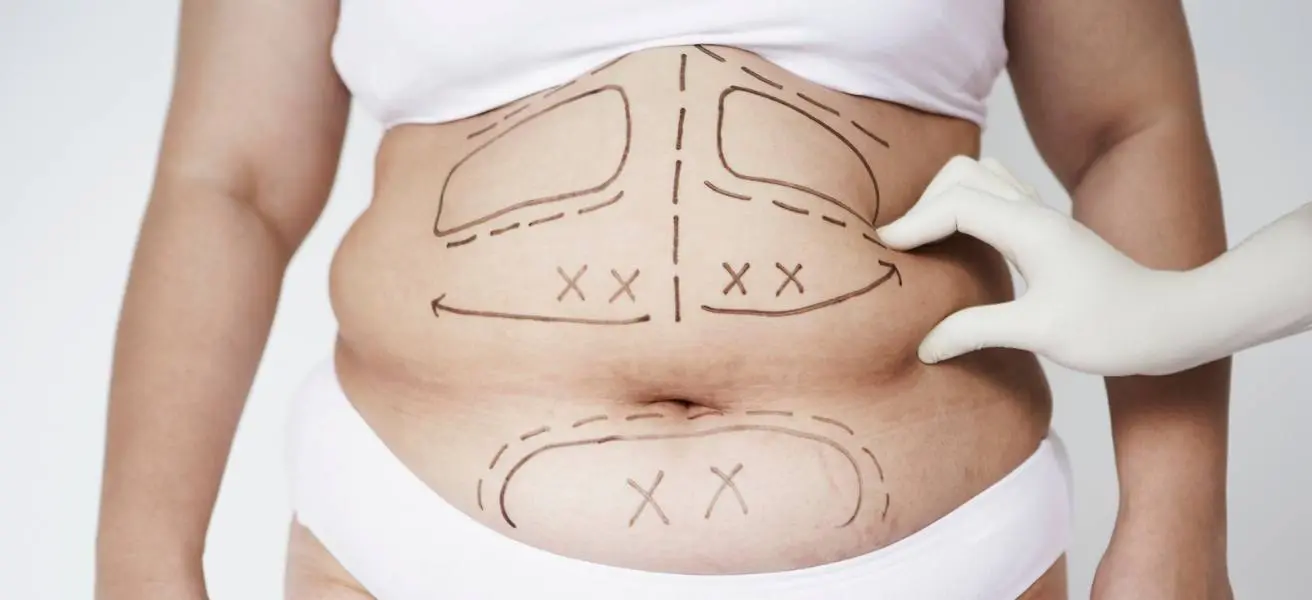
Yes, Vaser liposuction is considered a safe, effective body-contouring procedure when performed by an MOH-accredited doctor in a licensed Singapore facility, following the Ministry of Health's 2-litre fat removal limit per session. As with any surgery, it carries manageable risks (bleeding, swelling, infection, asymmetry) that are minimised through proper doctor selection and pre/post-op care.
Liposuction removes stubborn fat that resists diet and exercise, permanently reshaping the body and, for many patients, improving self-image and confidence. Vaser (Vibration Amplification of Sound Energy at Resonance) is an ultrasound-assisted form of liposuction that liquefies fat before removal for more precise contouring. Like any surgical procedure, it carries potential side effects and complications, this guide covers what Singapore's regulations require, what the real risks are, and how to reduce them.
Singapore's Ministry of Health (MOH) caps fat removal at 2 litres per liposuction session. This limit exists to protect patient safety and applies to every doctor offering the procedure in Singapore.
Liposuction in Singapore must take place in either:
All surgery carries anaesthesia-related risk, including nausea, vomiting, muscle pain, and sore throat. Twilight sedation (as opposed to general anaesthesia), administered and monitored by an MOH-accredited anaesthesiologist, is generally associated with faster recovery than general anaesthesia.
Fat embolism occurs when liquid fat particles enter the bloodstream and disrupt oxygen flow to vital organs. Thrombosis occurs when a blood clot forms in a vein or artery. Patients with a history of clotting disorders must disclose this during consultation so the doctor can plan accordingly.
Bleeding risk is higher in patients with bleeding disorders, those on blood-thinning medication, or those on birth control pills, all of which should be disclosed before surgery.
Post-op swelling is common and expected. It typically improves with hydration, gentle activity, and weekly manual lymphatic drainage massage.
Uneven fat removal or contouring is more likely with an inexperienced or less artistically skilled doctor. This is one of the strongest arguments for reviewing a doctor's case history before booking.
Incisions are closed using suturing techniques designed to minimise wound tension. Some itching during healing is normal and often a sign of recovery, but post-op wound care instructions must be followed closely to avoid infection.
Liposuction is widely regarded as a safe, effective cosmetic procedure when performed in an accredited facility by a properly trained, board-accredited doctor. Citing Rohrich et al., outpatient surgery carries a mortality rate of roughly 0.25–0.50 per 100,000 procedures, and liposuction specifically has a reported mortality rate of about 1 in 50,000. These figures underline that facility accreditation and doctor qualifications, not the liposuction technique itself, are the biggest safety variables.
Yes, when performed by an MOH-accredited doctor in an MOH-approved facility, in strict compliance with the Ministry of Health's 2-litre-per-session fat removal limit. Singapore has one of the strictest liposuction regulatory frameworks in the world, prioritising patient safety. Patients with underlying medical conditions, those who do not meet BMI criteria, and pregnant women are not permitted to undergo the procedure.
Risks exist, as with any surgery, including anaesthesia reactions, bleeding, infection and changes in skin sensation. These are manageable with proper doctor selection, adherence to safety protocols, and disciplined aftercare.
Swelling and bruising are common and temporary. Swelling typically peaks within the first few days after surgery and gradually improves over the following weeks. Bruising generally resolves within 1-2 weeks.
Vaser liposuction is associated with less trauma to surrounding tissues, which means, there is reduced bruising and faster recovery.
In the vast majority of cases, numbness or tightness results from temporary nerve irritation and usually resolves gradually on its own. Vaser’s ultrasonic technology minimises nerve damage compared to conventional liposuction.
Temporary lumpiness or unevenness is common in the early stages of recovery due to fluid accumulation and tissue swelling. Compression garments and regular manual lymphatic drainage massage (MLD) help the body clear excess fluid and promote smoother tissue healing. These irregularities typically improve as swelling subsides over the following weeks to months.
Most patients return to work and light activity within 1–2 days, but should avoid strenuous exercise for about a month, or until cleared by their doctor.
Any surgical incision will leave a scar. However, Vaser liposuction incisions are short, minimal and strategically placed in natural skin folds or concealed areas. Scars may look hyperpigmented or red initially , but with proper wound care, including medical-grade scar gel or sheets and sun protection, they typically fade significantly over time.
Most patients describe the discomfort as similar to muscle soreness after an intense workout, a deep ache or tightness rather than sharp pain. Discomfort typically peaks in the first 2 to 3 days and gradually subsides. Vaser liposuction's gentler approach generally results in a more comfortable recovery than conventional liposuction.