


Facial fat grafting in Singapore starts at SGD 3,500. Prices vary based on doctor's experience, etc. Fat grafting provides a more natural appearance.
October 4, 2026


Public parking available or drop off along Arab Street, Village Hotel Bugis (Previously known as Golden Landmark Hotel)
Buses (2, 12, 32, 33, 130, 133, 133A, 520, 960, NR7) MRT (alight at Bugis MRT station)


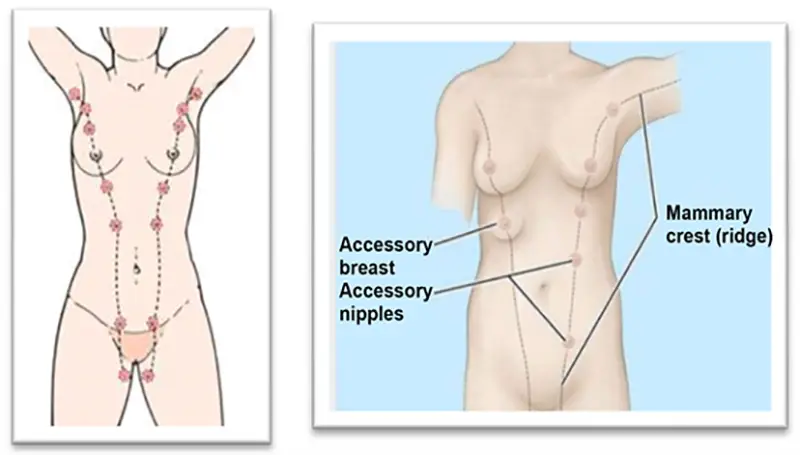
Accessory breast is a medical condition caused by the incomplete regression of the embryonic milk line during fetal development.

Accessory breast and armpit fat look similar, but they are fundamentally different. Accessory breast is a medical condition caused by the incomplete regression of the embryonic milk line during fetal development. Armpit fat results from fat accumulation in the axillary area. Treatment options for these two conditions vary as well.
| Feature | Armpit fat | Accessory breast |
|---|---|---|
| Medical term | Axillary adipose tissue | Polymastia or Supernumerary breast tissue |
| Medical condition | X | ✓ |
| Definition | Excess subcutaneous fat that builds up in the armpit area | Accessory breasts are residual (breast) tissue that remains from normal embryologic development. |
| Occurence | A common occurrence in men and women, especially if it is genetics, they are overweight or wearing tight-fitting clothing | Research shows it affects up to 6% of the female population, with the Japanese being the most affected |
| Cause | Excess weight, genes | Occurs when more breast tissue disintegrates and is absorbed into the body |
| Location | Armpit | Armpit or anywhere along the embryonic milk line |
| Appearance | Looks like armpit lump | Resembles a lump, swelling or even a mole or a dimple. May have a nipple, areola or patch of hair |
| Affects arm mobility | X | Depending on severity |
| Clothing worsens appearance | Will look more obvious if wearing a bra or tight-fitting clothes or sleeveless tops | Appears regardless of clothing |
| Treatment options | Healthy lifestyle (Diet, exercise), Liposuction | Surgical excision, Liposuction |
The Kajava classification, developed in 1915, classified accessory breasts as:
Extra breast tissue is not only a cosmetic concern.
It can also cause discomfort and pain, making everyday chores like the wearing of certain clothing an ordeal.
| Feature | Armpit Fat | Accessory Breast |
|---|---|---|
| Tissue composition | Primarily of adipose tissue (Fat cells) | Fibrous, dense glandular breast tissue |
| Feel | Feels like normal fat such as soft, squishy | Feels like normal breast such as dense, lumpy, firm |
| Hormonal response | X | ✓ |
Genetics is the most common cause of accessory breasts.
As it is glandular tissue, axillary breast tissue is vulnerable to hormonal fluctuations, as is normal breast tissue.
Axillary breast tissue may enlarge during menstruation, pregnancy, and nursing.
| Assessment | Details | Armpit Fat | Accessory Breast |
|---|---|---|---|
| Physical Examination | Feel for tender, soft tissue lumps in the armpit | ✓ | ✓ |
| Ultrasonography | Imaging method to differentiate tissue | X | ✓ |
| Mammography | To identify tissue or detect abnormality | X | ✓ |
| MRI | Enhance tissue characteristic for more details | X | ✓ |
| Biopsy | To test if tissue contains malignancy | X | ✓ |
Those with a severe grade of accessory breast may avoid socialising and may also resort to wearing baggy clothing to hide their medical condition.
Seek a doctor if your condition is limiting your mobility or affecting your quality of life.
Unlike fat tissues, accessory breasts cannot be eliminated by liposuction, and they certainly will not respond to lifestyle changes or any form of non-invasive treatment.
The only solution to solve this issue is to excise the tissue surgically.
Dr Ivan Puah, medical director at Amaris B. Clinic and Chairman of Lipo Peer Review Committee Singapore, has decades of experience performing surgical fat removal and accessory breast removal surgery.
“Patients who come in to consult for armpit fat are sometimes surprised to learn that their issues are a combination of both fat and accessory breast. This group of patients will require not just liposuction to remove the fat but also removal of the axillary breast tissue. Armpit fat is tough and generally does not respond to non-surgical methods or exercise. You may be doing a lot of workouts to target the problematic areas. These will benefit the chest muscles but will not address armpit fat or axillary breast. Surgical treatment is still the proven and permanent solution to this,” says Dr Puah.
A detailed consultation and assessment are required to ascertain whether the individual will require liposuction or liposuction with accessory breast removal.
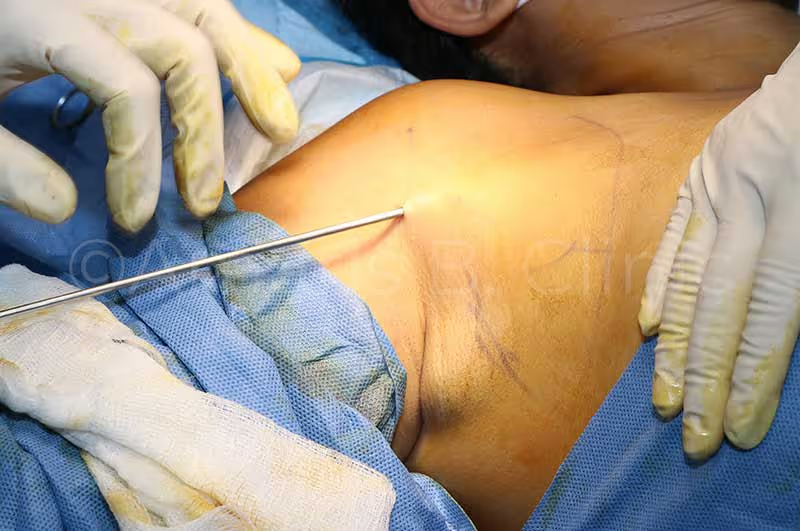
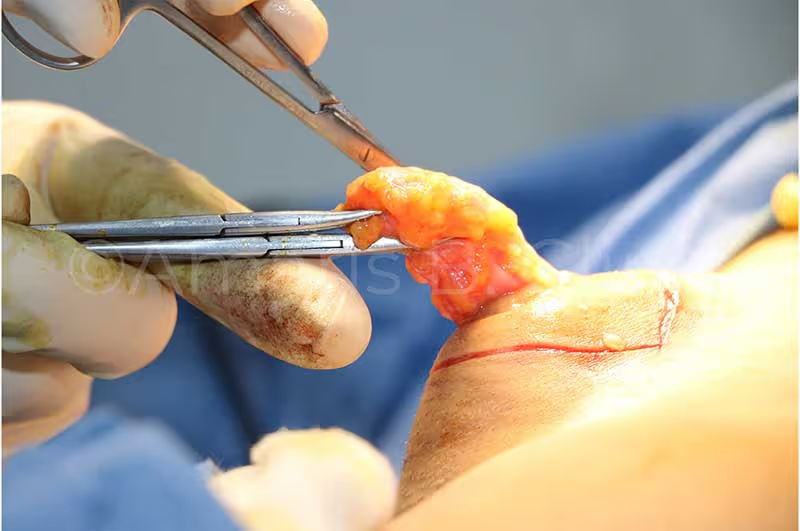
Surgical excision is required to remove the excess breast tissue. If fat is present alongside the accessory breast tissue, a complementary liposuction may be required to achieve a smooth axillary contour.
For armpit fat, liposuction alone is sufficient.
It is critical to find reliable, skilled, and accredited liposuction doctors accredited by the Ministry of Health, Singapore, before scheduling an appointment.
Accessory breasts can mimic several medical conditions, such as lipomas, cysts, or even neoplasms.
It is not. However, you should go for regular mammograms to check for breast cancer tissue, as you would your other normal breasts.
Tissue removed is permanent.
If the accessory tissue was not involved in lactation, you should still be able to breastfeed from your main breasts without any issues.
Accessory breast removal surgery may be claimable if it is a medical necessity.
Accessory breasts may be genetic, but it is not guaranteed, as genetic traits can vary.
Yes, you can check for accessory breast tissue during your regular breast self-exams using the 7 P's of Breast Self-Examination.


