Weekdays 9:30am - 7pm.
Alternate Saturdays 9am - 5pm.
Red orchid flowers in a vase with the text Amaris B. Clinic on a white wall in the background.
Getting Here
By Car/Taxi

Public parking available or drop off along Arab Street, Village Hotel Bugis (Previously known as Golden Landmark Hotel)

By Public Transport

Buses (2, 12, 32, 33, 130, 133, 133A, 520, 960, NR7)  MRT (alight at Bugis MRT station)

Follow us
Red orchid flowers in a vase with the text Amaris B. Clinic on a white wall in the background.
Getting Here
Follow us

Get In Touch

Clinically Diagnosing, Managing & Treating Lipedema In Singapore 

Jan 19, 2026
January 19, 2026
Reviewed by:
Dr Ivan Puah, Medical Director

There is no one diagnostic protocol for lipedema. A clinical diagnosis by experienced doc must include patient’s detailed medical history & physical assessment.
Diagnosis of Lipedema

Table of Contents

Lipedema, a frequently misunderstood and often misdiagnosed medical condition, requires a clinical diagnosis. A doctor's diagnosis integrates the patient's history with a physical examination to identify this painful fat disorder. 


Lipedema, also known as lipoedema, adiposis dolorosa, or painful fat, is a chronic medical condition estimated to affect approximately11% of adult women worldwide [1]

Characterised by a symmetrical buildup of painful, disproportionate fat, typically in the legs and arms, it is more than a cosmetic concern - it is a health condition that impacts mobility and quality of life. 

In Singapore, awareness and diagnosis of lipedema are growing.  Our clinic has observed a significant and rising number of patients consulting our medical director, Dr Ivan Puah, for lipedema assessment and management. 

Emerging Lipedema Cases In Singapore 

While historically under-recognised in Asian populations, leading to challenges in prevalence studies, recent clinical publications and case studies indicate a growing focus on lipedema in Asia [2, 3].

This suggests its occurrence among Asian women, including in Singapore, may be more common than previously understood. 

Worldwide Criterion For Lipedema Diagnosis, According To The Lipedema Foundation 

The Lipedema Foundation reviewed 9 of the published criteria for diagnosing lipedema from 1940 to 2021.

The lipedema symptoms that were studied are:

  • Abnormal gait and limited mobility (Flat feet, knock-knees)
  • Altered skin appearance or temperature
  • Altered subcutaneous tissue texture: Thickening, nodules
  • Bilateral and symmetrical subcutaneous tissue enlargement of limbs
  • Cuffing or ring fold at the ankle or wrist
  • Decrease in skin elasticity
  • Disproportionate fat distribution (Upper and lower halves of the body)
  • Distal fat tendrils of the knee (popliteus)
  • Edema (Pitting or non-pitting)
  • Family history
  • Fatigues in extremities
  • Heavy feeling in legs or extremities
  • Hypermobility
  • Muscle weakness
  • Negative stunners sign
  • No reduction of volume and/or pain when raising/elevating extremities
  • None or limited weight loss in affected tissues
  • Pain or tenderness to touch or palpitation
  • Presence of telangiectasia
  • Psychological involvement
  • Tendency for easy bruising

Common lipedema symptoms that the 9 studies agreed on are [4, 5, 6, 7, 8, 9, 10, 11, 12]:

The common symptoms of lipedema identified by the studies include:

Pain or Tenderness to Touch

Discomfort or pain in the affected fat is a frequent hallmark. 

Tendency for Easy Bruising

Patients often report bruising easily in the involved areas.

Negative Stemmer's Sign

This test, in which a skin fold at the base of the second toe or finger is pinched, helps differentiate lipedema from lymphedema. 

Edema (Pitting or Nonpitting)

Mild, pitting or non-pitting swelling may be present, especially as the day progresses.

Psychological Involvement

The chronic nature of lipedema often carries a significant psychological burden, affecting self-esteem and mental well-being.

Clinical Diagnosis of Lipedema in Singapore: How it's done

At Amaris B. Clinic, a lipedema diagnosis involves a multi-faceted approach:

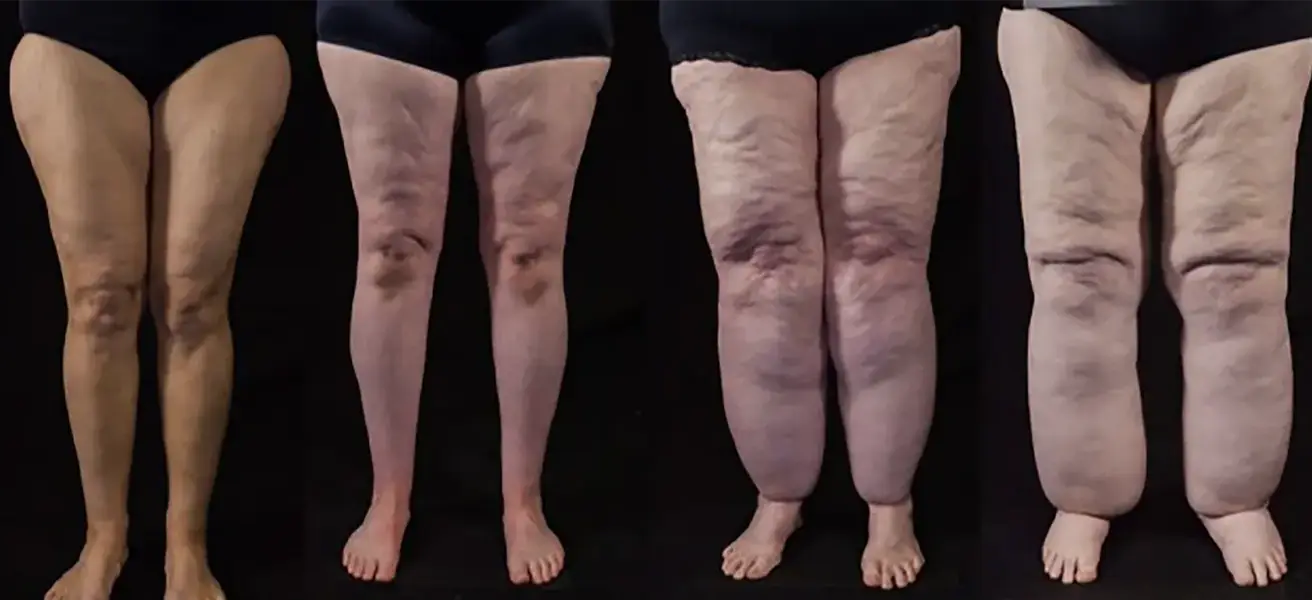
  1. Visual Inspection: Our doctor will assess for symmetrical fat enlargement in the limbs, a disproportionate body shape (e.g., a more petite upper body compared to the lower body), and skin changes such as coolness or visible telangiectasia (spider veins).
  2. Palpation: On examination, Lipedema-affected tissue may present with an altered texture, ranging from soft and nodular (like peas or rice under the skin) to firm and fibrotic. The areas are often tender to the touch.
  3. Negative Stemmer Sign Test: This is performed as a key differential diagnostic tool. A negative sign (able to pinch the skin) suggests lipedema, while a positive sign may indicate co-existing lymphedema.
  4. Detailed Medical History: We discuss your personal and family history, symptom onset (often around puberty, pregnancy, or other hormonal shifts), mobility issues, diet and exercise response, and the impact on your daily life

Scans or Blood Tests: Their Role in the Diagnosis of Lipedema 

Currently, there is no specific scan or blood test that diagnoses lipedema.

Blood tests are typically conducted before any surgical intervention to ensure patient safety. Imaging tests, such as ultrasound or MRI, may be used strategically to rule out other conditions with similar presentations, such as lymphedema, chronic venous disease, or lipohypertrophy.

Strategies to manage lipedema in Singapore

Some of the primary goals of lipedema treatment are to: 

  • Decrease Adipose Tissue
  • Improve Lymphatic Flow
  • Increase Mobility And Energy
  • Manage Inflammation And Pain
  • Manage Pain And Fatigue
  • Promote Mental Health And Overall Health

The objectives of lipedema surgery treatment can vary for each patient, depending on the severity of the condition and the location of the affected area. 

Conservative Management 


Physical Therapy A study found that physical therapy can help patients with early-stage Lipedema by reducing leg pain and improving quality of life.

Participants attended 9 60-minute sessions over 6 weeks, which included manual therapy and personalized exercise guidance.

After therapy, they reported significant improvements in pain and mobility, alongside decreased skin sodium levels, indicating reduced inflammation [13].
Diet change While lipedema fat is often resistant to diet, nutritional strategies focused on reducing systemic inflammation may help manage symptoms.
Compression Therapy Wearing medical-grade compression garments helps reduce pain, swelling, and the feeling of heaviness.

Research indicates that these garments and pneumatic compression devices are helpful non-surgical treatments that can enhance quality of life as they reduce inflammation and pain [14].
Exercise Low-impact activities like swimming, walking, or cycling promote circulation and lymphatic drainage without causing joint stress.
Massage Manual lymphatic drainage (MLD) uses specialised massage techniques to support lymphatic flow and reduce fluid buildup.

Surgical Management

For suitable patients who have not achieved sufficient relief from conservative care, surgical intervention can be a transformative option. 

At Amaris B. Clinic, Dr Ivan Puah performs lymphatic-sparing liposuction using his proprietary MDC-Sculpt®️ Lipo technique. This is not a cosmetic procedure but a functional, therapeutic intervention.

The method is designed to meticulously remove diseased lipedema fat cells while protecting the lymphatic vessels and nerves.

The goals are lasting pain reduction, improved mobility, reduced limb volume, and a sustainable improvement in quality of life.

FAQ on lipedema diagnosis in Singapore

Do I need to bring a support person to a lipedema consultation?

Lipedema is a painful fat disease. It can affect your physical appearance and mobility range, but more so, your level of confidence and comfort.

Given the emotional and physical nature of the condition, having a supportive friend or family member can be helpful.

They can provide moral support and help remember the information discussed.

What questions should I ask my lipedema doctor?

You should ask as many questions as possible, and a good lipedema doctor should be able to answer them patiently, clearly, and in complete transparency.

Some questions you should ask include:

  1. What stage or type of lipedema do I have?
  2. Am I a suitable candidate for surgical intervention, and what are the realistic, long-term outcomes? What is the recovery process like?
  3. What is your specific experience in treating lipedema?
  4. What does the recovery process involve?
  5. What are the costs, and is the procedure eligible for Medisave claims?

Can I self-diagnose lipedema?

While online checklists and the 'pinch test' can raise awareness, they are not diagnostic tools.

Lipedema shares symptoms with other conditions. A definitive diagnosis requires a clinical assessment by a doctor experienced in the condition.

Can lipedema be misdiagnosed?

Yes. Lipedema is often misdiagnosed as simple obesity, lymphedema, or dismissed entirely.

This is why seeking a consultation with a doctor knowledgeable about the disorder is crucial for obtaining an accurate diagnosis and an appropriate care plan.

What red flags should you watch for during your in-person consultation about lipedema?

Be cautious of any practitioner who dismissively states that "Lipedema is just obesity," recommends only weight loss as a cure or labels it as a social media trend or internet disease.

A qualified doctor will take your symptoms seriously and provide a comprehensive assessment and tailored management options.

LEARN MORE ABOUT LIPEDEMA SURGERY

This painful fat syndrome can be effectively addressed through Lipedema Surgery to remove sick fat, relieve pain, slow progression, and improve quality of life.

Reference

read other blogposts

Lipedema Misdiagnosis

Often labelled as simple obesity, cellulite or lymphedema, accurate diagnosis requires a doctor experienced in differentiating it from similar conditions.

January 19, 2026
Diagnosis of Lipedema

There is no one diagnostic protocol for lipedema. A clinical diagnosis by experienced doc must include patient’s detailed medical history & physical assessment.

January 19, 2026
lipedema surgery

Lipedema (known as Painful Fat Syndrome) is a frequently misunderstood chronic medical condition that affects a staggering 370 million women worldwide. 

January 19, 2026
lipedema in legs

Women with lipedema in the legs live with unbearable pain and invisible symptoms. We need to raise awareness in Singapore so patients can get proper care.

January 19, 2026
lipedema singapore

Lipedema is not weight-related but it can coexist with obesity and is often confused by other conditions. Here's how you can identify & self-diagnose lipedema.

January 19, 2026

Say hello to skin rejuvenation and a svelte figure with our arsenal of beauty treatments to help you look like your best version for the holidays.

January 19, 2026