Wondering if you qualify for breast fat transfer? Check BMI range, health criteria, and contraindications reviewed by an MOH-accredited doctor.
September 12, 2026


Public parking available or drop off along Arab Street, Village Hotel Bugis (Previously known as Golden Landmark Hotel)
Buses (2, 12, 32, 33, 130, 133, 133A, 520, 960, NR7) MRT (alight at Bugis MRT station)


Lipedema is a chronic fat disease condition that primarily affects women. Raising awareness is crucial for ensuring proper care for those impacted.
Lipedema is a chronic condition that primarily affects women, characterized by abnormal fat accumulation in the lower body, particularly in the buttocks, thighs, and legs. Symptoms include bruising, discomfort, and spider veins, often aggravated by fluid retention.
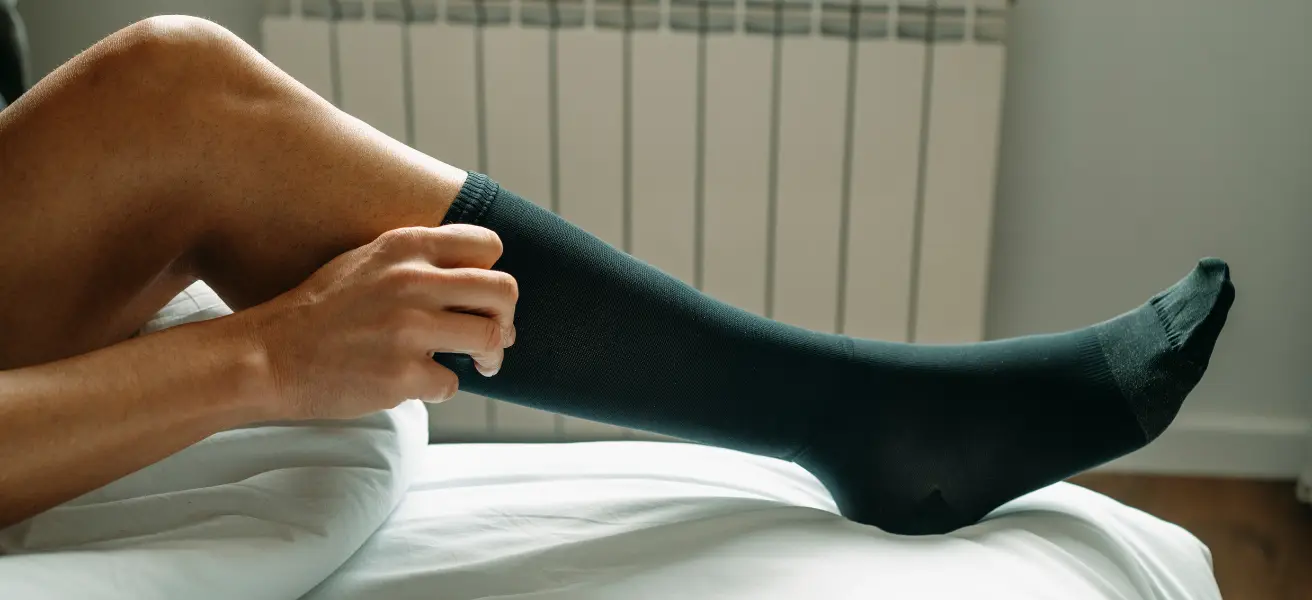
The condition is linked to hormonal changes and genetic factors and is classified into three stages, from mild to advanced. Effective treatment primarily involves liposuction, which removes excess fat and alleviates symptoms, while post-surgery care includes compression garments.
Dr Ivan Puah offers both surgical and conservative management for affected individuals. Raising awareness about lipedema is crucial for ensuring proper care for those impacted.
Lipedema is a chronic condition where there is an excess build-up of fat tissues commonly affecting areas at the lower body such as the buttocks, thighs, lower legs and arms [1].
The affected areas may have the following symptoms:
Lipedema may sometimes be worsened by fluid retention (lymphedema).
Patients may have increasingly worsened swelling in the legs during the day and improve overnight.
Affecting mostly women, symptoms of lipedema can lead to reduced mobility and psychological issues, such as low self-esteem.
The cause of lipedema is generally unknown.
Lipedema mostly occurs during puberty, pregnancy or after menopause, suggesting there may be hormone influence in the causation of lipedema.
There is also some evidence to suggest that genetic influence may be relevant.
Lipedema is categorised into 3 stages. The different stages present different levels of pain, swelling, fat build-up and tenderness in the patient.
𝗦𝘁𝗮𝗴𝗲 𝟭 (𝗠𝗶𝗹𝗱) The skin is smooth, and the lipedema in the legs at this stage can appear normal, but there is pain, easy bruising and a nodular feel to the fat tissue.
𝗦𝘁𝗮𝗴𝗲 𝟮 (𝗠𝗼𝗱𝗲𝗿𝗮𝘁𝗲 𝘁𝗼 𝘀𝗲𝘃𝗲𝗿𝗲) The lipedema fat exhibits a mattress-like pattern, indicating fibrosis under the skin that tethers to the skin that can be found on the upper legs (Type II) or extends down to the ankles (Type III).
𝗦𝘁𝗮𝗴𝗲 𝟯 (𝗔𝗱𝘃𝗮𝗻𝗰𝗲𝗱) There are tissue folds, and the lipedema in the legs usually extends down to the ankles.
Some of the primary goals of lipedema treatment are to:
The objectives of lipedema surgery treatment can vary for each patient, depending on the severity of the condition and the location of the affected area.
| Method | Recommendation from studies | Proven results |
|---|---|---|
| Physical Therapy | Personalised exercise guidance; twice a week 60-minute sessions [2] | Improvements in pain & mobility [2]
Decreased skin sodium levels [2] Reduced inflammation [2] |
| Diet change | Low-carb, high-fat (LCHF) or ketogenic diets [3] | Significantly reduced calf subcutaneous adipose tissue area & pain [3] |
| Compression Therapy | Three-dimensional, seamless & breathable knitted fabric class 2 compression leggings [4] | Improves the quality of life [4]
Decreases the severity of lipedema symptoms [4] *Better results when combined with exercise [4] |
| Exercise | Exercises under physiotherapist supervision [5]
Dr Puah recommends low-impact activities that do not cause joint stress, such as walking | Improve pain [5]
Improve quality of life [5] Improves limb volumes and/or circumference [5] Improves functional performance [5] *Better results when combined with decompression therapy [5] |
| Lymphatic Drainage Massage | Manual Lymphatic Drainage Massage, instead of machine-assisted tools and pneumatic devices [6] | Mitigates oxidative stress in lipedema & cellulite [6]
Pain-relieving qualities for patients with otherconditions [6] Helps patients with discomfort, tenderness, & sensitivity issues [6] However, MLD would have to be performed regularly, ideally daily, for life [6] |
| Kinesio taping | Eight sessions, twice a week [7] | Relieves pain [7] Improves blood vascular & lymphatic flow by lifting the skin from underlying fascia [7] |
| Deep oscillation therapy | Using electrostatic attraction and friction in the tissue of the patient [8] | Reduce swelling & discomfort [8] |
| Cognitive behavioral therapy (CBT) | Psychotherapy, support groups, psychoeducation, and counselling can provide emotional support and a sense of community [9] | Improves self-esteem [9]
Copes skills with body image & self-acceptance [9] Improves the quality of life of people [10] Positive effects on mental condition [10] Decrease in depressive symptoms [10] |
The only treatment that is clinically effective in reducing the excess fatty tissue associated with lipedema is liposuction.
Lipedema with liposuction could benefit women with 'painful fat' disease [11].
Excess fat tissues are removed with liposuction, permanently reshaping the affected areas.
Researchers who conducted an online survey of 209 female patients, the majority of lipedema patients (average age 38.5 years) who underwent liposuction reported that liposuction led to a significant reduction in pain, swelling, tenderness, and easy bruising [12].
Post liposuction compression over several weeks to months is equally important to prevent edema or fluid retention after that.
Lipedema is made worse with weight gain or obesity. Hence it is important to avoid weight gain, or even better, to start losing weight after treatment to prevent recurrence.
This is not a cosmetic procedure but a functional, therapeutic intervention. The method is designed to meticulously remove diseased lipedema fat cells while protecting the lymphatic vessels and nerves.
The goals are lasting pain reduction, improved mobility, reduced limb volume, and a sustainable improvement in quality of life.
Dr Ivan Puah, an MOH-accredited liposuction doctor in Singapore, has more than 20 years of experience in fat removal and body sculpting surgery.
He has successfully treated many patients in Singapore, Australia, and the rest of Asia Pacific to relieve their lipedema symptoms, including their physical appearance and pain management.
He also provides conservative treatments for lipedema, such as manual lymphatic drainage massage.
One such patient that Dr Puah has treated is an Indonesian lady, whom we shall call "Ms Sy."
Ms Sy, a 40-year-old woman, struggled with painful, swollen legs and fat accumulation, leading to her lipedema diagnosis by Dr Ivan Puah in 2024.
Despite living healthily, traditional weight loss methods failed her.
After her first lipedema surgery on her hips, thighs, and knees, she saw significant improvement and sought further treatment for her calves.
During a consultation, Dr Puah explained that lipedema is a chronic condition affecting women, characterised by painful fat accumulation.
A physical exam revealed tenderness in her calves, prompting surgical removal of the affected tissue.
Her lipedema surgery employed Dr Puah's MDC-Sculpt®️Lipo technique under local anaesthesia.
Post-surgery, she plans to focus on recovery, including wound care and wearing compression garments, which have already reduced her pain.
The only way to self-diagnose lipedema is through a pinch test. Gently pinch the affected area to check for any pain or any difference in texture.
It is painful due to a combination of chronic inflammation, mechanical stress, and possibly neuropathic alterations [13, 14].
Lipedema is a chronic medical condition characterised by abnormal fat deposits, often in the legs and arms, accompanied by pain, tenderness, and swelling.
Lipedema affects anyone, including those who are underweight, normal weight and not just those who are overweight, although the condition worsens with weight gain
Unfortunately, lipedema is unlikely to be resolved by weight loss or dieting.
Lipedema affects the legs and arms, causing them to be symmetrical and disproportionate, with painful, tender fat.
In Singapore, the Lymphatics Support Group Singapore (@lymphatics.sg) provides support for individuals with lymphedema, lipedema, and other types of swelling.
For international support options, a quick online search for "support groups and organizations for individuals with lipedema" can provide many useful results.