Who qualifies for breast fat transfer in Singapore? Check health criteria, donor fat, contraindications and timing after pregnancy.
October 26, 2026


Public parking available or drop off along Arab Street, Village Hotel Bugis (Previously known as Golden Landmark Hotel)
Buses (2, 12, 32, 33, 130, 133, 133A, 520, 960, NR7) MRT (alight at Bugis MRT station)


Although wearing post-lipo compression garment may not be fashionable or comfortable, they significantly improve your final results. Here's why and how!
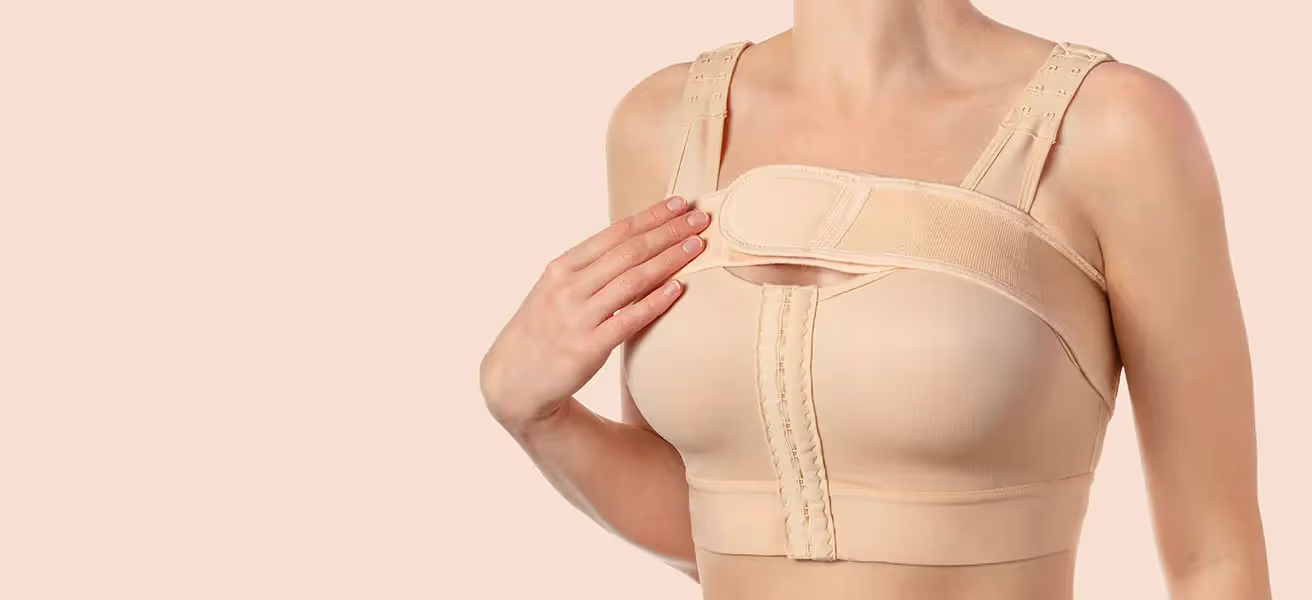
A post-lipo compression garment applies steady, gentle pressure to treated areas. This reduces swelling, bruising, pain and seroma risk, supports scar healing and helps skin settle smoothly. It should be worn consistently for a minimum of 4 to 6 weeks, from the first day after surgery. A properly fitted garment is one of the most important factors in your final liposuction result.
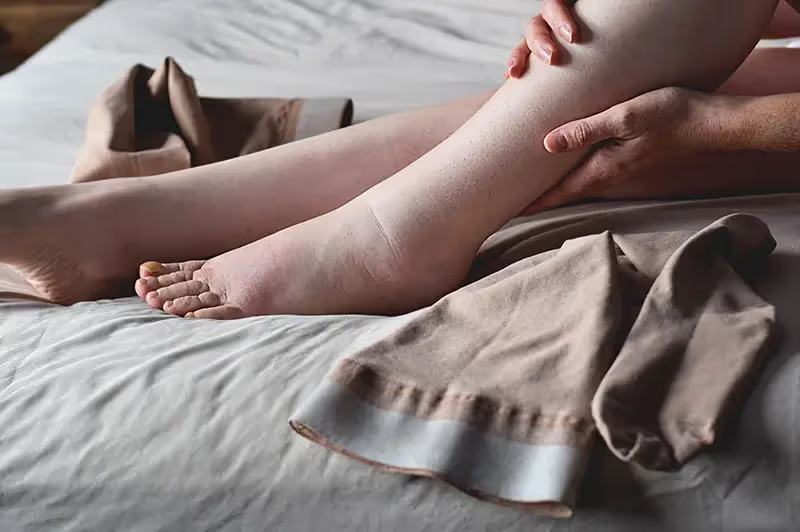
A compression garment is specialised apparel that delivers steady, gentle pressure to targeted areas to support healing after surgery. It is typically made from hypoallergenic materials such as breathable nylon, medical-grade elastic or latex-free fabrics [1].
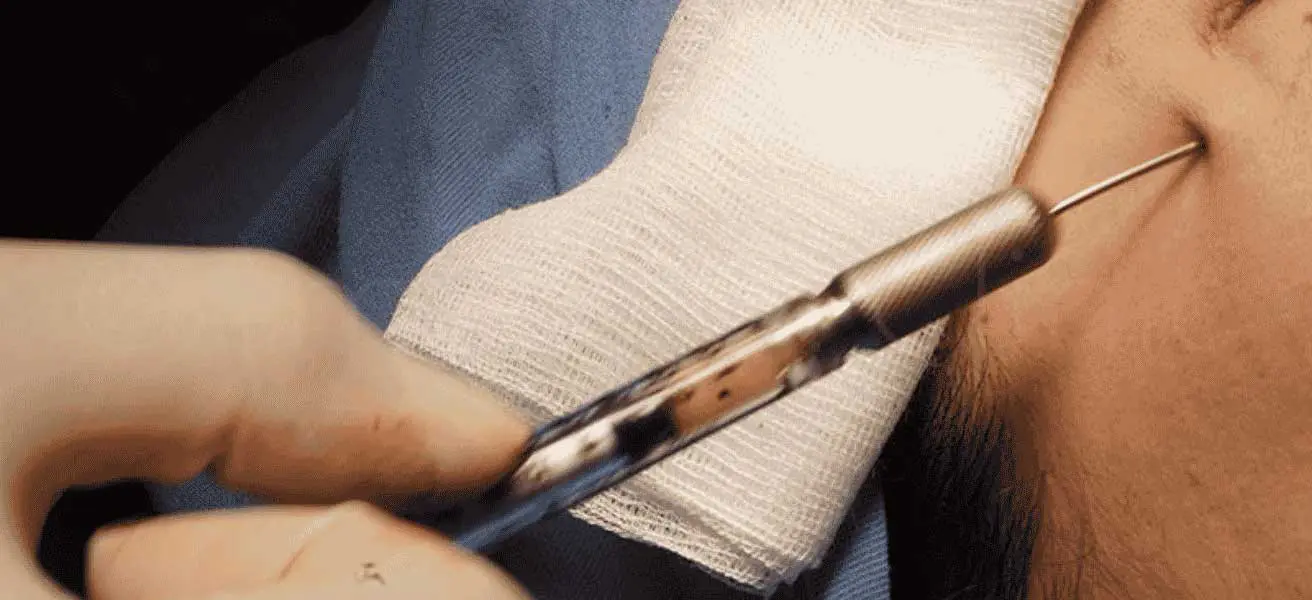
During liposuction, the cannula disrupts blood vessels, lymphatic vessels and fat structures. This tissue trauma causes swelling, bruising and inflammation. These are common after any surgery, but they can prolong recovery.
Compression garments counter this with gentle, constant pressure. They help combat swelling, accelerate your body's natural healing process and ultimately optimise your final results [2].
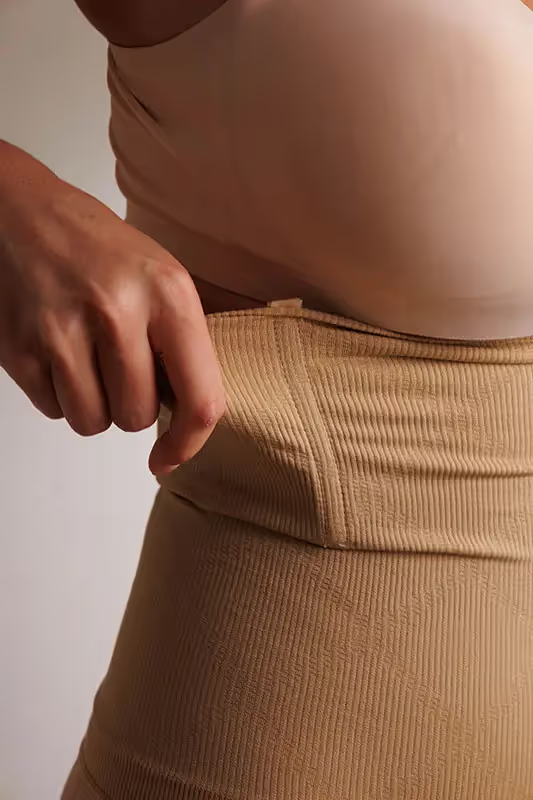
Swelling after lipo is caused by tissue trauma and fluid accumulation. It is an expected part of healing, not a surgical complication. Medical-grade compression garments help manage swelling from day one. They also support tissue re-adhesion for a smoother body contour and minimise inflammation and fibrosis.
| Stage | What to expect |
|---|---|
| 24 hours to 14 days | Swelling typically begins between 24 and 48 hours, with mild increases over the first 10 to 14 days. The area feels soft and slightly tender. |
| Week 2 to 3 | Your body absorbs residual fluid. The area "firms up" while tenderness gradually fades. |
| Week 4 to 8 | By weeks 4 to 6, parts of the area soften unevenly. By weeks 6 to 8, the tissue becomes uniformly supple. |
Throughout this journey, your compression garment guides your new contours while supporting your body's recovery [3].
Liposuction can disrupt blood vessels, causing bruising. Compression garments help by preventing blood from pooling and reaching the skin's surface.
Constant pressure on the treated area helps relieve post-surgery discomfort and minimise pain.
A seroma is a pocket of clear fluid that can occasionally develop in treated areas. Medical-grade compression garments reduce this risk by collapsing potential fluid spaces. Two procedural factors may contribute to seromas:
Our 20+ years of clinical experience in liposuction management point to a third key factor: inconsistent use of compression garments. An ill-fitting garment, or frequent removal and reapplication, cannot provide the sustained pressure needed to collapse potential fluid spaces. This dramatically elevates seroma risk.
Gentle pressure reduces tension on incision sites, promotes proper healing and minimises raised or thickened scars.
A properly fitted garment optimises skin retraction for smoother results. An ill-fitting one, particularly combined with poor posture, may contribute to surface irregularities such as dimples, grooves, wrinkles or skin folds. Checking the fit regularly after surgery is essential.
At Amaris B. Clinic, our medical team counsels patients on correct application techniques. Consistent use of the garment is critical to minimise these concerns.
Wear it consistently for a minimum of 4 to 6 weeks, starting from the first day after surgery. Your doctor will advise the exact duration for your treated areas and recovery progress.
Your garment is made of medical-grade materials and needs gentle care. Remove rings and bracelets when dressing to avoid tearing it. Our medical team recommends:
Consistent care ensures your garment delivers steady therapeutic pressure throughout recovery.
Schedule a private consultation with Dr Ivan Puah at Amaris B. Clinic to explore what's possible for you.
Yes. Consistent use helps reduce swelling, bruising, pain and seroma risk, and supports smoother skin contraction and scar healing.
For a minimum of 4 to 6 weeks, starting from the first day after surgery.
Frequent removal or an ill-fitting garment cannot give the sustained pressure needed to collapse potential fluid spaces. This raises seroma risk and may contribute to dents or irregularities.
Swelling begins within 24 to 48 hours and may mildly increase over the first 10 to 14 days. It firms up around weeks 2 to 3 and softens progressively, becoming uniformly supple by weeks 6 to 8.
A seroma is a pocket of clear fluid that can occasionally develop in a treated area after liposuction.
Typically hypoallergenic materials such as breathable nylon, medical-grade elastic or latex-free fabrics [1].
Hand-wash in cool water with mild detergent and air-dry it flat away from heat. Use a delicate cold cycle in a mesh bag only if necessary.