
Who qualifies for breast fat transfer in Singapore? Check health criteria, donor fat, contraindications and timing after pregnancy.
October 26, 2026


Public parking available or drop off along Arab Street, Village Hotel Bugis (Previously known as Golden Landmark Hotel)
Buses (2, 12, 32, 33, 130, 133, 133A, 520, 960, NR7) MRT (alight at Bugis MRT station)


Stress affects us in many ways, even manifesting outwardly and leading to skin breakouts, weight gain and muscle aches, amongst others. Combat its effects now!

Long-term stress can have adverse effects on health. When cortisol levels stay high for too long, it can lead to health conditions such as obesity, cardiovascular disease, mental health issues, cancer, and a greater chance of getting infections [1].
Whether you're facing work-related and financial pressure or worry for your children, stress affects us in a variety of ways.
It manifests outwardly, leading to skin breakouts, weight gain, and muscle aches, among other symptoms. These, in turn, can affect our self-confidence and wellbeing.

Onset: Sudden and temporary
Effect on the body: This stress triggers the body's stress response. Although it doesn't last long, it's essential to know how to manage it for better health and wellbeing.
What to do: Yoga, meditation, breathing exercises, cognitive reframing, progressive muscle relaxation, and mini-meditation can help individuals cope and perform tasks more effectively.
Onset: Appears suddenly and doesn't last long.
Effect on the body: Can negatively impact both physical and mental health. Physical issues may include joint pain and cardiovascular problems, while psychological effects can involve anxiety, depression, and irritability.
What to do: Utilise proper strategies and techniques to maintain wellbeing.
Onset: Long-lasting and can affect a person throughout their life
Effect on the body: Leads to significant physical (like joint pain and heart issues) and psychological problems (like anxiety and depression)
What to do: Use relaxation techniques and a combination of short-term stress relievers. Emotion-focused and solution-focused strategies are essential for effective management.

Onset: Emotional stress arises from excessive workplace pressure or strained relationships
Effect on the body: can be very intense and harm both physical and mental health
What to do: practice time management and build strong relationships with others. Understanding and proper communication are essential in managing this type of stress.
Onset: Often occurs in workplaces and educational environments. Burnout stress can lead to feelings of losing control. While sufferers aim to strive, they may face obstacles such as a lack of growth opportunities, inadequate pay, and overwhelming workloads.
Effect on the body: Detrimental effects on the physical and psychological health
What to do: Recognising these challenges and using effective coping strategies is key to managing burnout.
Onset: An anxiety disorder that occurs after experiencing a traumatic event.
Effect on the body: Symptoms include flashbacks, nightmares, trouble sleeping, and feeling detached from others.
What to do: Seek help from a therapist. Treatments like cognitive behavioral therapy can teach you coping strategies, such as relaxation techniques and challenging negative thoughts.
Onset: Comes from the pressure to fit in or meet expectations,
Effect on the body: Leads to feelings of loneliness and low self-esteem.
What to do: Focus on what truly matters and remember that others’ opinions don’t define your value. Taking time for yourself and practicing relaxing activities, like yoga or meditation, can also help. For instance, you can spend a few minutes each day on mindful breathing exercises.
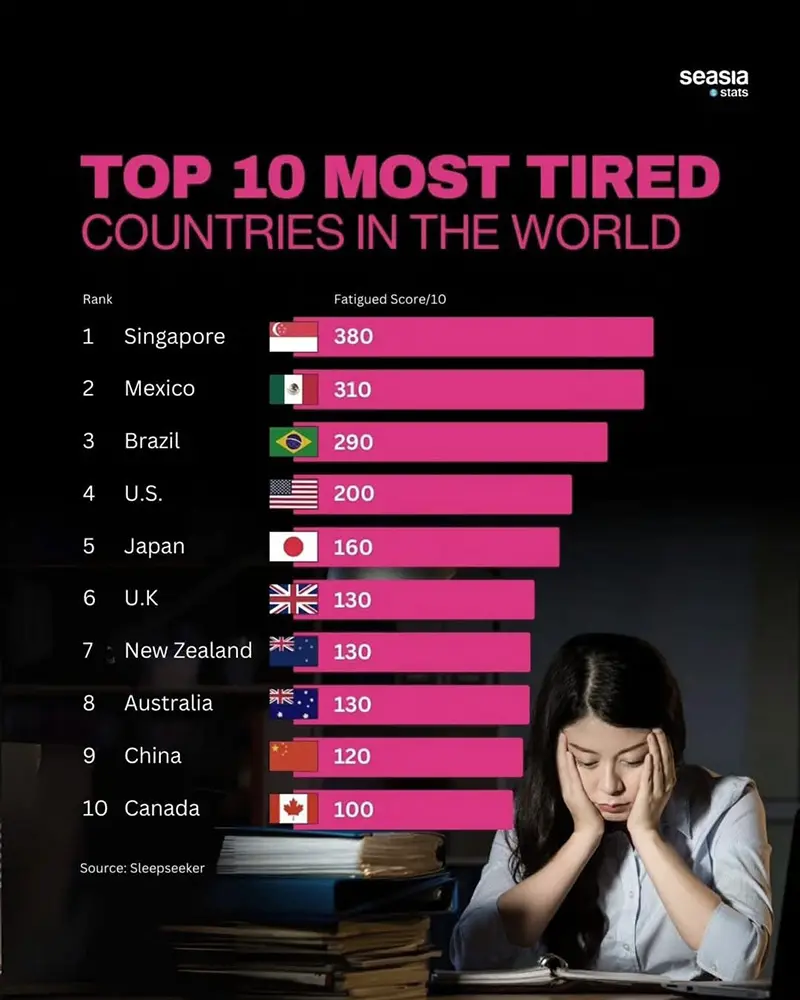
Sleepseeker’s 2025 report revealed that Singapore is the world’s most tired country, with a fatigue score of 380 out of 10!
The ranking considers factors such as:
Despite being one of the most efficient and developed cities in the world, the drive for productivity to keep up in our fast-paced lifestyle has made rest and self-care a luxury.
Experts emphasise the urgent need for better work-life balance in the city-state. With burnout becoming more prevalent, governments and employers are being urged to prioritise mental health, flexible schedules, and a culture of rest — critical steps to take in ensuring progress does not come at the expense of wellbeing.
Stress can disrupt our regular hormonal response system, triggering neurogenic and inflammatory responses at the skin level and directly affecting the skin’s ageing process.
For example, increased stress levels lead to the release of the hormone cortisol; resulting in an increase of sebum production and the likelihood of getting acne.
Stress can also cause the skin to dry out and develop wrinkles. Over time, hyperpigmentation and volume loss can also occur.
Stress can affect how people eat, leading to changes in food intake. While research shows that stress can cause some individuals to eat more and others to eat less, often depending on how severe the stress is, there are patterns that emerge [4].
People under chronic stress tend to crave foods that are high in sugar and fat. Long-term stress has been linked to weight gain, especially in men, and may play a role in obesity [4].
Studies indicate that stress and high cortisol levels can lead to increased abdominal fat, which is linked to metabolic syndrome. Mindfulness practices can help reduce stress and improve eating habits, potentially leading to less abdominal fat over time [5].
Obesity is caused by various factors, and this review highlights how stress contributes to its development, offering important insights into the connection between obesity and stress [5].

Stress can trigger migraine attacks in people who are prone to them. This happens due to changes in the body’s response to stress, like the release of certain hormones, and also due to how individuals react to stress mentally [6].
Many migraine sufferers identify stress as their main trigger. Stress can lead to more frequent migraines and may even turn occasional migraines into chronic ones. When someone has a migraine, it can also be a source of stress, creating a cycle where both stress and migraines worsen each other [6].
When people feel stressed, their bodies release hormones like adrenaline and cortisol.
Adrenaline kicks in the “fight-or-flight” response, increasing blood flow and tensing muscles to prepare for action. Cortisol helps the body focus on immediate threats by shutting down systems like digestion and reproduction. Once the threat is gone, the body usually goes back to normal [7, 8].
However, if stress occurs frequently, excess adrenaline and cortisol can cause muscle tension and pain. Over time, stress can also affect the nervous system, making the body more sensitive to pain, even from minor triggers [7, 8].
Disclaimer: The information provided herein is intended solely for educational purposes. This article is not intended to serve as medical advice or consultation. The content is not a substitute for professional medical diagnosis, advice, or treatment. Individuals should seek advice from their physician or other qualified health care providers for any questions regarding a medical condition. Do not disregard professional medical advice or delay seeking it because of something you have read in the article.