Who qualifies for breast fat transfer in Singapore? Check health criteria, donor fat, contraindications and timing after pregnancy.
October 26, 2026


Public parking available or drop off along Arab Street, Village Hotel Bugis (Previously known as Golden Landmark Hotel)
Buses (2, 12, 32, 33, 130, 133, 133A, 520, 960, NR7) MRT (alight at Bugis MRT station)


Here’s a read on what cellulite is about to help you better understand the condition and take either preventive or remedial action, depending on your condition.

There are perhaps not many things as frustrating and disconcerting as cellulite.
“Orange peel”, “cottage cheese,” and the slightly bemusing “mattress phenomenon” are just some of the common and unflattering terms used to describe its appearance.
Here’s a read on what cellulite is about to help you better understand the condition and take either preventive or remedial action, depending on your current state.
A key contributing factor to cellulite is poor blood flow [1].
The reasons behind this are plenty, and they include:
The above does not need further elaboration, but the interesting point is that a deskbound job constitutes a “sedentary lifestyle”.
So do remember to get up from your seat, move around and massage your legs to promote better circulation.
As far as ageing is concerned - even though it is a natural process - you can adopt healthy skincare practices, good dietary habits, and a lifestyle that includes physical activity (and mental exercises).
These can help reduce its harsh effects, not only on cellulite but also on your overall well-being.
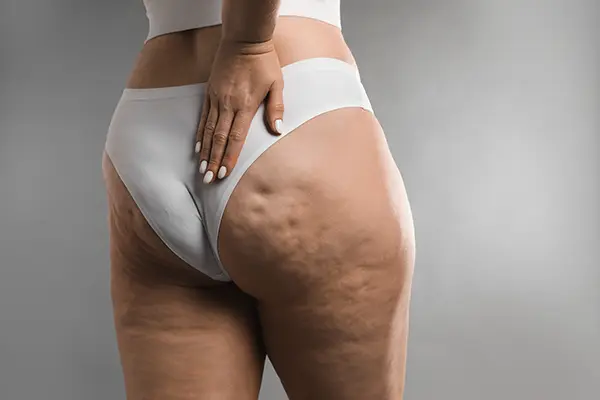
According to the clinical presentation, the scale used to classify cellulite is proposed by Nürnberger and Müller and consists of four grades [6].
Zero: No changes
Grade I: Visible changes in muscle contraction
Grade II: Visible changes when there is no manipulation
Grade III: Visible changes associated with nodulations
There is a copious amount of myths surrounding cellulite. Some of which include:
Men do get cellulite.
The only (slight) difference is that women are more affected because they carry more fat around the thighs and hips.
Women have less connective tissue, and these, together with the fat cells, are arranged vertically rather than in a criss-cross pattern like in men.
People who are not overweight are affected by cellulite.
It’s just that overweight individuals carry more fat, especially under the skin, resulting in more visible cellulite.
As for lotions and topical creams, those that contain retinol provide temporary “camouflage” (that’s what they essentially do), but that’s about it. It’s not a long-term solution.

No, cellulite is not a medical condition; it is a cosmetic concern. It is one of the most common lipodystrophy syndromes [7]. It poses no health risks; however, it may affect one's self-esteem.
While it may not be possible to completely prevent cellulite, maintaining a healthy lifestyle can help minimise its appearance. Regular exercise, a balanced diet, and staying hydrated can be beneficial.
Various treatments claim to reduce cellulite [8], including:
Some people find success with home remedies such as dry brushing, coffee scrubs, or regular exfoliation. However, scientific evidence supporting their effectiveness is limited.
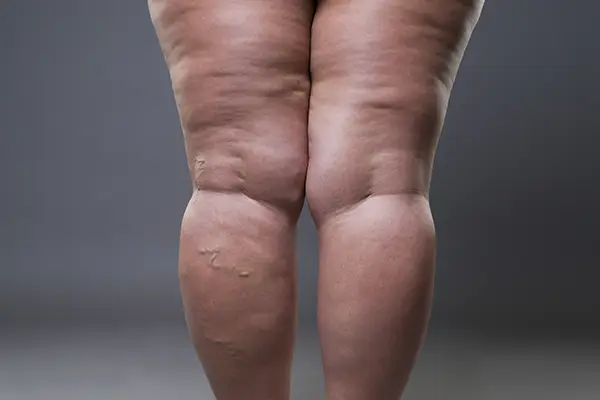
This is not a myth, per se. Cellulite can develop at any age, but it is more commonly seen in women as they get older, often appearing in their 20s and beyond.
Weight loss may help reduce the visibility of cellulite, but it does not guarantee its complete disappearance [10]. Even thin individuals can have cellulite.