Who qualifies for breast fat transfer in Singapore? Check health criteria, donor fat, contraindications and timing after pregnancy.
October 26, 2026


Public parking available or drop off along Arab Street, Village Hotel Bugis (Previously known as Golden Landmark Hotel)
Buses (2, 12, 32, 33, 130, 133, 133A, 520, 960, NR7) MRT (alight at Bugis MRT station)


Liposuction extends far beyond mere cosmetic enhancement. It also offers medical and health benefits, including improving your health markers. Here's how.
Liposuction is widely recognised as a surgical procedure designed to remove persistent fat deposits that resist the effects of diet and exercise.
While liposuction extends far beyond mere cosmetic enhancement, it also offers notable medical and health benefits, including improving your health markers.
Here's how, according to extensive research and studies.
The subcutaneous fat lies beneath the skin and is made mainly of lipocytes. It serves as a cushion to trauma, a heat insulator, and a significant source of energy and hormone metabolism.
When there is a surplus of calories in our body, the fat cells multiply and expand, filling the new spaces with triglyceride. When one loses weight, fat cells shrink, but they do not AND CANNOT disappear.
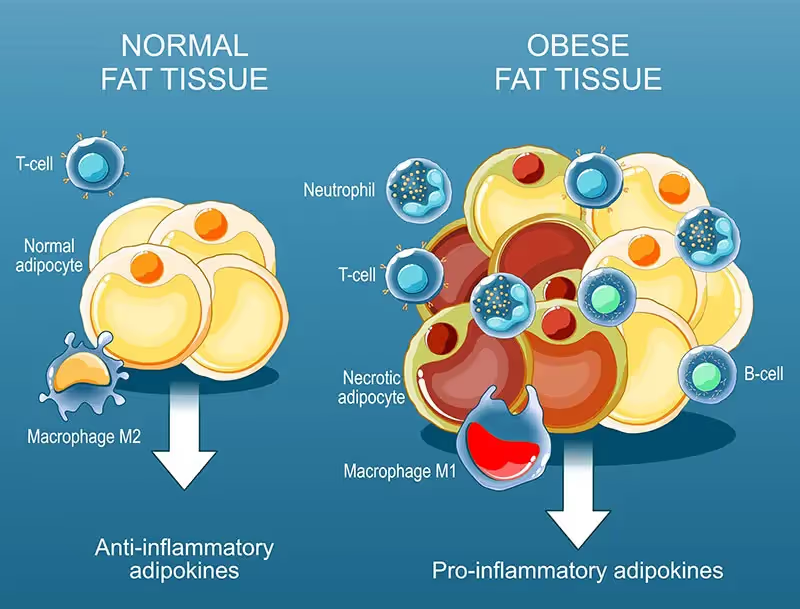
| Fatty acids | Released into the bloodstream, contributing to increased levels of bad (LDL) cholesterol, blood glucose, and blood pressure. |
| Inflammatory agents | Triggers chronic inflammation throughout the entire body, potentially leading to the development of various diseases. |
| Other chemicals | Fat cells can also store various chemicals, such as alcohol and pesticides [1], which can be released into the body over time. |
| Triglyceride | The primary role of the fat cell is to store energy. |
| Hormones | Produces hormones such as leptin, adiponectin and sex hormones. Hormonal imbalance can lead to metabolic issues. |
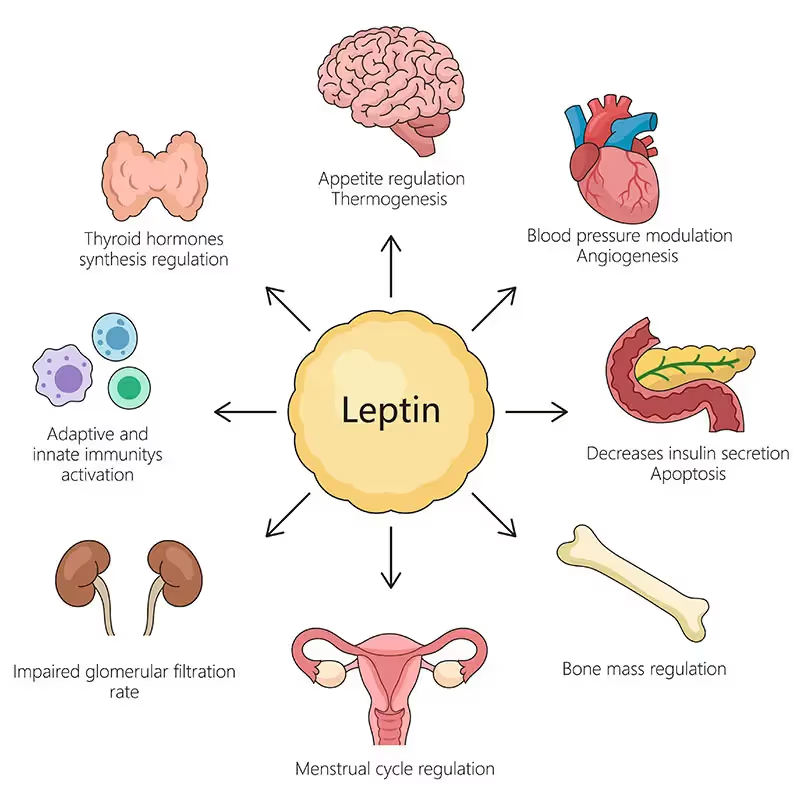
Leptin is a hormone primarily produced in fat cells. It plays a multifaceted critical role in:
Excessive subcutaneous fat can lead to leptin resistance. When this happens, the body cannot respond to its signals.
While subcutaneous fat is often associated with being unsightly, the real dangers arise when it becomes excessive.
This excess can lead to chronic inflammation and promote risk of chronic health problems such as:
| Joint and bone problems | Increased body weight adds pressure on joints, potentially leading to osteoarthritis and joint discomfort. |
| Heart disease and stroke | Excess subcutaneous and visceral fat contributes to the development of heart disease and stroke. |
| Type 2 diabetes | Insulin resistance, which is a distinctive characteristic of type II diabetes, is often associated with excess fat, particularly visceral fat. |
| Metabolic syndrome | High levels of blood pressure, blood sugar, excess abdominal fat and triglyceride is usually related with excess subcutaneous and visceral fat. |
| Some cancers | Research has reported that excess body fat, especially in the abdominal, increases the risk of specific types of cancer [2]. |
According to extensive research, liposuction can lower the risk of contracting certain diseases, as it eliminates excess fatty tissues from the body by removing them from areas where they accumulate and pose health risks.
| Improvements | How lipo improves health markers |
| Lower Blood Pressure [3] | Liposuction reduces fat in the blood. This results in at least a 25% decrease in triglyceride levels, which in turn lowers blood pressure. |
| Fewer White Blood Cells [4] | By removing subcutaneous fat, systemic inflammation will be reduced, thus lowering the count of leukocytes (white blood cells). |
| Boosts Metabolism [5] | Lipo leads to fat loss, without causing any change in lean mass. This will improve insulin sensitivity and overall metabolic health. |
| Decreased Cardiovascular Risk [6] | Reducing fat can lower vascular inflammation in obese patients, thereby reducing the risk of heart disease. |
| Lowers Body Fat [7] | When combined with exercise, lipo can enhance body composition by preserving muscle mass while reducing overall body fat. |
| Improved Insulin Sensitivity [8] | Studies show that lipo maintains healthy blood sugar levels and promotes insulin sensitivity, especially in women with type 2 diabetes. |
| Reduction of Visceral Fat [9] | Large volume liposuction has proven to lower weight, decrease body fat, and slim down the waist circumference. |
| Relief of Lipedema Symptoms [10] | Lipo relieves pain, boosts mobility, and improves quality of life for lipedema patients. |
| Hormonal Balance [11, 12] | Lipo alters levels of leptin and ghrelin that will regulate appetite and control body weight. |
| Lower Inflammation Markers [13, 14, 15] | Lipo can decrease the risk of inflammation and obesity-related issues as the reduced fat will lower levels of C-reactive protein (substance produced by the liver in response to inflammation) and tumour necrosis factor alpha (type of protein that acts as a messenger in cell communication). |
| Decreased Risk of Obesity-Related Disorders [16] | Lipo can lower the risk of issues like sleep apnea, joint issues, and limited mobility associated with high body fat. |