Who qualifies for breast fat transfer in Singapore? Check health criteria, donor fat, contraindications and timing after pregnancy.
October 26, 2026


Public parking available or drop off along Arab Street, Village Hotel Bugis (Previously known as Golden Landmark Hotel)
Buses (2, 12, 32, 33, 130, 133, 133A, 520, 960, NR7) MRT (alight at Bugis MRT station)


Lipedema (known as Painful Fat Syndrome) is a frequently misunderstood chronic medical condition that affects a staggering 370 million women worldwide.

Lipedema, also spelt as lipoedema and known as Painful Fat Syndrome, is frequently misunderstood as a chronic medical condition that affects a staggering 370 million women worldwide.
A study shows that the pain experienced by individuals with lipedema is real and measurable, not just psychological. The Lipedema Foundation's 2022 report revealed that they experience significant discomfort, with an average pain intensity of 5 out of 10, and only 4% reporting no pain. Unfortunately, their symptoms are often dismissed by healthcare professionals.
Some patients experience lipedema pain flare-ups similar to pain in other chronic conditions that damage nerves [1, 2]!
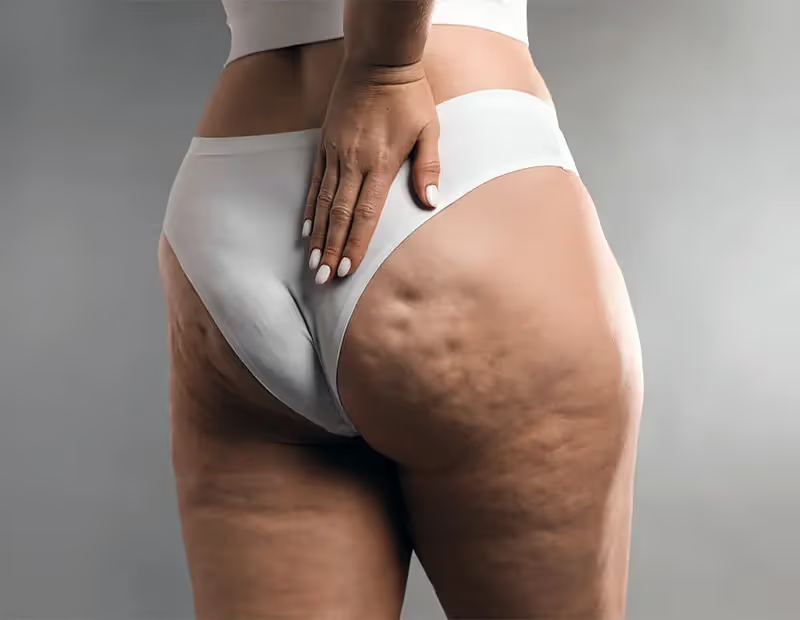
Characterised by the abnormal accumulation of fat in specific areas, including the hips, buttocks, upper and lower legs, and arms [3], lipedema often causes significant pain and functional limitations.
Lipedema is frequently accompanied by pain, discomfort, swelling, and increased susceptibility to bruising, which limit mobility and affect quality of life.
Lipedema, also known as painful fat syndrome, is characterised by pain caused by abnormal accumulation of subcutaneous fat in the legs, arms, and buttocks.
This medical condition is accompanied by pain, tenderness, and discomfort due to localised inflammation, reduced tissue oxygen, and internal pressure on nerves and joints from fat-cell swelling.
The pain occurs at varying intensities, with characteristics such as dullness, throbbing, or sharpness, and with varying duration and timing.
Patients report that their persistent pain intensifies in the evening [4, 5] and that applying activity or physical pressure to the affected area worsens the pain.
Patients with severe lipedema often suffer from mobility limitations that affect their quality of life.
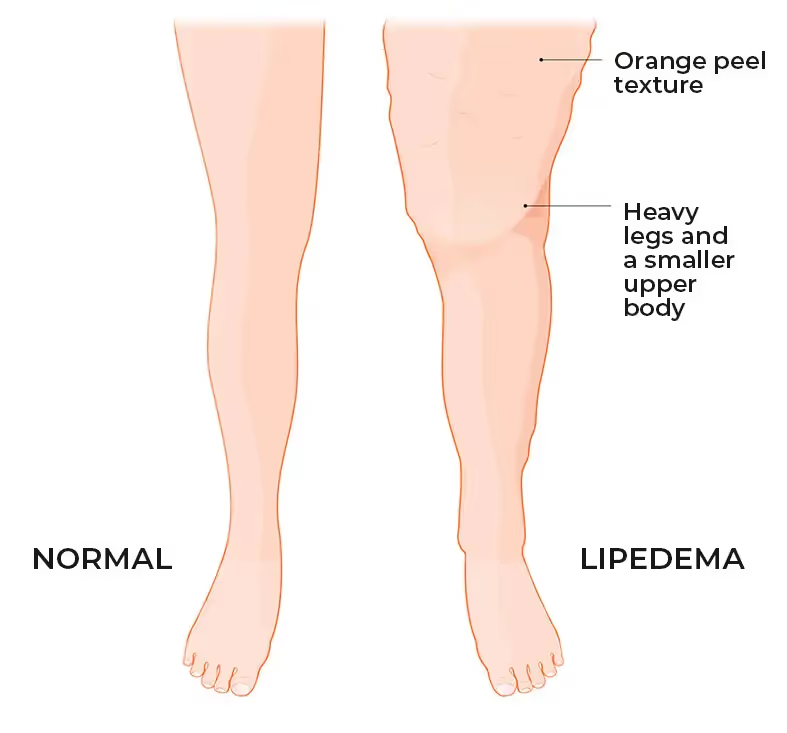
In patients with lipedema, fat distribution differs from that of normal fat, often resembling tumour-like growths and causing significant tenderness upon touch.
The fatty deposits typically concentrate in the upper and lower limbs and knees, resulting in discomfort during movement and, over time, potential damage to the arms, knees, and ankles.
Lipedema symptoms tend to progress gradually, therefore necessitating timely intervention and management.

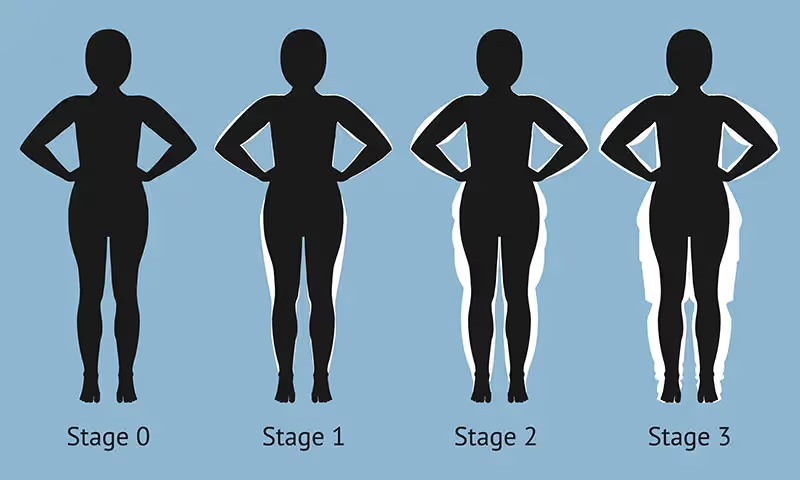
This painful fat syndrome was also noted to worsen during pivotal life stages like puberty, pregnancy, or menopause.
This suggests there may be a hormone influence on the causation of lipoedema, while some individuals inherit lipedema from their families.
This painful fat syndrome can also be associated with bruising, heaviness in the legs and/or arms, and changes in skin texture.
It can lead to reduced mobility and psychological issues, such as low self-esteem.
Severe or chronic lipedema pain can impair daily activities, lower the quality of life and detrimentally affect the patient's self-image.
Despite efforts such as exercise, weight loss, and physical therapy, managing the affected areas remains challenging for most patients.
Unlike typical fat, the pathological fat in lipedema is poorly responsive to standard weight-loss methods.
According to research, the majority of patients who underwent liposuction reported significant reductions in pain, swelling, tenderness, and bruising [1].
In Singapore, painful fat syndrome can be effectively treated with lipedema surgery using the MDC-Sculpt®️ Lipo Technique.
This surgery aims to remove "sick fat" (adiposopathy), alleviate physical symptoms such as pain, slow the progression of the disease and improve quality of life for women with lipedema.
The procedure is carried out under local anaesthesia with the patient under twilight sedation in an accredited Day Surgery Centre in Singapore.
While all published guidelines acknowledge pain as a possible symptom, none require its presence for a person to receive a lipedema diagnosis [8, 9].
Some doctors define lipedema not only as an accumulation of adipose tissue but also as a painful accumulation of adipose tissue, whereas other clinical practices specifically use pain as a criterion for diagnosis.
For an accurate diagnosis, it is recommended to book an appointment with Dr Ivan Puah, who has successfully treated Lipedema patients in Singapore and the Asia Pacific region.