
Who qualifies for breast fat transfer in Singapore? Check health criteria, donor fat, contraindications and timing after pregnancy.
October 26, 2026


Public parking available or drop off along Arab Street, Village Hotel Bugis (Previously known as Golden Landmark Hotel)
Buses (2, 12, 32, 33, 130, 133, 133A, 520, 960, NR7) MRT (alight at Bugis MRT station)


Essential nutrients are vital for us to function. Among the nutrients that our body needs is magnesium. Let’s find out more about this precious mineral.

Magnesium is crucial for bone health, energy production, and nervous system regulation. It supports brain health, mood, sleep, stress management, and blood pressure. Rich sources include quinoa, nuts, avocado, spinach, and edamame. Supplements should be used cautiously and under a doctor's guidance. Maintaining adequate magnesium levels is vital for overall health.
Our bodies need vitamins and minerals to help them grow, develop, and stay healthy.
These essential nutrients are vital for our daily functioning.
Among the nutrients that our body needs is magnesium.
Let’s find out more about this precious mineral.
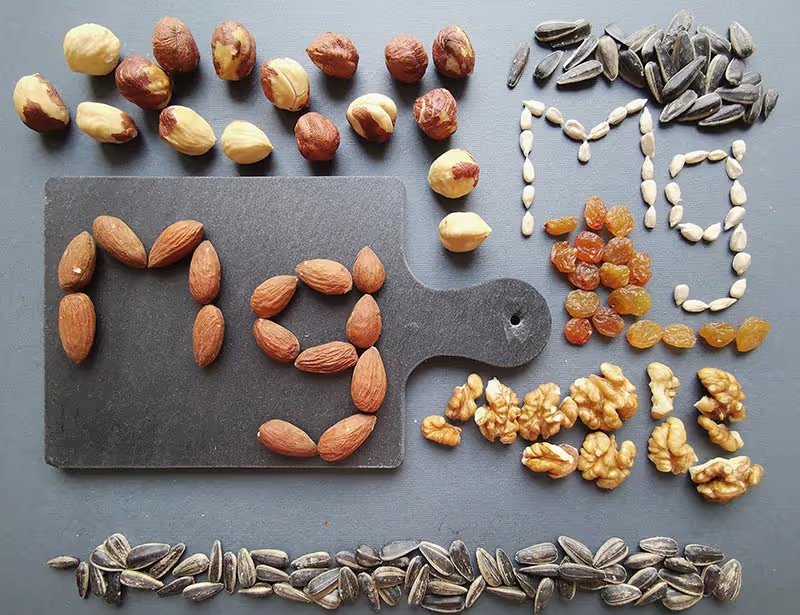
Magnesium is a mineral crucial to our body’s functions.
This mineral can be found in the sea, on land, in animals, and in plants.
Magnesium can also be found in various food groups and as a dietary supplement.

Calcium and Vitamin D are often in the limelight regarding bone health, but magnesium also plays an equally important role.
It works in conjunction with Vitamin D to help normalise calcium levels.
More importantly, magnesium can also lower the risk of fracture.
60% of the magnesium in our bodies is found in the bones, and the rest is distributed in soft tissues, muscles, and even blood.
Its role as an enzyme cofactor means magnesium is essential in regulating our body’s biochemical reactions.
Among its many functions are energy production by converting food into energy, protein synthesis, facilitating muscle contraction and relaxation, regulating the body’s nervous system, and maintaining genes.
Healthy magnesium levels help to stabilise mood and promote better sleep [1].
It also helps keep stress in check by regulating the body’s stress response system.
Magnesium can also help prevent migraines [2].
In people with elevated blood pressure, this essential mineral has been shown to help lower blood pressure [3].
It has also been shown to have anti-inflammatory benefits [4].
Health conditions that can lead to magnesium deficiency include gastrointestinal diseases [5], diabetes [6] and kidney disease [7].

Magnesium can be found in a variety of foods.
Some examples are quinoa, nuts like almonds and cashews, avocado, spinach, and edamame.
Incorporating these foods supplies the body with this mineral.
Additionally, you can buy magnesium supplements off the shelf for your needs.

However, check with your doctor before you buy any magnesium supplements, as they may not be advisable if you’re on antibiotics and heart medications.
Our body is truly amazing, but what makes it so is what keeps it running.
Remember to get the essential nutrients you need to keep it running like a well-oiled machine.
So eat right and live well!