Who qualifies for breast fat transfer in Singapore? Check health criteria, donor fat, contraindications and timing after pregnancy.
October 26, 2026


Public parking available or drop off along Arab Street, Village Hotel Bugis (Previously known as Golden Landmark Hotel)
Buses (2, 12, 32, 33, 130, 133, 133A, 520, 960, NR7) MRT (alight at Bugis MRT station)


Understanding the difference in procedures, and having realistic expectations are crucial steps when considering breast enhancement options.

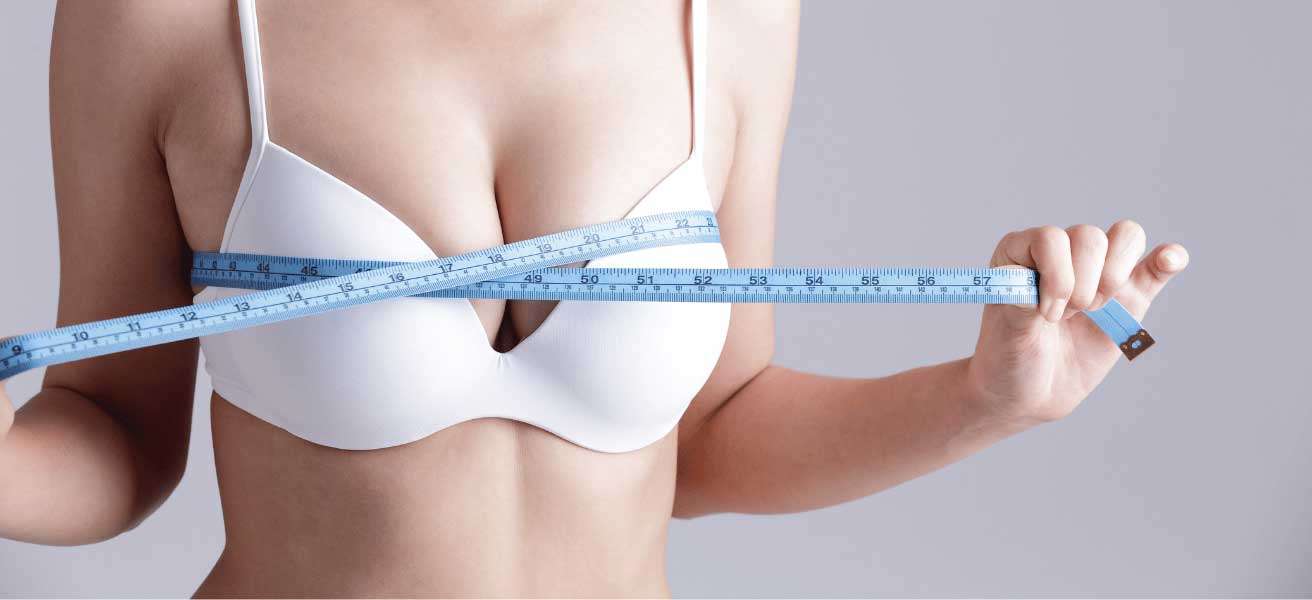
Breast implants deliver a larger, more dramatic size increase (2–3+ cup sizes) starting from SGD 7,000, but require replacement every 10–15 years and carry surgical-object risks (rupture, capsular contracture). Breast fat transfer uses your own liposuctioned fat to add 1–1.5 cup sizes with a softer, natural feel, minimal scarring, and faster recovery, starting from SGD 5,000++ onwards, but results are more modest and roughly 30% of transferred fat may be reabsorbed. The right choice depends on how much size increase you want versus how much you value a natural feel and shorter downtime.

| Factor | Breast implants | Breast fat transfer |
|---|---|---|
| Cost (Singapore) | From SGD 7,000++ to SGD 18,000++ | SGD 5,000++ onwards |
| Size increase | Several cup sizes | 1 to 1.5 cup sizes |
| Recovery time | 4–6 weeks | A few days |
| Feel | Firm, taut, water-balloon-like | Soft and natural |
| Scarring | Visible, under breast or armpit | Minimal |
| Main risks | Rupture, capsular contracture, BII, ALCL, infection | Fat necrosis, calcifications, ~30% fat reabsorption |
| Longevity | Replace every 10–15 years | Long-term but may need touch-up sessions |
| Best for | Significant, dramatic size change | Natural, moderate enhancement + body contouring |
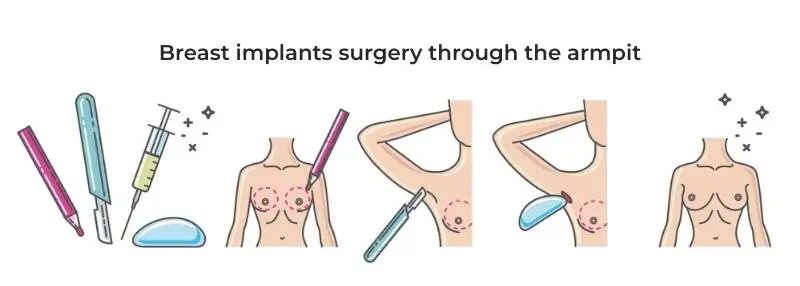
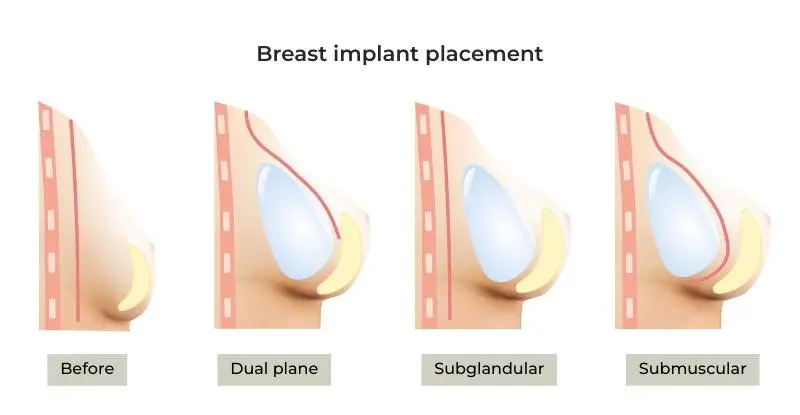
A surgeon makes an incision, typically in the breast crease, armpit, or around the areola, and places a silicone or saline implant either behind the pectoral muscle or between the muscle and breast tissue. The method for breast implant positioning will depend on the implant type, the desired size, the patient's body type and the surgeon's recommendation.
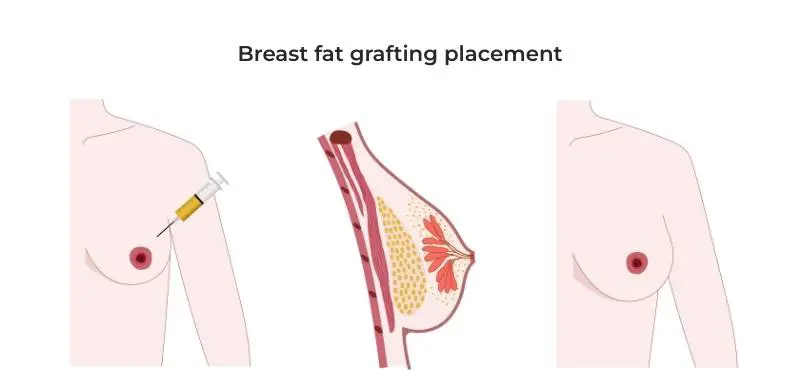
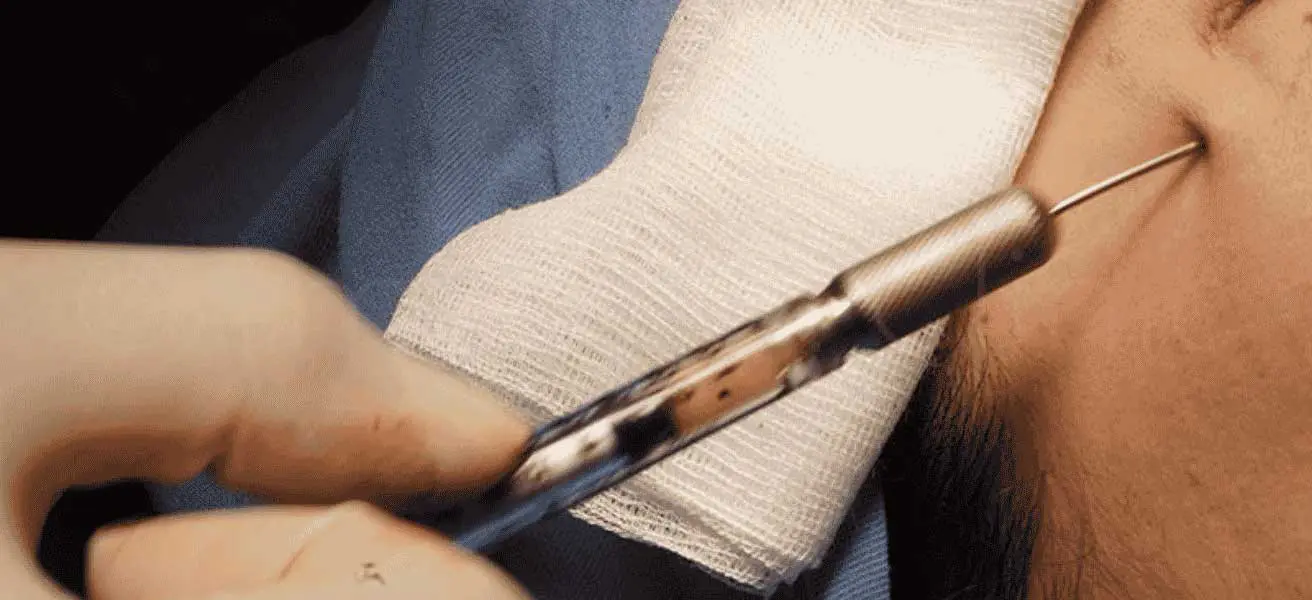
Excess fat is removed via liposuction from donor areas such as the abdomen or thighs, purified to preserve healthy fat cells, then injected into the breast to add volume and shape.
Key entity distinction: implants are a foreign medical device; fat transfer uses the patient's own tissue (autologous), which is why it's often chosen by people who specifically want to avoid a synthetic implant in the body.
| Factor | Breast implants | Breast fat transfer |
|---|---|---|
| Texture | Smooth or textured shell | Natural fat tissue |
| Sensation | Can feel less natural | Natural |
| Placement | Over or under chest muscle | Injected around/below breast tissue |
| Look | Full, rounded | Natural, proportionate fullness |
Choose breast implants if you:
Choose breast fat transfer if you:
Both candidates should be in good physical and mental health before proceeding.
Breast implants are not a one-time, permanent solution. Evidence-based complications include:
| Treatments | Breast Implants |
|---|---|
| Implant Rupture | 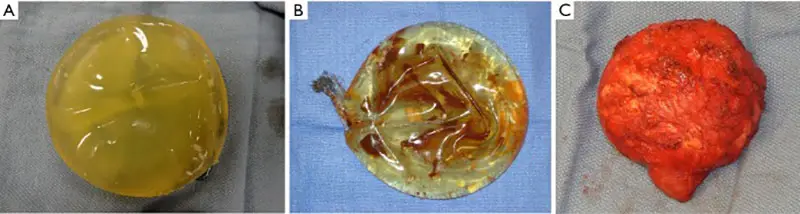 Image source [1]: Variations of implant rupture. (A) Intact 1st generation implant with evidence of gel "bleed"; (B) ruptured second generation implant with free silicone leak; (C) intracapsular rupture of silicone implant in a patient who presented with a breast lump. The most common cause of breast implant rupture is iatrogenic damage, meaning the rupture is often caused by implant damage during placement [2], normal wear and tear and capsular contracture, which is the formation of scar tissue around the implant. Evaluation for implant rupture is primarily driven by patient symptoms, including a change in breast shape, size or firmness, capsular contracture, palpable lumps or breast pain [3]. |
| Implant Leakage | Silicone leakage, such as silicone sweating (gel bleed), has been associated with loco-regional effects such as histolytic necrotising lymphadenitis and with systemic disorders such as autoimmune and connective tissue diseases [4]. |
| Capsular Contraction | 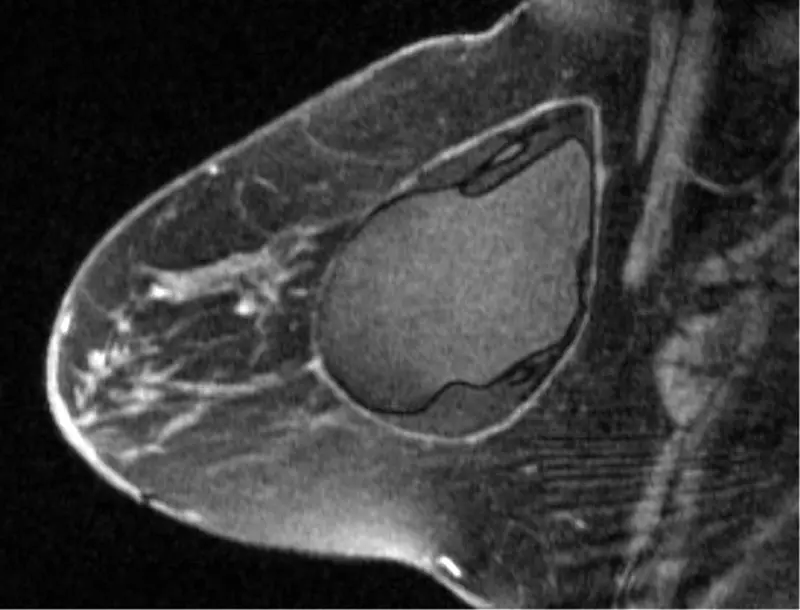 Image source [2]: Magnetic resonance imaging (MRI) of a second-generation implant with intra-capsular rupture, there is free silicone liquid within the capsule. Capsular contracture is where scar tissue thickens around the implants, resulting in implant hardening and distortion. |
| Hematoma | Hematomas, solid swellings of clotted blood within the tissues [5]. |
| Wound Infection | Wound infection has been rated as the third most common breast implant complication [5]. |
| Long Recovery | Women who have had breast implants frequently experience local complications during the subsequent five years [5]. |
| High Complication Rate | 23.8% had at least one local complication each after implantation, although complications were significantly less frequent after cosmetic implantation than after implantation following mastectomy for cancer or cancer prophylaxis [5]. |
| Breast Implant Illness (BII) | Symptoms of Breast Implant Illness include: • Lymphomas [6] • Sleep disturbances [7] • Morning stiffness that sometimes may last more than an hour [7] • Fibromyalgia [7] • Muscle weakness can be severe and may render the patient bedridden [7] • Dry eyes and dry mouth, which are typically severe [7] • Severe neurological manifestations [7] • Atopic symptoms, such as sneezing, a runny nose, itchy eyes, red eyes, nasal congestion and post-nasal drip [7] • Occurrence of hives and/or Quincke's edema [7] • Symmetric polyarthritis compatible with a diagnosis of rheumatoid arthritis [8 ,9] • Asthma, pulmonary nodules, interstitial lung disease, pulmonary silicone embolism [10] This has led to a rise in breast explant surgery. |
| Rippling | Stretch marks or 'rippling' on their breasts is a frequent complication following breast augmentation or implant-based reconstruction and results in significant patient dissatisfaction [11]. |
| Not a permanent solution | The rate of rupture increases over the life of the implant. Patients with breast implants need to change their implants every 10 to 15 years. |
| Change in breast size | Saline and silicone implants present some hallmarks that give them away, especially in later years, as the patient ages and their body changes. For example, breast implants look like symmetrical orbs, while natural breasts are pear-shaped and rarely the same shape and size. The positioning of implants on the chest is another giveaway. Implants also don't move like natural fat in the breast tissue and tend to be static. |
| NIpple shifting | Some women have also found that their nipples have somewhat moved away from the equator after the procedure. |
Regular clinical follow-up is recommended for anyone with breast implants to catch complications early.
Breast explant surgery can be done for several reasons, including replacing old implants, tissue hardening around the implant, or other complications.
Breast implant removal surgery is carried out by plastic surgeons for reasons such as silicone leakage and scar tissue that formed following breast implantation.
In many cases, the scar tissue that develops following implant placement is mild and does not require removal, but it may also harden and cause pain and discomfort. This is typically the justification for having the implants and scar tissue removed.
Breast implants will require replacement or removal roughly every 10 to 15 years. In some cases, the implant's outer shell degrades, allowing silicone to leak and scar tissue to stiffen around the implant. It's critical to understand that your implants should be removed if this happens.
Patients may also suffer from breast implant illness (BII) that presents symptoms such as fatigue, joint pain, brain fog and dry eyes. This has led to a rise in breast explant surgery.

Dr Ivan Puah is an MOH-accredited liposuction doctor with over 20 years of experience in liposuction and fat grafting in Singapore, and was among the first doctors to introduce autologous fat grafting to Singapore in 2007. He trained in syringe liposculpture and fat grafting under French plastic surgeon Dr Pierre François Fournier, with further training in Italy, the US, and Argentina.

Choose a doctor accredited by Singapore's Ministry of Health (MOH) to perform liposuction. Since fat grafting requires harvesting fat via liposuction before reinjecting it into the breast, the doctor needs surgical credentials covering both steps.
Yes. Beyond MOH liposuction accreditation, outcomes depend heavily on the doctor's experience and aesthetic judgment, specifically, skill in harvesting quality fat, purifying it correctly, and placing it symmetrically. Look for doctors with dedicated training in fat grafting technique, not just general liposuction.
Many patients achieve their desired result in a single session. The number needed depends on your aesthetic goals, available donor fat, and how much transferred fat successfully establishes a blood supply. A qualified doctor will set realistic expectations during consultation.
Breasts contain both glandular and fatty tissue. Weight loss burns fat throughout the body, including the breasts, which often hollow out first, leading to a deflated or disproportionate look. Autologous fat grafting can restore this lost volume using the patient's own tissue.
Breast fat transfer in Singapore typically starts from SGD 5,000++ onwards, compared to SGD 7,000++ to SGD 18,000++ for breast implants, depending on implant type and surgeon expertise. Final pricing depends on the amount of fat transferred, complexity of the procedure and individual patient factors., and clinic.
Fat transfer avoids implant-specific risks like rupture, capsular contracture, and Breast Implant Illness, and has minimal scarring. Its main downsides are roughly 30% fat reabsorption and a smaller achievable size increase (1–1.5 cup sizes) compared to implants.