Who qualifies for breast fat transfer in Singapore? Check health criteria, donor fat, contraindications and timing after pregnancy.
October 26, 2026


Public parking available or drop off along Arab Street, Village Hotel Bugis (Previously known as Golden Landmark Hotel)
Buses (2, 12, 32, 33, 130, 133, 133A, 520, 960, NR7) MRT (alight at Bugis MRT station)


With high testosterone levels produced puberty, for the vast majority of men, the breast tissue does not develop like it does for their female counterpart.

Gynecomastia, enlarged male breast tissue, commonly called "man boobs", is a real medical condition, not just a cosmetic concern. It can cause physical discomfort and affect confidence, but it's highly treatable.
Below, Dr Ivan Puah answers the questions that Singaporean men most often ask about causes, risk factors, and gynecomastia (male breast reduction) surgery.
Dr Ivan Puah, MBBS (NUS), is the Medical Director of Amaris B. Clinic and an MOH-Accredited Liposuction Doctor with close to 20 years of experience in gynecomastia and male chest contouring surgery.
He developed the proprietary 360° GTD® technique for gynecomastia surgery, and was trained under US plastic surgeon Dr Miguel A. Delgado in San Francisco, and has published research papers on gynecomastia surgery in Asian men, including a 2025 paper in the 'World Journal of Plastic Surgery'.
He is affiliated with the Singapore Medical Association and the Society of Aesthetic Medicine Singapore.
No, not in the way most people think.
Hoppy beers such as IPA contain phytoestrogens (plant-based compounds that weakly resemble estrogen). Still, the levels are far too low to disrupt hormone balance meaningfully.
Heavy alcohol consumption of any kind is harmful to overall health, but "beer belly" and man boobs from drinking are more commonly linked to weight gain and liver strain than to phytoestrogens specifically.
Generally, no, this is a popular myth in Singapore and across Asia. Soy contains isoflavones, a class of phytoestrogens that may mildly mimic estrogen.
Research on soy's actual hormonal effect is mixed, but consuming soy in normal dietary amounts is considered safe and unlikely to cause gynecomastia on its own.
Yes. Gynecomastia can occur in infants, teenagers, and adult men of any ethnicity, and often resolves on its own, though not always.
| Gynecomastia in infants | More than half of male babies are born with enlarged breast tissue due to the mother's estrogen. This usually resolves within 2 to 3 weeks after birth. |
| Gynecomastia in puberty | Hormonal changes commonly cause gynecomastia in teenage boys. It typically resolves without treatment within 6 months to 2 years. |
| Gynecomastia in adults | Among men aged 50–80, studies estimate 24 to 65% are affected, meaning at least 1 in 4 men in this age group has some degree of gynecomastia, often without symptoms. |
Yes. Studies show close to 65% of men aged 27 to 92 have some degree of gynecomastia. As men age, testicular function gradually declines and body fat tends to increase, both of which shift the testosterone-to-estrogen ratio.
This is sometimes linked to "andropause" (male menopause), where testosterone production drops after age 50, contributing to hormonal imbalance and breast tissue growth.
Several common prescription drug classes are linked to gynecomastia, according to the Mayo Foundation for Medical Education and Research (MFMER):
| Medication type | Examples |
| Anti-androgens | Flutamide, finasteride (Proscar, Propecia), spironolactone (Aldactone, Carospir) |
| Anabolic steroids/androgens | Used for hormone deficiency, delayed puberty, muscle-wasting disease |
| HIV/AIDS medications | Efavirenz (Sustiva) |
| ADHD medications | Amphetamine-based drugs (Adderall) |
| Anti-anxiety medications | Diazepam (Valium) |
| Ulcer medications | Cimetidine (Tagamet HB) |
| Heart medications | Digoxin (Lanoxin), calcium channel blockers |
| Stomach-emptying medications | Metoclopramide (Reglan) |
| Others | Tricyclic antidepressants, chemotherapy drugs, some antibiotics, recreational drugs and alcohol |
Gynecomastia can be a symptom of an underlying medical condition, per Johns Hopkins Medicine, including:
Yes, surgery is the only clinically proven permanent solution.
Gynecomastia surgery (male breast reduction) physically removes the enlarged glandular breast tissue.
Non-surgical options like fat freezing or low-energy laser treatments cannot eliminate gynecomastia, because they don't address the glandular tissue itself.
Whether insurance or MediSave can be used to cover gynecomastia surgery is determined by whether the procedure is classified as medically necessary, rather than purely cosmetic.
If your gynecomastia is causing physical symptoms, has persisted for some time, and has not responded to other forms of treatment, there is a stronger case for it to be considered medically necessary, and therefore potentially claimable.
However, the final decision rests with the insurance provider, based on their assessment of your specific case.
Yes, in certain cases. Liposuction is a fat-removal and body-contouring procedure.
It's effective for pseudogynecomastia (fat-only enlargement) or mixed gynecomastia (a combination of excess fat and glandular tissue), often used alongside glandular tissue excision for full correction.
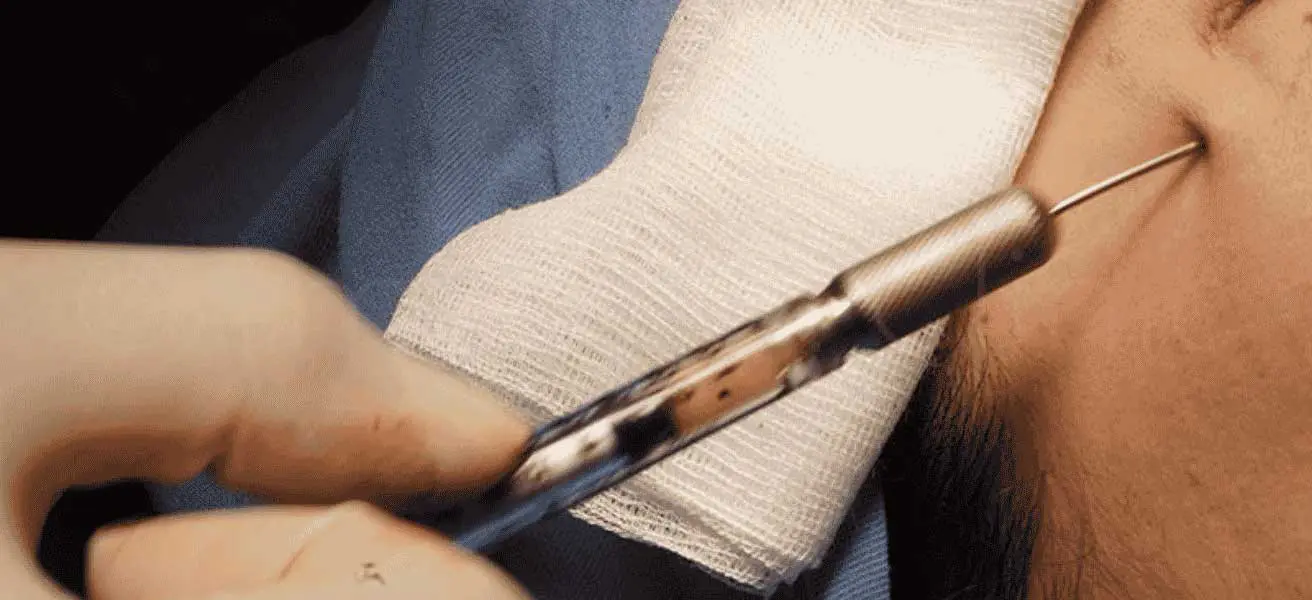
Very small. Dr Ivan Puah performs gynecomastia surgery using endoscopic-line incisions no larger than 4mm, strategically placed to minimise visible scarring.
Usually not, for small to moderate cases. Skin typically shrinks and tightens naturally after healing. Dr Puah's 360° GTD® (Glandular Tissue Dissection) technique is designed to remove glandular tissue while promoting skin retraction.
Patients are required to wear a compression vest 24/7 for 6 to 8 weeks post-surgery to reduce swelling and support skin tightening.
Note: patients with significant skin laxity from major weight loss, bariatric surgery, or long-term severe gynecomastia may see different results than those with typical gynecomastia-related sagging.
Recurrence is uncommon, occurring in about 12.5% of cases at 10+ years post-surgery, according to a 2017 study in the journal Aesthetic Plastic Surgery.
In other words, roughly 9 in 10 patients do not see their condition return. Recurrence risk is generally linked to ageing, hormonal changes, alcohol use, opioids, anabolic steroids, and certain medications.
Only temporarily, and it won't reduce breast size. A cold compress may ease soreness or pain, but it does not affect the underlying glandular tissue causing the enlargement.