How to identify your acne type, Occurrence of Acne in Singapore
Occurrence of Acne in Singapore among adults & teens, acne differences between males & females, how to identify acne types & FAQ in the Singaporean context.
June 12, 2025


Public parking available or drop off along Arab Street, Village Hotel Bugis (Previously known as Golden Landmark Hotel)
Buses (2, 12, 32, 33, 130, 133, 133A, 520, 960, NR7) MRT (alight at Bugis MRT station)


Experiencing acne is a painful struggle. Acne breakouts and scars are more than just a skin issue; they dampen confidence. If over-the-counter products or lifestyle changes haven't worked, it is time for a clinically guided solution.
We recognise that stubborn cystic acne, post-acne scarring, and persistent adult breakouts require tailored solutions rather than one-size-fits-all approaches. This is why we're offering a personalised, medically-driven Acne Management Programme.
Led by Dr Ivan Puah, the acne and acne scar treatment plan will be tailored to your skin and scarring type, whether you're just starting your pimple journey or have been seeking acne and acne scar treatments in Singapore.
Our customised approach combines other skin solutions, including Pico Fractional Laser, RF Microneedling, Exosome Therapy and Hyperpigmentation treatment delivered across a structured three-phase programme: Assessment, active treatment, and long-term maintenance.
Book a consultation with Dr Ivan Puah at Amaris B. Clinic in Singapore today.
According to World Health Organisation criteria[1], acne is defined as a chronic disease based on its clinical characteristics. It is estimated to affect 9.4% of the global population, making this a prevalent and most common skin disorder.
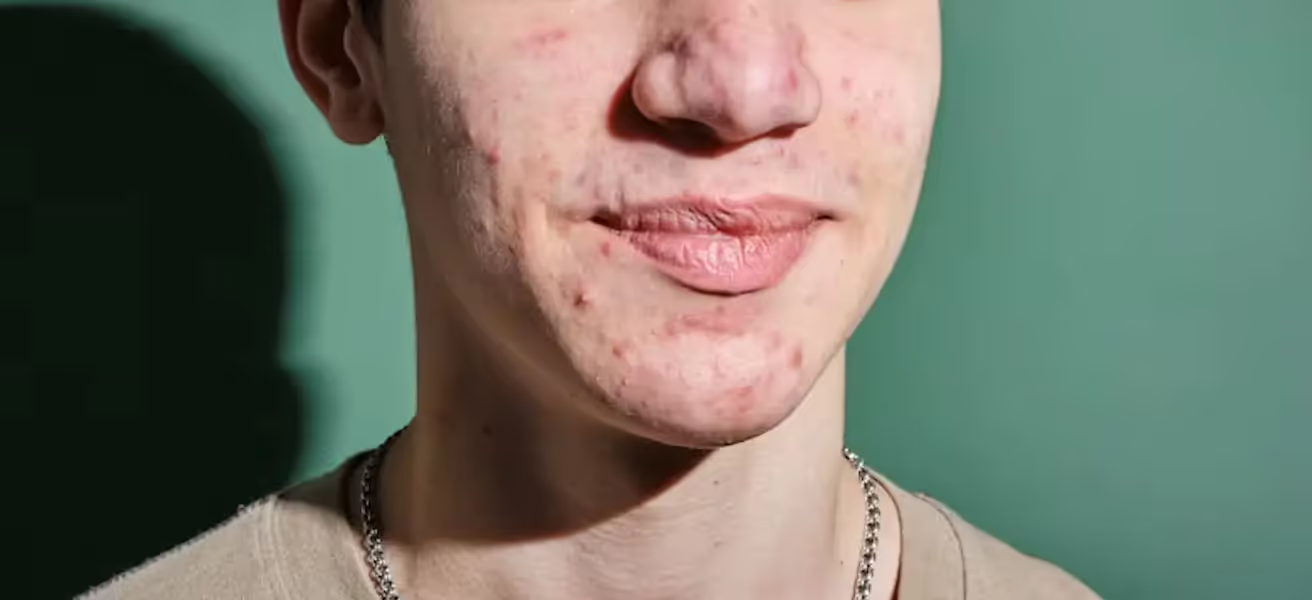
Acne, or acne vulgaris, is a very common skin disorder that affects more than 85% of teenagers[2]. It typically starts at puberty and slowly resolves in the 20s, although there are some who continue to have acne way into their 40s and 50s.
Acne is a multifactorial skin issue caused by overactive oil glands, hormones, and bacterial infection. When oily secretions under the skin block the tiny opening of hair follicles, it can lead to the development of spots such as blackheads, whiteheads, and cysts on the skin.
Acne commonly occurs on the face, neck, back, and chest.
Depending on the severity of the condition, acne symptoms may vary.
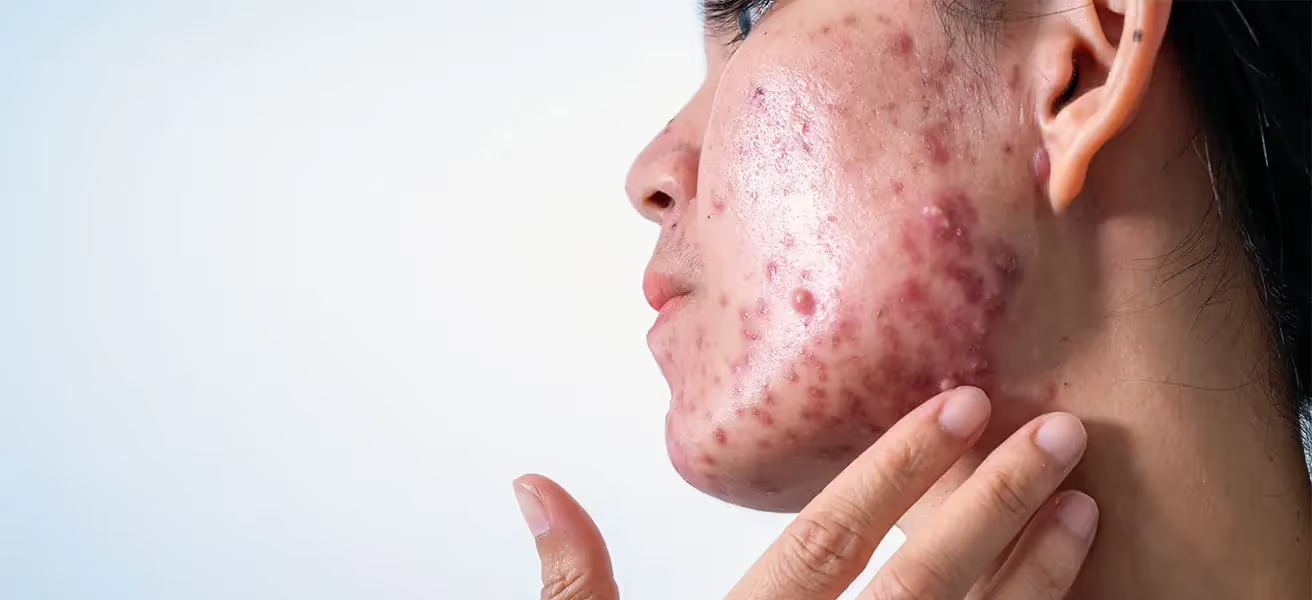
Acne can be classified as mild, moderate or severe, and the type of treatment you will require will largely depend on the type of acne you have and where.

Small bumps.
Do not cause pain or swelling.
Two types: Closed comedones, commonly known as whiteheads, and open comedones (blackheads).

Raised area of skin.
Tender & sore.
Small red or pinkish in colour

Severe form of acne.
Hard, large and painful lesions.
Buried deep under the skin.
Nodular acne can last for weeks or even months.

A most severe form of acne.
If left untreated, there is a risk of permanent scarring.
Large lumps filled with pus (looks similar to boils).
Cause pain and discomfort.
Buried further below than nodules.
Acne occurs when oil and dead skin cells clog up the pores. This combination causes swelling, leading to infection and pus.
Aside from puberty, genetics, hormonal imbalance and using oil-based skin products are also factors behind its appearance. Acne typically appears on the face, chest, and back.
Factors that influence the development and severity of acne include genetics, androgens (hormones), smoking, excess sweating and stress.
Medical conditions such as Cushing's syndrome and polycystic ovary syndrome are known to induce acne eruptions.
Lithium, bromides, and iodides can also trigger acne.
Severe acne can leave significant scarring.
Cystic pimples are inflammatory acne which involves more white blood cells rushing to the area, and because there are more enzymes in that area, it leads to more destruction.
The skin then tries to desperately heal itself, which results in a scar.
There is a major difference between acne marks and scars. Acne marks are usually pigmentation left after the acne is healed.
Acne scars leave an indent on the skin as follows:

Caused by bands of scar tissue that form under the skin, giving the surface of the skin a rolling and uneven appearance.

Broad depressions with sharply defined edges.

Small, deep holes in the surface of the skin that look like the skin has been punctured with a sharp object.

A cutaneous condition characterised by deposits of excessive amounts of collagen, which gives rise to a raised scar, but not to the degree observed with keloids.
Those who suffer from acne and acne scars may lack self-confidence, experience social withdrawal, and feel insecure, inferior, and depressed.
The psychological impact is far worse than the physical.
Different hormones can cause unique acne conditions, so it's important to have a targeted treatment plan that addresses these hormonal factors.
This strategy can help manage acne effectively and reduce the risk of scarring.
During the consultation, Dr Ivan Puah will first assess your clinical condition and grade the acne severity:
Acne treatments
Atrophic acne scars plan
Hypertrophic acne scars plan
Acne medications
With the stage approach, acne treatment is more affordable for patients.
You will also be able to monitor your progress and see the improvement.
You will receive comprehensive care during your anti-acne and skin resurfacing journey.
The treatment plan will be tailored based on your acne condition and skin type throughout the process.
If you are suffering from acne, you would probably have gone through periods of extremely low self-confidence and feelings of despair. Indeed, acne can affect sufferers physically (acne scars) and psychologically.
At Amaris B. Clinic, we have seen many patients who have spent a lot of money trying a variety of "over-the-counter" acne treatments and skin care with little success. Needless to say, this can be extremely frustrating.
Dr Ivan Puah, the Medical Director of Amaris B. Clinic, holds a Graduate Diploma in Family Dermatology from NUS and boasts over 20 years of clinical experience in addressing various dermatological concerns.
His proficiency encompasses the treatment of skin laxity, wrinkles, fine lines, hyperpigmentation, acne scarring, and more.
Dr Puah's knowledge and skill are further acknowledged through his appointment as a trainer-to-doctor by Merz Singapore and Allergan Singapore.

What lifestyle changes can I make to better manage my acne?
Watch What You Eat: Foods high in carbohydrates, such as rice, potatoes, and pasta, can raise blood sugar levels, which can result in acne. Focus on whole grains, beans and vegetables instead.
Get Out And Get Active: Exercise reduces stress and improves blood circulation, both of which benefit your skin. Always shower after workouts.
Include Omega-3 Fatty Acids: Walnuts, avocados, flaxseed oil, salmon and other foods that contain omega-3 fatty acids help control inflammatory acne.
Cleanse your face 2x daily: Use cleansing oil and a gentle cleanser to remove makeup that can clog pores.
Hydrate: Drinking at least 6 glasses of water daily can help improve skin health.
How do diet and leaky gut impact acne severity?
Recent studies have examined the diets and blood zonulin levels (often referred to as leaky gut) of people with and without acne to determine how diet affects acne or triggers it [3].
Zonulin is a protein in the blood that can open spaces between cells in the intestine. This increased permeability might affect acne.
The researchers have found that certain foods, such as red meat, chocolate, milk, and high-glycemic index foods, may worsen acne [4].
What is Pico Laser (Scar Treatment Mode)?
Picolaser is a non-invasive skin laser, that is performed by trained medical doctors to address common skin issues, including pigmented lesions, acne scars, and sunspots.
This skin laser can treat acne scars by creating a "thermal injury" in the targeted area.
The injured skin will then trigger the body's natural healing process. It also enhances elastin production in the skin for a brighter and softer complexion.
Picolaser sends ultra-short pulses of energy, without heat, to targeted areas and shatters the problematic pigment, which is then eliminated naturally by the body.
Does the hair product I use contribute to acne?
All hair care products leave residue on your hair. When you rinse your hair, the hair care residue can travel down your face and body, and it may transfer to your skin from your hair, towel, or pillow after washing.
Research in dermatology revealed that shampoo and conditioner residue can remain on our forehead, cheeks, scalp, and even our back for up to 2 hours, while residue from styling products, such as leave-in conditioners and curl creams, can remain for up to 4 hours.
This extended exposure creates a considerable opportunity for ingredients to penetrate the skin, potentially causing skin irritation and acne [5].
Can undigested collagen cause blackheads and acne in Asians?
A*Star Research shows that genetic mutations affecting how collagen is reshaped could be a hidden cause of acne. People with darker skin tones, like Asians, actually have more collagen, which can make acne and scarring more severe because it makes it harder for the skin to heal properly [6].
Additionally, Asian skin tends to produce more pigment after inflammation, leading to post-acne marks.
Does acne have a psychological impact?
Research shows that people with acne feel unattractive, embarrassed, or self-conscious [7].
Millions of men and women suffer from acne and hyperpigmentation at least once in their lifetime. Some stubborn acne, especially deep, painful cystic acne, can cause deep scars or hyperpigmentation if not treated early.
Scarring or frequent acne breakouts have been shown by some studies to hurt self-esteem among patients of all ages.
What does oily skin promote acne development?
Oily skin is caused by overactive oil glands. When oily secretions under the skin block the tiny opening of hair follicles, spots such as blackheads, whiteheads, and cysts can develop on the skin, including the neck, back, and chest.
Is there scientific evidence supporting the acne face map?
Face mapping, which has its roots in ancient Chinese and Ayurvedic medicine, suggests that acne locations on the face may be linked to specific health issues in the body.
However, there is limited scientific evidence to support this theory.
That said, certain areas of the face may be more susceptible to acne breakouts for various reasons:
Reference
[1] Zouboulis Cc. Acne As A Chronic Systemic Disease. Clin Dermatol. 2014 May-Jun;32(3):389-96. DOI: 10.1016/j.clindermatol.2013.11.005. Epub 2013 Nov 23. PMID: 24767186.
[2] Ayer, J., & Burrows, N. (2006). Acne: More Than Skin Deep. Postgraduate Medical Journal, 82(970), 500-506. https://doi.org/10.1136/pgmj.2006.045377
[3] Gürel RC, Yıldırım M, Erturan İ, Korkmaz S, KumbulDoğuç D. Measurement of Acne Severity, Dietary Habits, and Blood Zonulin Levels in Acne Patients. J Cosmet Dermatol. 2025;24(3):e70083. doi:10.1111/jocd.70083
[4] Jaquez-Durán G, Arellano-Ortiz AL. Western diet components that increase intestinal permeability with implications on health. Int J Vitam Nutr Res. 2024;94(5-6):405-421. doi:10.1024/0300-9831/a000801
[5] Rubin, I. K., & Gourion-Arsiquaud, S. (2020). Deposition and retention of hair care product residue over time on specific skin areas. Journal of drugs in dermatology: JDD, 19(4), 419-423.
[6] https://research.a-star.edu.sg/articles/features/acnes-possible-new-roots-in-growing-glands-and-undigested-collagen/
[7] Dalgard F, Gieler U, et al. “Self-esteem and body satisfaction among late adolescents with acne: Results from a population study.” J Am Acad Dermatol 2008;59(5):746-51.

Dr Ivan Puah's novel 360° Glandular Tissue Dissection (360°GTD®) technique minimises surgical invasiveness while achieving cosmetic results.


Dr Ivan Puah's novel 360° Glandular Tissue Dissection (360°GTD®) technique minimises surgical invasiveness while achieving cosmetic results.

Dr Ivan Puah's novel 360° Glandular Tissue Dissection (360°GTD®) technique minimises surgical invasiveness while achieving cosmetic results.